Overview
Let’s be honest — stress is something most of us have quietly accepted as part of daily life. The back-to-back meetings, the endless to-do lists, the phone that never really switches off. We push through, tell ourselves we’ll slow down “once things settle,” and somehow things never quite do.
What if instead of waiting for life to get less busy, you gave your nervous system a little support right now — from the comfort of your own home?
Ayurveda has been doing exactly this for thousands of years. Not by suppressing stress with quick fixes, but by gently restoring balance to a system that has been pushed too hard for too long. It sees stress as a sign that Vata and Pitta doshas are out of balance — and it offers beautifully practical ways to bring them back.
Here are 10 Ayurvedic tips for stress relief you can start today, no clinic visit needed.
1. Start Your Day With a Consistent Routine (Dinacharya)
This one sounds almost too simple, but it is genuinely one of the most powerful things you can do for your stress levels. Ayurveda calls it Dinacharya — a structured daily routine — and it works because your nervous system thrives on rhythm and predictability.
When you wake, eat, move, and sleep at roughly the same times each day, your body stops spending energy bracing for uncertainty. That alone quiets a significant layer of background anxiety that most of us don’t even realise we’re carrying.
You don’t need a perfect schedule. Just a few anchors — a consistent wake time, a proper breakfast, a wind-down ritual at night — can make a remarkable difference within weeks. Think of it as creating a safe container for your nervous system to relax into.
2. Breathe Deliberately — It Changes Everything
Most of us breathe without thinking about it, which means most of us breathe badly when we’re stressed — shallow, fast, chest-driven breaths that keep the body locked in fight-or-flight mode.
Pranayama, the Ayurvedic science of breath regulation, is one of the simplest and most immediate ways to reduce stress and anxiety naturally. Just a few minutes of intentional breathing can physically shift your nervous system from reactive to calm.
Try these:
- Nadi Shodhana (alternate nostril breathing) — brilliant for anxiety and scattered thinking
- Bhramari (humming bee breath) — deeply soothing when you feel irritable or overwhelmed
- Deep abdominal breathing — simply breathing into your belly for a count of 4, holding for 4, exhaling for 6
Ten to fifteen minutes in the morning is ideal, but honestly, even five deep breaths before a stressful meeting can shift things noticeably.
3. Give Yourself a Warm Oil Massage (Abhyanga + Shiro Abhyanga)
This is the one Ayurvedic practice that people are often most skeptical about — until they try it. Warm oil massage, or Abhyanga, is not a luxury. It is a daily self-care ritual that directly nourishes the nervous system through the thousands of nerve endings in the skin.
When you’re stressed, your body tightens — muscles contract, circulation slows, and the nervous system stays on high alert. A warm oil massage reverses all of this — signaling to the body that it is safe to let go.
- For the body (Abhyanga): Warm sesame oil (great for anxiety and restlessness) or coconut oil (cooling for irritability and burnout). Massage from head to toe for 15–20 minutes before your morning shower.
- For the head (Shiro Abhyanga): Gently massage warm Brahmi or sesame oil into the scalp for 10–15 minutes before bedtime. If you’ve ever had someone play with your hair when you were exhausted, you already know instinctively how profoundly calming this can be.
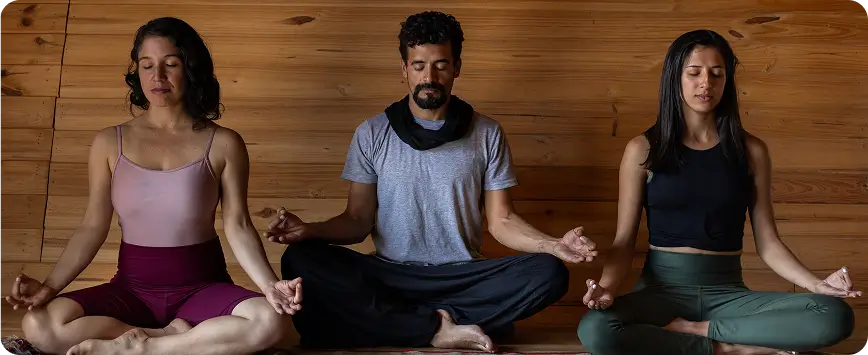
4. Sit in Stillness — Even Just for Ten Minutes (Meditation)
Meditation does not require incense, a special cushion, or an empty mind. It just requires ten minutes and a willingness to sit with yourself — which, admittedly, is harder than it sounds when you’re stressed.
But this is exactly why it matters. When we’re overwhelmed, we tend to keep moving, keep scrolling, keep doing — because stillness feels uncomfortable. Ayurveda calls this aggravated Vata: the restless, scattered energy that keeps the mind spinning even when the body is exhausted.
Meditation trains the nervous system to find stillness on demand. Over time it reduces cortisol, improves emotional balance, and builds a kind of inner steadiness that no external circumstance can easily shake.
How to start: Sit comfortably, close your eyes, and focus gently on your breath for ten minutes. When your mind wanders — and it will — simply notice it and come back. That noticing and returning is the practice. No judgment needed.
5. Make Time for a Warm Herbal Bath
There is something about a warm bath that humans have always known is healing. Ayurveda formalises this instinct and makes it even more effective with the addition of calming herbs.
A herbal bath relaxes tense muscles, lowers cortisol, and soothes the nervous system from the outside in — making it one of the most enjoyable Ayurvedic treatments for stress you can give yourself.
Try adding to your bathwater:
- A Dashamoola decoction — deeply Vata-pacifying and relaxing
- Neem leaves — purifying and cooling for Pitta-type stress
- A few drops of lavender or sandalwood oil — calming and grounding
- Rose water — soothing for emotional overwhelm
Even without the herbs, a warm bath taken slowly and mindfully — without the phone nearby — is a genuinely therapeutic act.
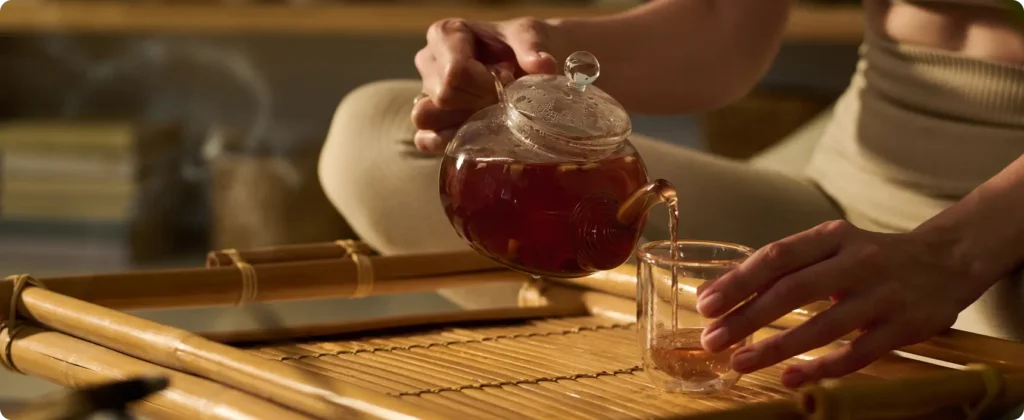
6. Sip Herbal Teas Through the Day
If you’re someone who reaches for coffee when you’re stressed, you’re not alone — but you’re also not doing yourself any favors. Caffeine spikes cortisol and amplifies the exact nervous system reactivity that stress already creates.
Switching to warm herbal teas — even just in the afternoon and evening — is a gentle but meaningful shift. These are some of the most accessible forms of Ayurveda medicine for stress, and most of them are available in any kitchen or health store.
Worth trying:
- Tulsi (Holy Basil) tea — adaptogenic, calming, and wonderful for immune health too
- Brahmi tea — for mental fatigue and a mind that won’t switch off
- Chamomile — gentle and effective for winding down in the evening
- Licorice (Yashtimadhu) — soothing, anti-inflammatory, and naturally sweet
Drink them slowly, without distraction. The ritual of it matters as much as the herbs.
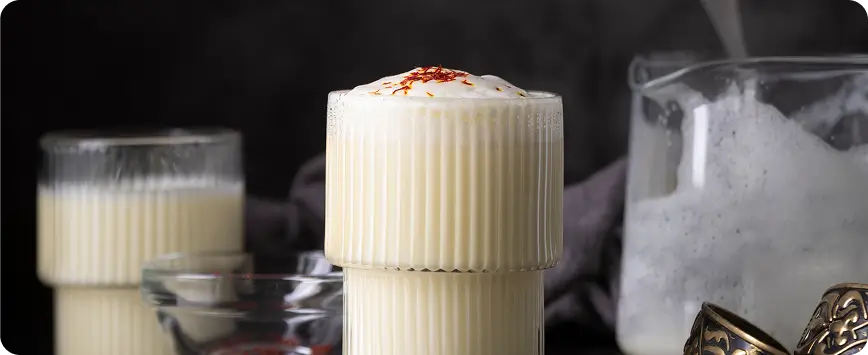
7. End the Night With Warm Spiced Milk
If you’re struggling with sleep or that dreaded second-wind of anxiety that hits right when you try to rest, this old Ayurvedic remedy is worth taking seriously.
Warm milk is considered Sattvic in Ayurveda — pure, calming, and nourishing to the mind. It naturally contains tryptophan, a precursor to serotonin and melatonin, which directly supports both mood and sleep quality. The added spices take it a step further.
How to make it: To a cup of warm whole milk, add a pinch of Ashwagandha powder, a quarter teaspoon of turmeric, a pinch of cardamom, and a small amount of pure ghee. Sweeten lightly with honey.
Drink it slowly, about 30 minutes before bed. It is a small ritual, but it tells your body — firmly and gently — that the day is done and it is time to rest.
8. Take Care of Your Sleep (Nidra Management)
Speaking of rest — Ayurveda places Nidra (sleep) alongside food and breath as one of the three pillars of good health. And yet it is often the first thing we sacrifice when life gets busy, which is exactly backwards. Poor sleep amplifies every form of stress, while good sleep restores the nervous system’s natural resilience.
You don’t need eight perfect hours every night. You need consistent, quality rest — and a few small habits can make a big difference.
Simple shifts:
- Aim to be in bed before 10 PM — this aligns with the body’s natural Kapha cycle, which supports deep, restorative sleep
- Put the phone away at least an hour before bed
- Do a short Shiro Abhyanga (head massage with warm oil) before sleeping
- Keep the bedroom cool, dark, and quiet
- Use calming herbs like Brahmi or Ashwagandha if your mind tends to race at night
9. Let Herbs Support You — Ashwagandha and Brahmi
Once you have the lifestyle foundations in place, herbs can meaningfully amplify the work you’re doing. Two stand above the rest when it comes to stress.
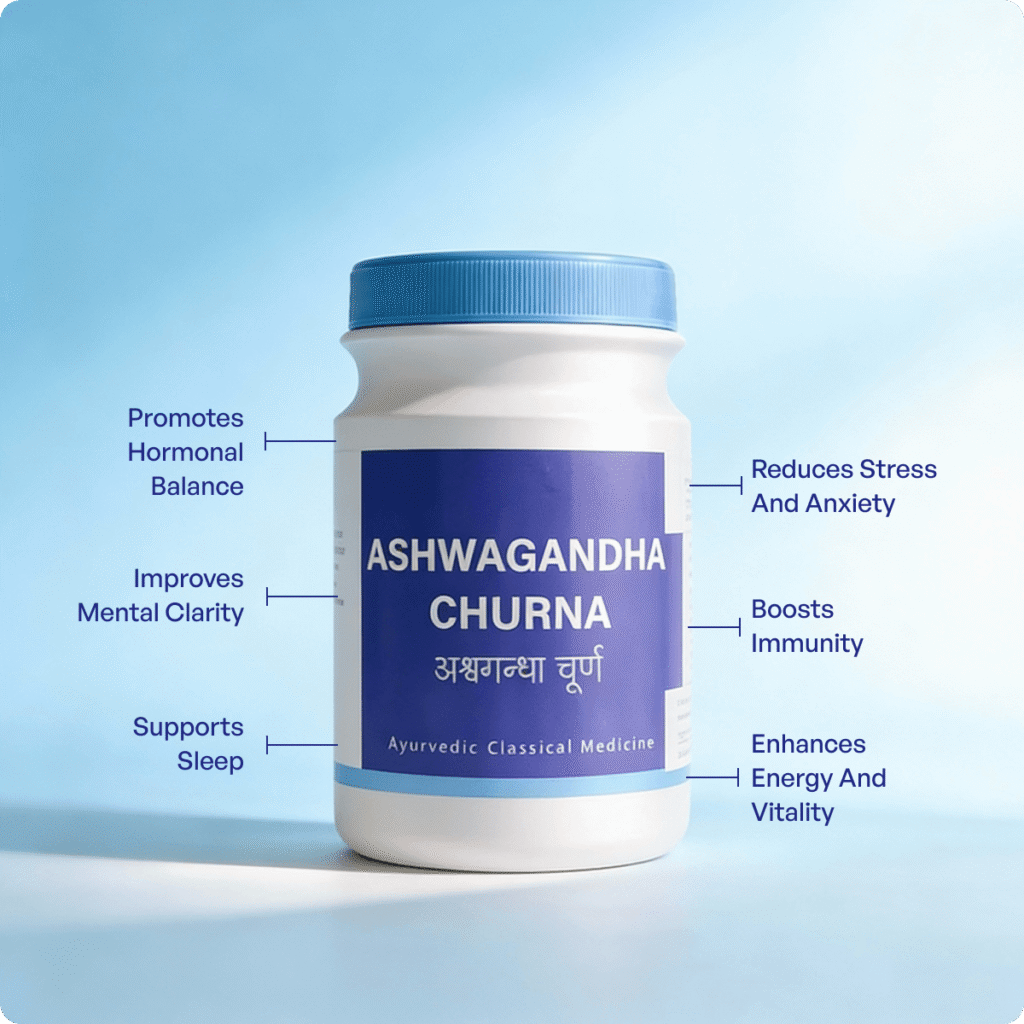
- Ashwagandha is the classic Ayurvedic medicine for stress. It is an adaptogen, which means it helps the body adapt to stress rather than react to it. It reduces cortisol, supports adrenal function, builds physical and mental stamina, and promotes genuinely restful sleep. Take it as a powder in warm milk at night, or as a capsule if that suits you better.
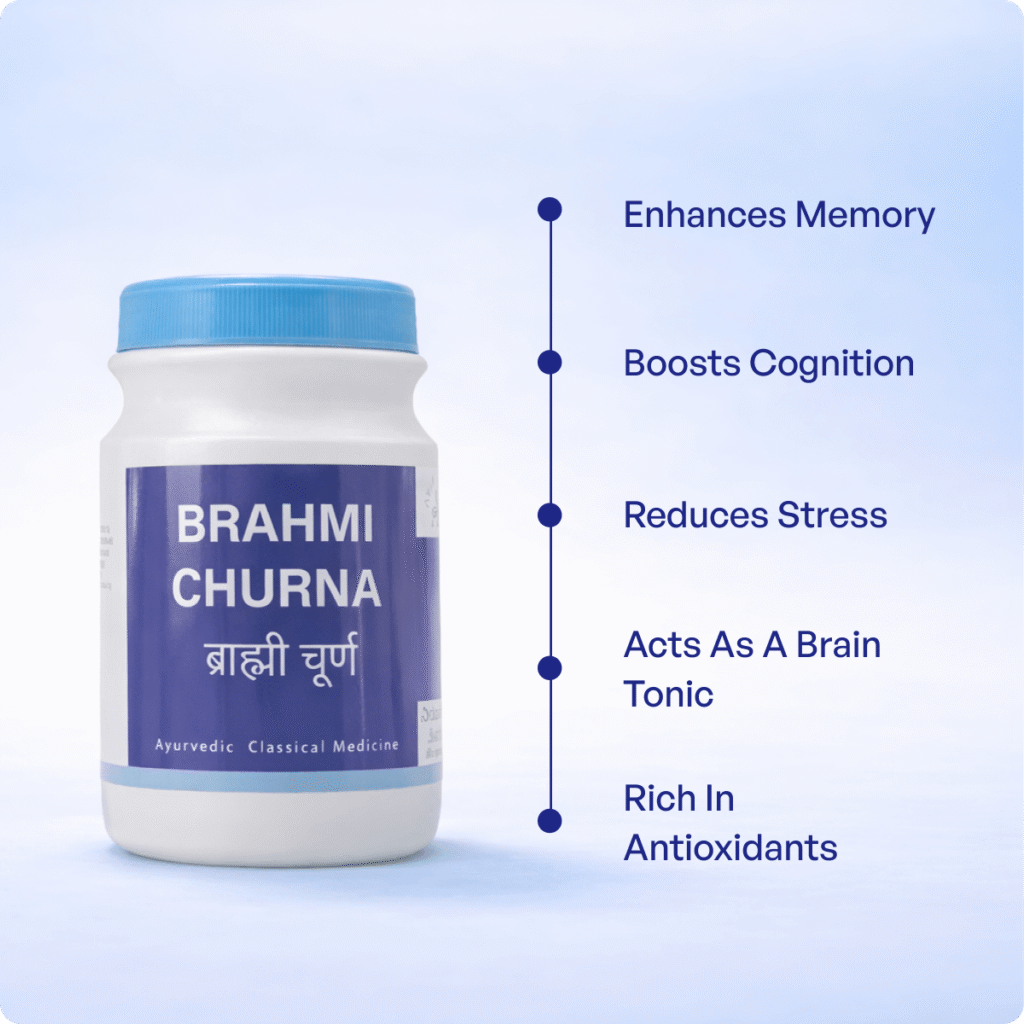
- Brahmi is your go-to when the stress shows up as mental overload — racing thoughts, inability to focus, a sense of being perpetually behind. It calms the mind without dulling it, enhances memory and cognitive clarity, and is deeply nourishing to nervous tissue. It can be taken internally or used as a scalp oil for added benefit.
But neither herb is a quick fix. Used consistently over several weeks, they quietly and steadily shift the baseline — making you genuinely more resilient, not just momentarily calmer.
10. Work With Your Mind, Not Against It — Sattvavajaya Chikitsa
The final and perhaps most profound tip comes from Sattvavajaya Chikitsa — Ayurveda’s dedicated branch of mental wellness. The name translates roughly to “winning over the mind,” and it is about cultivating the kind of inner environment where stress simply has less room to take hold.
This is not about toxic positivity or forcing yourself to think good thoughts. It is about being deliberate with what you feed your mind — the information you consume, the conversations you engage in, the foods you eat, the quality of your relationships, and how much time you spend in nature versus in screens.
Ayurveda calls the quality of clarity and calm it cultivates Sattva. And it recognises something modern psychology is only beginning to confirm: that chronic stress is not just about what happens to us, but about the cumulative environment we live in day after day.
Small acts of Sattvavajaya look like: taking a walk without your phone, cooking a simple meal mindfully, writing three things you’re grateful for before bed, saying no to one thing that drains you, or choosing a quiet evening over a stimulating one.
None of these individually feel like Ayurvedic treatment for stress. Together, practiced consistently, they are some of the most powerful medicine available.
A Final Word
Stress is not a character flaw or a sign of weakness. It is a signal — your body and mind communicating that something needs attention. Ayurveda’s great gift is that it listens to that signal and responds with warmth, wisdom, and practical tools rather than judgment.
You don’t have to overhaul your life overnight. Pick one or two of these tips that feel genuinely manageable right now, and practice them consistently for a few weeks. Notice what shifts. Build from there.
And if stress feels like more than you can manage alone, please do reach out to a qualified Ayurvedic practitioner for personalised guidance. How to reduce stress and anxiety naturally looks different for every person — and knowing your own constitution (Prakriti) can make all the difference in finding what truly works for you.




 Blog
Blog

 Heart Health
 Joint Pain
 Women’s Health