Overview
If you have heard about Swarnaprashana from a friend, your child’s paediatrician, or perhaps at a health camp, you probably have a mix of curiosity and questions. Gold for children — it sounds unusual at first. But Swarnaprashana has been a part of Ayurvedic paediatric care for over three thousand years, and once you understand what it is and how it works, the logic behind it becomes quite clear.
This article tries to answer the questions that parents most commonly ask — what it is, what it does, whether it is safe, why it is given on a particular lunar day, and whether taking it once a month is really enough. We will try to keep this as straightforward and honest as possible.
What is Swarnaprashana?
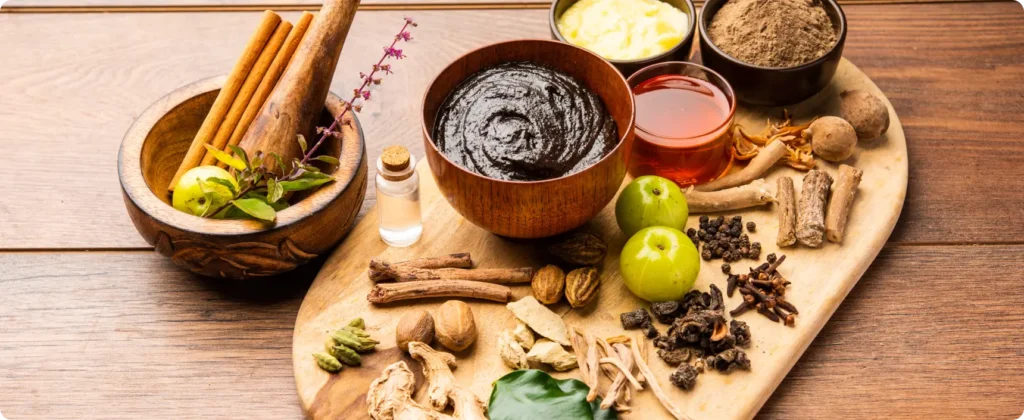
Swarnaprashana is an Ayurvedic preparation in which Swarna Bhasma — a highly purified form of gold ash — is combined with honey, ghee, and a set of classical herbs that have long been used to support the developing brain and immune system. It is given orally to children in small drops, typically on a specific lunar day called Pushya Nakshatra, once every month.
The practice finds its roots in Kashyapa Samhita, an ancient Ayurvedic text specifically devoted to child health. The text describes Swarnaprashana as something that promotes intellect, strengthens immunity, improves digestion, and supports the overall development of the child. Over centuries, Ayurvedic physicians have relied on this preparation as one of the foundational practices of child wellness — not as a treatment for any particular illness, but as a means of building a strong foundation for lifelong health.
What goes into it?
The key ingredients in Swarnaprashana and their classical roles are as follows:
- Swarna Bhasma — The primary ingredient. This is not raw gold but gold that has been through an extensive purification and incineration process, reducing it to nano-sized particles that are biocompatible and easily absorbed. It is the immunomodulatory and cognitive-enhancing core of the preparation.
- Vacha (Acorus calamus) — Traditionally used to support speech development, memory, and intellectual function in children.
- Brahmi (Bacopa monnieri) — One of the most well-researched Ayurvedic herbs for brain health. Known to improve retention, reduce anxiety, and support overall cognitive development.
- Shankhapushpi (Convolvulus pluricaulis) — A brain tonic that supports nervous system health and mental clarity.
- Honey — Not just a sweetener — honey acts as a bioavailability enhancer, helping carry active compounds into the deeper tissues of the body.
- Cow Ghee — In Ayurveda, ghee is considered one of the best carriers for fat-soluble compounds. It facilitates the transport of active ingredients across the blood-brain barrier, making the preparation particularly effective for cognitive support.
Swarnaprashana Benefits
The Swarnaprashana benefits cover several dimensions of a child’s development. These are not isolated effects — they work together as a system, which is consistent with how Ayurveda approaches health.
Immunity
Children who receive Swarnaprashana regularly tend to show fewer episodes of recurrent infections, cough, cold, and fever. This is attributed to the immunomodulatory action of Swarna Bhasma, which does not target a specific pathogen the way a vaccine does but rather supports the body’s overall immune response. Over months of consistent use, the child’s system becomes more resilient — less reactive to minor environmental triggers and better equipped to handle infections when they do occur.
Brain Development and Memory
The combination of Swarna Bhasma with Brahmi, Vacha, and Shankhapushpi makes Swarnaprashana a Medhya Rasayana — a preparation specifically directed at nourishing the mind. The early years of a child’s life are critical for brain development. During this period, the neural connections forming the basis of memory, language, emotion, and cognition are being laid down. Providing the right nourishment during this window can have lasting effects. Parents who give Swarnaprashana from infancy often report improvements in attention span, language development, and the ability to retain what is learned.
Speech and Concentration
Vacha has a long classical history as an herb for speech. Children with mild speech delays or difficulties with focus are among those who seem to respond particularly well to Swarnaprashana. This is not to suggest it is a treatment for speech disorders — but in the context of overall neurodevelopmental support, it appears to be a helpful addition.
Digestive Strength
Ayurveda places enormous importance on Agni — the digestive fire. A child with weak digestion does not absorb nutrients well, regardless of how well they are fed. Swarnaprashana is said to kindle Agni, improving the child’s appetite, digestion, and the body’s ability to utilise what it receives. This is particularly relevant for children who are underweight or have poor appetite.
Physical Growth and Emotional Balance
Through improved digestion and nutrient absorption, Swarnaprashana indirectly supports healthy physical development. Additionally, the adaptogenic herbs in the preparation help children manage stress better, sleep more soundly, and remain emotionally stable. These may seem like subtle benefits, but in a child’s developmental years, they matter quite a lot.
Swarnaprashana Uses — Which Children Benefit Most?
Swarnaprashana is suitable for children from the age of 28 days up to 16 years. It is primarily a preventive and developmental preparation — meaning it is not given only when a child is unwell, but as an ongoing practice to support healthy growth.
The children who tend to benefit most from regular Swarnaprashana use include:
- Infants and toddlers in the critical 0 to 3 year brain development window
- Children who fall sick frequently — recurrent cold, cough, throat infections, or fever
- Children with mild delays in speech, language, or cognitive development
- Children who seem easily distracted, have poor attention span, or struggle with learning
- Underweight children or those with poor appetite and weak digestion
- Children with allergic tendencies — skin, respiratory, or food-related
- Healthy children whose parents want to optimise their development and immunity preventively
It is worth saying clearly — Swarnaprashana is not a medicine in the conventional sense. It does not treat a diagnosis. It is a Rasayana — a rejuvenating, nourishing practice intended to be continued over time. The longer and more consistently it is given, the deeper and more lasting the benefits tend to be.
Why Pushya Nakshatra? The Reasoning Behind the Timing
This is one of the questions parents ask most often, and it deserves a genuine answer rather than a dismissal.
Pushya Nakshatra is one of the 27 lunar asterisms in Vedic astronomy, occurring approximately once every 27 to 28 days. The word Pushya means to nourish, to strengthen, to cause to thrive. It is considered the most auspicious of the Nakshatras for any activity related to health, nourishment, and growth. Classically, many Ayurvedic preparations and practices are timed around this day.
From an Ayurvedic pharmacological standpoint, the reasoning goes beyond tradition. Ayurveda recognises that the human body is not separate from its natural environment — and that the moon, which governs tidal forces, fluid balance, and biological cycles, also influences the body’s capacity for absorption. On Pushya Nakshatra, the body’s tissues are considered to be in a state of heightened receptivity, meaning that Rasayana preparations like Swarnaprashana are absorbed more completely and retained in the tissues more effectively.
Modern research on circadian and lunar rhythms lends some credibility to this. Studies have shown that lunar phases influence metabolic activity, hormone secretion, and cellular permeability in living organisms. Whether or not one fully accepts this framework, the practice of monthly administration timed to a specific lunar day is at least internally consistent with Ayurvedic principles of how the body responds to its environment.
It is also worth noting practically — Pushya Nakshatra falls roughly once a month, which makes it a natural reminder to maintain consistency with the practice.
Does Once a Month Actually Work? Understanding the Gap Between Doses
This is a reasonable concern. We are used to supplements and medicines that need to be taken daily to be effective. Once a month feels insufficient by that standard. But Swarnaprashana does not work the way a daily vitamin does.
Swarnaprashana belongs to the Rasayana category of Ayurvedic medicine. Rasayana preparations are designed to work at the level of the Dhatus — the deeper body tissues including plasma, blood, muscle, bone, and nervous tissue. They do not work on the surface and leave quickly. Instead, they penetrate gradually, create changes at a cellular level, and remain active in the tissues for an extended period.
Swarna Bhasma in particular consists of gold nanoparticles of approximately 15 to 20 nanometres. At this size, gold is taken up by immune cells and neural tissue, and research suggests that its biological effects persist for weeks after a single administration. The immune memory it creates builds with each successive dose — so the benefit is cumulative rather than immediate.
A simple way to think about it is this — when you fertilise a plant, you do not do it every day. You do it periodically, because the fertiliser works slowly, is retained in the soil, and the plant continues to draw from it over time. Daily application would actually be counterproductive. Rasayana preparations follow a similar logic. The monthly interval is not a limitation — it is by design.
Most parents notice subtle shifts in the first two to three months — fewer sick days, better sleep, improved appetite. More significant changes in cognition and overall development typically become visible after six to twelve months of consistent administration.
Swarnaprashana Side Effects — An Honest Assessment
The safety question is the one most parents rightly want answered first. Giving gold to a child — even in processed form — understandably raises concerns.
Authentic Swarnaprashana, prepared according to classical Ayurvedic standards, has a well-established safety record when given in the prescribed dose. The gold used is not metallic gold or a gold compound in the pharmaceutical sense. Swarna Bhasma is produced through a lengthy process of purification and calcination that transforms gold into nano-sized particles of an entirely different character from the raw material. At the doses used in Swarnaprashana, gold toxicity is not a known concern — and this is supported both by centuries of use and by pharmacological studies on gold nanoparticles.
That said, there are some things to be aware of:
- Occasionally, in the first one or two doses, some children experience mild loose stools. This typically resolves on its own and is generally considered a detoxification response.
- Children with known allergies to any of the ingredients should not receive Swarnaprashana without medical supervision.
- Rarely, some children may show mild skin reactions — these should be reported to your Ayurvedic physician promptly.
- Quality matters enormously. Poorly manufactured Swarna Bhasma that has not been through proper classical processing is a genuine concern in the market. Always source from a trusted, reputable Ayurvedic brand.
As with any health practice for children, it is always advisable to consult a qualified Ayurvedic physician before starting. They can assess your child individually, recommend the appropriate dose, and advise on any specific considerations.
What Does Modern Research Say?
Research on Swarnaprashana is still developing. Several studies published in Ayurvedic journals have reported improvements in immune parameters, cognitive assessments, and physical development in children receiving regular Swarnaprashana. The immunostimulatory, anti-inflammatory, and neuroprotective properties of gold nanoparticles are also supported by laboratory research in mainstream pharmacology.
However, it is fair to acknowledge that large-scale, well-designed clinical trials are limited. The evidence base, while promising, is not yet at the level that would satisfy rigorous modern scientific standards for efficacy claims. Swarnaprashana is a practice with a long observational history, and its standing in Ayurvedic medicine rests significantly on that tradition alongside the growing body of research. Parents making a decision about this should factor in both.
A Final Word
Swarnaprashana is not a quick fix, and it should not be approached as one. It is a slow, cumulative, deep-acting practice rooted in a tradition that views child health not in terms of treating illness but in terms of building resilience and developmental potential from the very beginning.
Whether you are a parent considering it for the first time or someone who has been giving it to your child for months and wondering if it is worth continuing — the answer, based on both classical understanding and available evidence, is that it is a genuinely worthwhile practice when done correctly, consistently, and with a good quality preparation.
If you have specific concerns about your child or would like guidance on starting Swarnaprashana, we recommend consulting with a qualified Ayurvedic physician who can assess your child individually. AyurvedaOne’s team is also available to answer any questions you may have.


 General

 Digestive Health
 General
 General