



Ayurvedic Medicine for Thyroid Health
AyurvedaOne’s Thyroid Health range brings together Ayurvedic medicine for thyroid support in the formats people actually use every day – thyroid Ayurvedic tablets, capsules and traditional churna (herbal powder). Each product is chosen around herbs that classical Ayurveda has long associated with the thyroid region, metabolism and energy, such as Kanchanara and Ashwagandha.
This category is for adults who want to add an Ayurvedic approach to their thyroid care – whether you’re working on thyroid balance, keeping an eye on a rising TSH report, or dealing with the tiredness and weight changes that often come with an underactive thyroid. These products are meant to support your wellbeing alongside regular blood tests and your doctor’s advice. They are not a replacement for prescribed thyroid medicine.
If you aren’t sure where to start, our Ayurveda doctors can help you choose through a personal Ayurvedic consultation.
What Is the Best Ayurvedic Medicine for Thyroid Support?
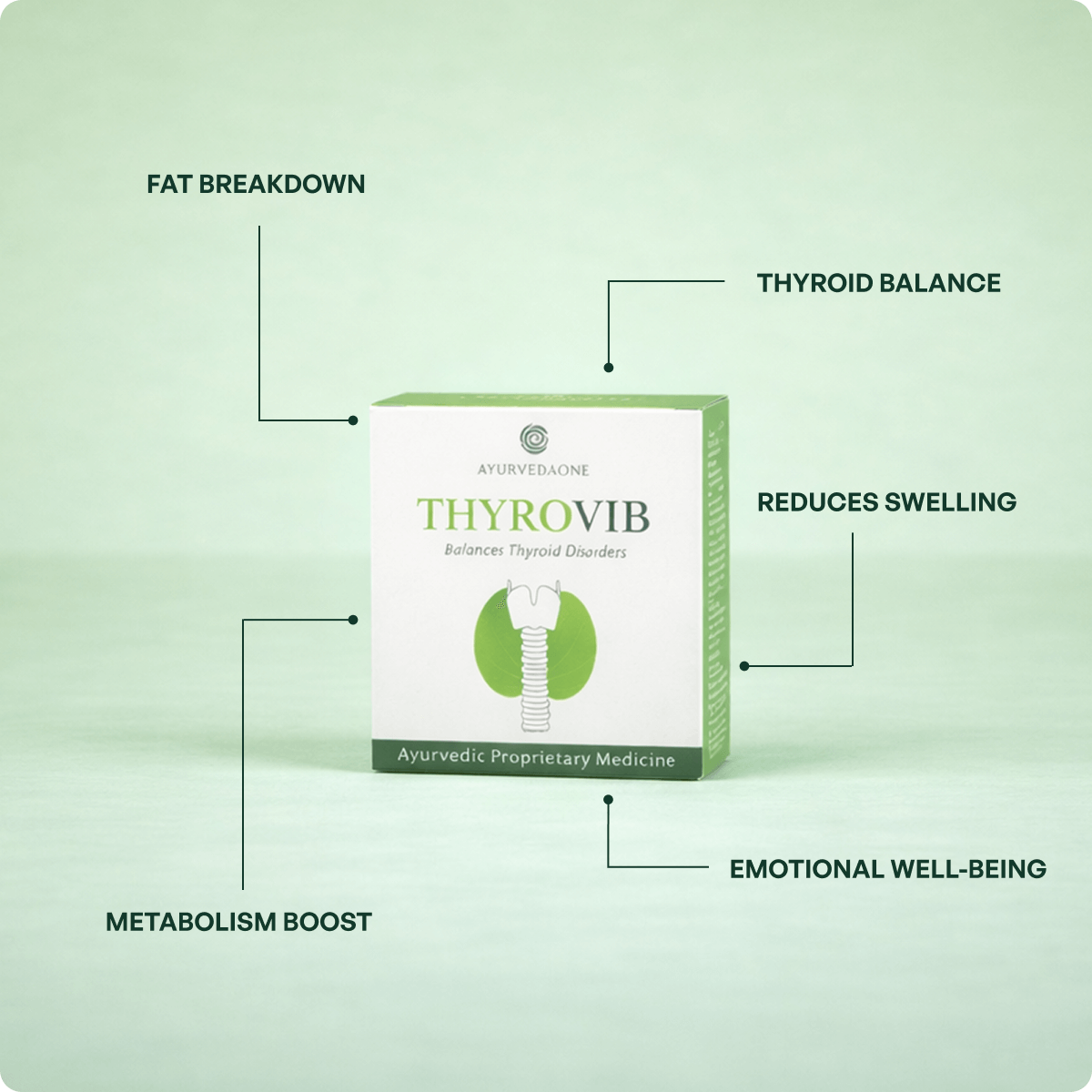
The best Ayurvedic medicine for thyroid support is the one that matches your thyroid pattern, your current treatment and the format you’ll take consistently. For most people, that means a dedicated formulation such as Thyrovib Capsule, with single-herb products like Kanchanara churna used under an Ayurveda doctor’s guidance.
Here is how the products in this category compare:
| Product | Specification | Used For | Price |
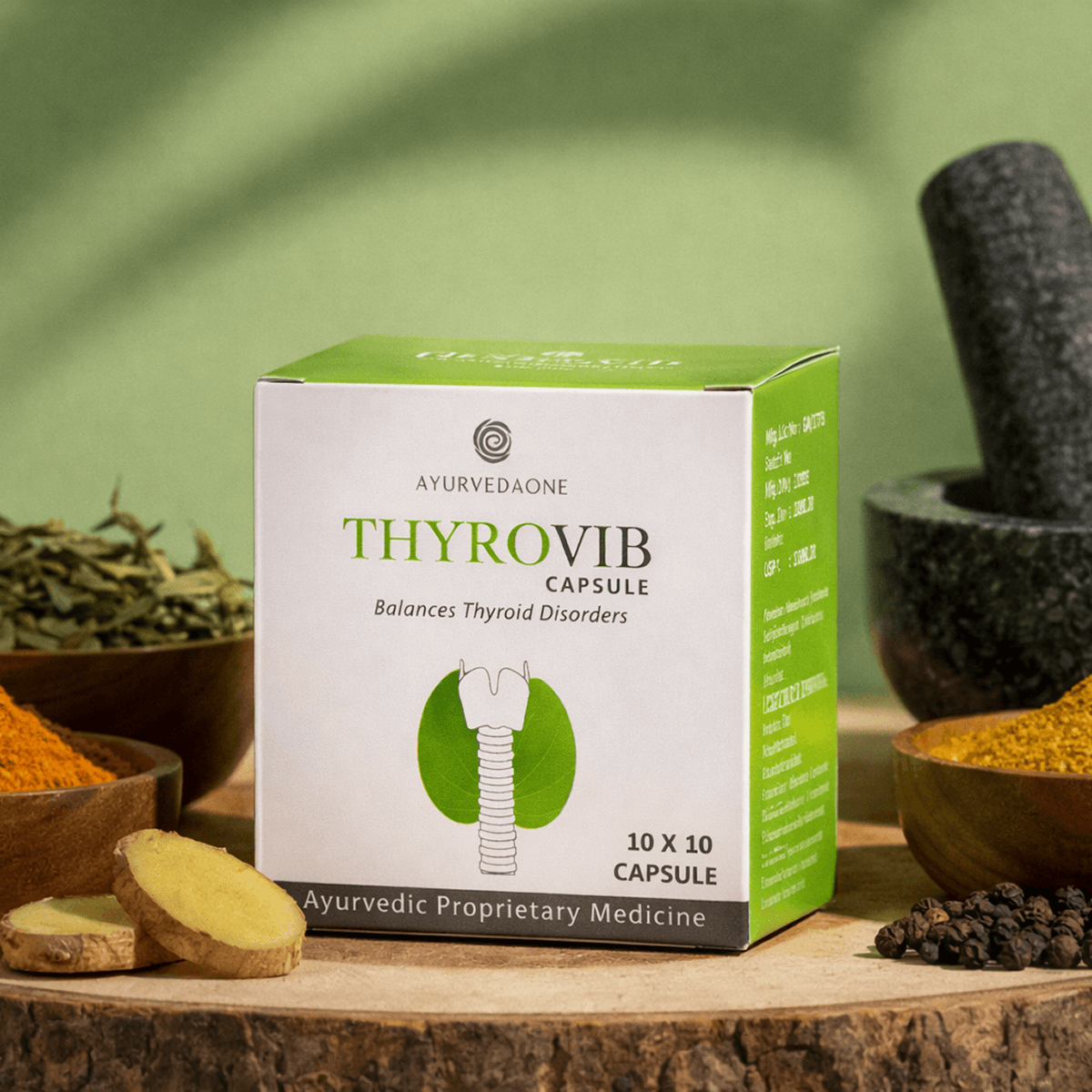
| Thyrovib Capsule – Ayurvedic Medicine for Thyroid | Capsule · 10 capsules per pack · see product page for full composition | AyurvedaOne’s dedicated thyroid formulation, intended to support thyroid balance, healthy metabolism and daily energy | ₹[verify on live page] |
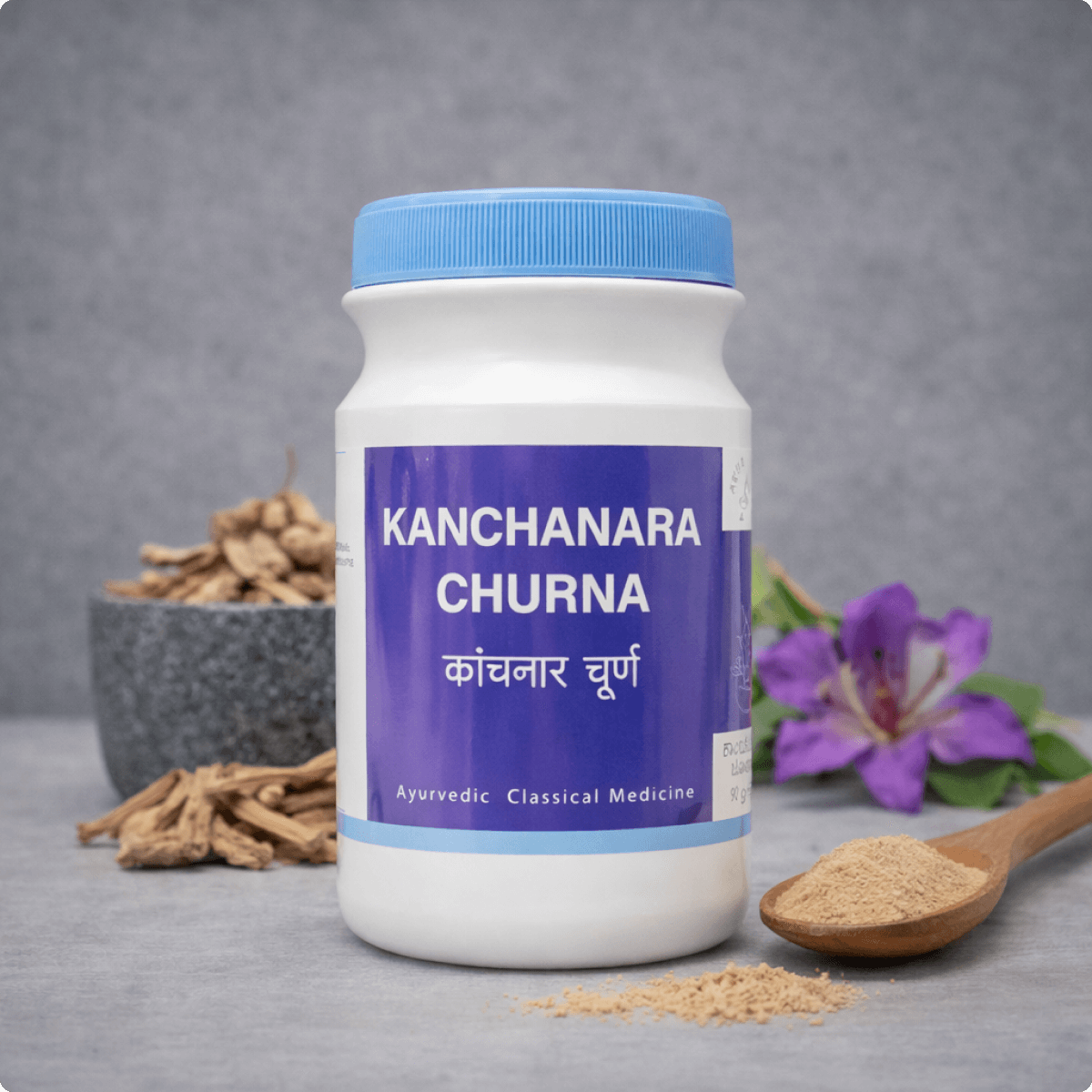
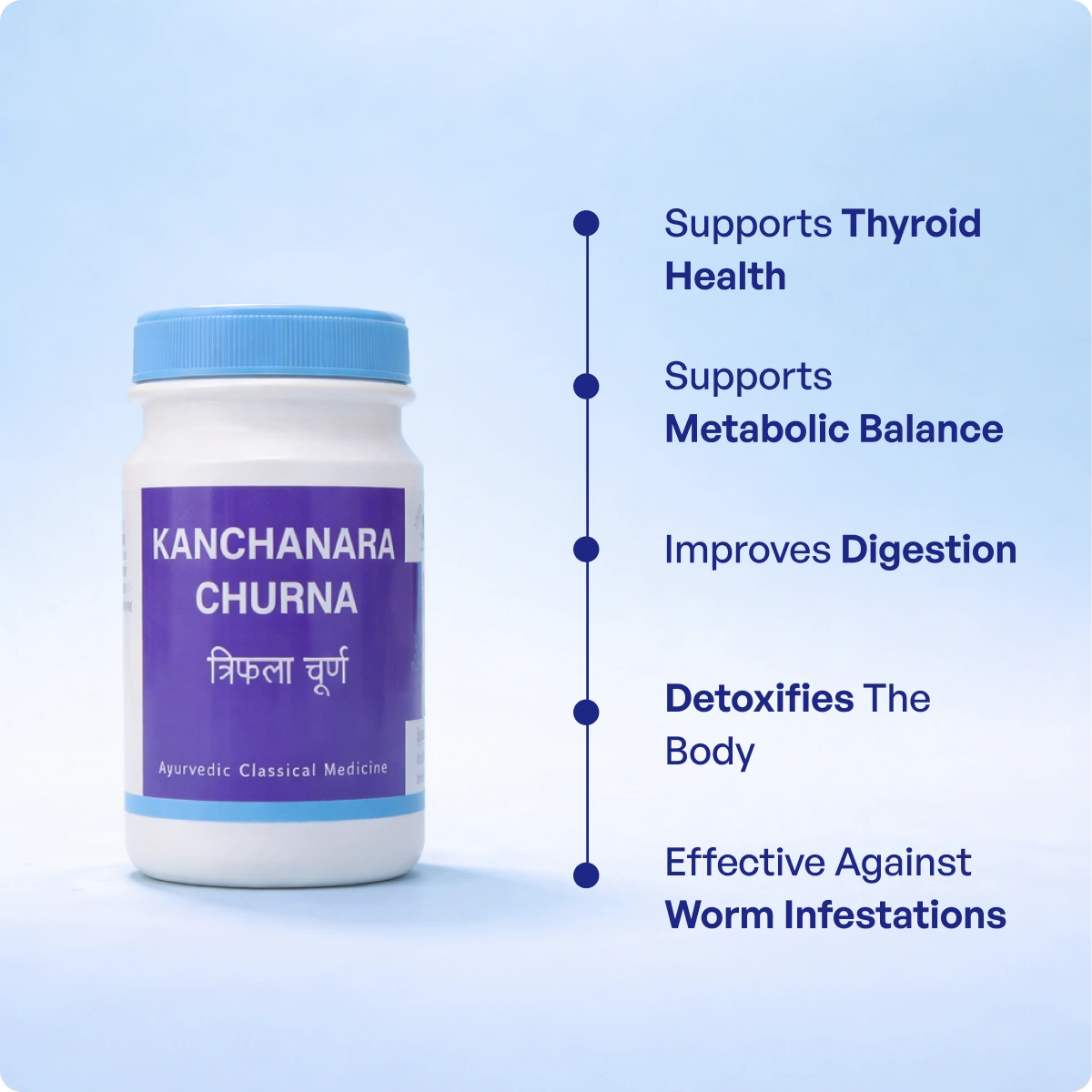
| Kanchanara Churna (90 g) – Ayur Vibes | Churna (herbal powder) · 90 g · Kanchanara (Bauhinia variegata) | Traditionally used in Ayurveda for Galaganda (swelling in the neck/thyroid region) and Kapha balance | ₹[verify on live page] |
| Ashwagandha Tablets 850 mg (60 tabs) – Ayur Vibes | Tablet · 850 mg · 60 tablets · Ashwagandha (Withania somnifera) | Traditionally used as a Rasayana for stress, strength and energy; studied in subclinical hypothyroidism – use only with medical advice | ₹[verify on live page] |
| Ashwagandha Churna (90 g) – Ayur Vibes | Churna (herbal powder) · 90 g · Ashwagandha root | Traditional Rasayana powder for vitality and stress support; the flexible-dose option for doctor-guided use | ₹[verify on live page] |
A quick guide to choosing:
- Want one dedicated thyroid product? Start with Thyrovib, our Ayurvedic thyroid capsule.
- Prefer a classical single herb? Kanchanara churna is the herb most closely linked with the thyroid region in Ayurvedic texts.
- Stress and fatigue are a big part of the picture? Ask a doctor whether Ashwagandha tablets are suitable for you before starting. Ashwagandha is not suitable for every thyroid condition.
How Does Ayurveda Approach Thyroid Balance?
Ayurveda approaches thyroid balance by looking at Agni (metabolic fire), Kapha and Vata dosha, and the health of the body’s tissues. It doesn’t treat a single lab value on its own. An Ayurvedic medicine for thyroid balance is usually chosen together with changes to diet, sleep and daily routine.
The classical texts don’t describe the thyroid gland in modern terms. They do, however, describe Galaganda, a swelling in the front of the neck, and a pattern of sluggish metabolism, heaviness and low energy. Ayurveda doctors today commonly relate an underactive thyroid to:
- Mandagni (weak metabolic fire) – slower metabolism, weight gain, low appetite, constipation
- Kapha aggravation – heaviness, puffiness, lethargy, feeling cold
- Vata involvement – dry skin, hair fall, anxiety, irregular cycles
Because of this, Ayurvedic thyroid care usually combines herbs that “kindle” Agni and clear Kapha with Rasayana (rejuvenating) herbs that support strength and resilience.
How to read this page: Traditional Ayurvedic use describes how herbs are used in classical practice. Modern scientific evidence refers to published studies, which for most thyroid herbs is still limited. We label which one we’re describing so you can judge for yourself.
Which Herbs Are Used in Ayurvedic Thyroid Tablets and Capsules?
Ayurvedic thyroid tablets and capsules most often use Kanchanara, Guggulu and Ashwagandha, sometimes with Brahmi, Shigru (moringa) or Varuna. A 2019 review in the Journal of Research in Ayurvedic Sciences (CCRAS, Ministry of AYUSH) looked at around 15 such herbs. It found promising early signals, but most of the evidence came from animal studies rather than human trials.
| Herb | Traditional Ayurvedic Use | What Modern Research Says |
| Kanchanara (Bauhinia variegata) | Classical herb for Galaganda and Kapha-type swellings; the key ingredient of Kanchanara Guggulu | Studied mainly in preclinical and small clinical settings; larger human trials are still needed |
| Guggulu (Commiphora mukul) | Used to clear Kapha and support metabolism; a common base for thyroid formulations | Preclinical studies suggest effects on thyroid activity; human evidence is limited |
| Ashwagandha (Withania somnifera) | Rasayana for strength, stress and vitality | In one 8-week randomised trial (50 adults with subclinical hypothyroidism, 600 mg/day root extract), TSH, T3 and T4 moved toward normal compared with placebo. NCCIH advises caution for people with thyroid disorders. |
| Brahmi (Bacopa monnieri) | Medhya (mind-supporting) herb | Mostly animal data on thyroid hormones |
| Shigru (Moringa oleifera) | Kapha-clearing, nutritive | Mostly animal data |
The takeaway: these herbs have a real place in Ayurvedic thyroid care, but none should be treated as a proven replacement for thyroid hormone medicine.
Can Ayurvedic Medicine Help With a High TSH Level?
An Ayurvedic medicine for high TSH level may help support thyroid function as part of a doctor-supervised plan. It shouldn’t replace levothyroxine or other prescribed treatment. A high TSH usually means your thyroid isn’t making enough hormone, so your pituitary gland is producing more thyroid-stimulating hormone to push it to work harder.
What this means in practice:
- Mild or “subclinical” rise in TSH: This is where most interest in Ayurvedic medicine for thyroid stimulating hormone comes from. The Ashwagandha trial above was done in this group. Our Thyrovib Ayurvedic medicine for thyroid is designed for this kind of everyday thyroid support.
- Clearly high TSH or diagnosed hypothyroidism: Standard care is daily levothyroxine. Ayurvedic support can sit alongside it, but only with your doctor’s knowledge.
- Re-test, don’t guess: Symptoms alone don’t show where your thyroid is. Keep your scheduled TSH tests so you and your doctor can see whether anything is changing.
Never stop or reduce prescribed thyroid medicine on your own. If you want to combine Ayurvedic and conventional care, tell both your doctor and your Ayurveda practitioner.
Is There an Ayurvedic Medicine for Thyroid and Weight Loss?
There’s no Ayurvedic medicine for thyroid and weight loss that works on its own, but Ayurvedic support can help alongside diet, activity and proper thyroid treatment. Weight gain is a common symptom of an underactive thyroid, and it often eases once thyroid levels are properly managed.
Ayurveda frames thyroid-related weight gain as a Kapha and Mandagni pattern. A practical Ayurvedic plan usually includes:
- A thyroid-support product from this category, chosen with guidance
- Warm, freshly cooked, easily digestible meals rather than heavy, cold or processed foods
- Regular movement you can sustain, even a daily 30-minute walk
- Consistent sleep and wake times, which help regulate appetite and energy
- Checking whether weight gain is actually thyroid-related, since stress, sleep, other hormones and medicines can all play a part
If weight changes come with irregular periods, acne or excess hair growth, it’s worth also reading about natural ways to manage hormonal imbalance in women and the Ayurvedic approach to PCOS, because thyroid and ovarian hormone issues often overlap.
What About Ayurvedic Medicine for Thyroid and Weight Gain?
If you’re looking for an Ayurvedic medicine for thyroid and weight gain because you’re losing weight unintentionally, get your thyroid checked for an overactive thyroid (hyperthyroidism) first. Unexplained weight loss despite a good appetite is a recognised sign of hyperthyroidism, which needs medical care.
This matters because products meant for an underactive thyroid aren’t suitable for an overactive one:
- Herbs that may raise thyroid hormone levels, including Ashwagandha, should be avoided in hyperthyroidism unless a doctor specifically advises them.
- Iodine-rich supplements such as kelp and seaweed can worsen hyperthyroidism.
- Ayurveda usually approaches this pattern with Pitta-Vata pacifying, nourishing (Brimhana) care, which is individual and best planned in a consultation with an Ayurveda doctor.
Should You Choose Tablets, Capsules or Churna?
Choose the format you’ll take consistently. Ayurvedic thyroid tablets and capsules give a fixed, convenient dose, while churna lets an Ayurveda doctor adjust the dose and the vehicle it’s taken with, such as warm water or honey.
| Format | Best For | Keep in Mind |
| Ayurveda thyroid capsule (e.g. Thyrovib) | Busy routines; a single multi-herb product; no taste | Fixed composition – check it doesn’t overlap with anything else you take |
| Ayurvedic thyroid tablet (e.g. Ashwagandha 850 mg) | Easy to carry; measured single-herb dose | Take only with medical advice if you have a thyroid condition |
| Churna / powder (e.g. Kanchanara, Ashwagandha) | Doctor-tailored dosing; classical preparation | Needs measuring; taste is strong for some people |
How Should You Take Ayurvedic Thyroid Medicine Alongside Your Current Treatment?
Take Ayurvedic thyroid medicine exactly as the product label or your Ayurveda doctor directs, and keep it separate from levothyroxine. Continue your regular thyroid blood tests.
- Follow the label dose. Don’t double up by combining several products with the same herb.
- Keep your thyroid tablet routine unchanged. Levothyroxine is usually taken on an empty stomach. Ask your doctor how far apart to space other supplements.
- Give it time, then review. Recheck TSH at the interval your doctor recommends before judging whether a product suits you.
- Tell every clinician what you take. This includes herbal products, multivitamins and cough syrups, which can contain iodine.
Which Diet and Lifestyle Habits Support Thyroid Balance?
Enough (but not too much) iodine and selenium, regular sleep, daily movement and stress management all support thyroid balance, whichever Ayurvedic medicine for thyroid you choose.
- Iodine: Your thyroid needs iodine to make hormones. For most people in India, iodised salt covers this. More isn’t better, because very high iodine intake can itself cause goitre, and kelp supplements vary widely in how much iodine they contain.
- Selenium: Your thyroid needs selenium to make hormones. Food sources such as eggs, fish, seeds and whole grains are the safest route. Research on selenium supplements for thyroid disease is mixed.
- Ayurvedic eating pattern: Favour warm, cooked meals with digestive spices like ginger, cumin and black pepper. Eat your main meal at midday, and don’t overeat heavy, cold or deep-fried food.
- Movement and joints: Stiffness and joint aches can come with an underactive thyroid. If they’re a big part of your day, see our Ayurvedic bone, joint and muscle health range.
- Stress and sleep: Chronic stress and poor sleep drain energy further. Keep a fixed bedtime and try a short daily breathing practice.
Who Should Be Careful With Ayurvedic Thyroid Medicine?
Anyone who is pregnant or breastfeeding, taking thyroid or other prescription medicines, or living with hyperthyroidism, Hashimoto’s or another autoimmune condition should speak to a doctor before using Ayurvedic thyroid medicine.
- Pregnancy and breastfeeding: Thyroid needs change a lot during pregnancy. Ashwagandha should be avoided during pregnancy and breastfeeding.
- Prescription thyroid medicine: Ashwagandha may interact with thyroid hormone medication. Your doctor may need to adjust your dose or monitoring.
- Autoimmune thyroid disease (Hashimoto’s, Graves’): NCCIH advises against Ashwagandha for people with autoimmune or thyroid disorders unless medically supervised. Large amounts of iodine can also worsen Hashimoto’s.
- Liver concerns: Rare cases of liver injury have been linked to Ashwagandha supplements. Stop and seek advice if you notice yellowing of the eyes or skin, dark urine or unusual tiredness.
- Nutrient overlap: Check your multivitamin and other supplements for iodine, selenium or the same herbs so you don’t take too much.
- Upcoming surgery: Tell your surgeon about any herbal products you’re taking.
This isn’t meant to put you off. It’s so you can use Ayurvedic support safely and get the most from it.
Where Can You Buy Genuine Ayurvedic Thyroid Medicine Online?
Buy from a store that names each product, its format and pack size clearly, and that gives you access to qualified Ayurveda doctors. AyurvedaOne’s Thyroid Health range is built around that idea:
- Clear product pages: Every product in this category lists its format, pack size and intended use, so you can compare before you buy.
- Doctor access: You can book an Ayurvedic consultation with our doctors to choose the right product and dose for your thyroid pattern.
- Clinical Ayurveda expertise: Our team includes experienced practitioners such as Dr. Sreeja S (MD Panchakarma), Head of the Panchakarma Unit at I-AIM. Learn more about AyurvedaOne.
- One place for related concerns: Thyroid health rarely exists in isolation, so you can browse our full range of Ayurvedic products for digestion, stress, bone and joint health and more.
Have a question before ordering? Contact our team.
Frequently Asked Questions
Why Buy Ayurvedic Products Online from AyurvedaOne
AyurvedaOne is your trusted destination for authentic ayurvedic products online — curated from GMP-certified manufacturers, verified for quality, and delivered fast across India. Whether you are looking for a classical formulation from a traditional text or a modern proprietary Ayurvedic supplement, our range covers every health need in one place.
- 100% authentic formulations from GMP-certified Ayurvedic manufacturers
- Wide range of classical and proprietary medicines under one roof
- Fast, secure delivery across India — no minimum order
- Expert-curated selection — every product verified for safety and efficacy
Source and Reference:
| Source / Organisation | Information Referenced | URL |
| NIDDK (U.S. National Institutes of Health) | What hypothyroidism is; symptoms incl. tiredness, weight gain, joint pain; levothyroxine as standard treatment; high iodine and Hashimoto’s | https://www.niddk.nih.gov/health-information/endocrine-diseases/hypothyroidism |
| NIDDK (U.S. National Institutes of Health) | Weight loss despite increased appetite as a sign of hyperthyroidism; iodine, kelp and iodine-containing supplements can worsen it | https://www.niddk.nih.gov/health-information/endocrine-diseases/hyperthyroidism |
| MedlinePlus (U.S. National Library of Medicine) | What TSH is; why a high TSH usually indicates an underactive thyroid | https://medlineplus.gov/lab-tests/tsh-thyroid-stimulating-hormone-test/ |
| NIH Office of Dietary Supplements | Iodine is needed to make thyroid hormones; excess iodine can cause goitre; variable iodine in kelp supplements | https://ods.od.nih.gov/factsheets/Iodine-Consumer/ |
| NIH Office of Dietary Supplements | Selenium’s role in thyroid hormone production; mixed evidence for selenium supplements in thyroid disease | https://ods.od.nih.gov/factsheets/Selenium-Consumer/ |
| NCCIH (U.S. National Institutes of Health) | Ashwagandha safety: caution in thyroid/autoimmune disorders, interaction with thyroid hormone medicine, avoid in pregnancy and breastfeeding, rare liver injury | https://www.nccih.nih.gov/health/ashwagandha |
| Sharma AK, Basu I, Singh S. J Altern Complement Med, 2018 | Randomised placebo-controlled trial: 600 mg/day Ashwagandha root extract for 8 weeks in 50 subclinical hypothyroid adults; improved TSH, T3, T4 | https://journals.sagepub.com/doi/10.1089/acm.2017.0183 |
| Dixit AK et al. Journal of Research in Ayurvedic Sciences (CCRAS, Ministry of AYUSH), 2019 | Review of ~15 Ayurvedic herbs for hypothyroidism incl. Kanchanara, Guggulu, Ashwagandha, Brahmi, Shigru; evidence largely preclinical | https://www.jaypeedigital.com/doi/JRAS/pdf/10.5005/jras-10064-0090 |
| AyurvedaOne | Product names, formats, pack sizes and URLs; consultation, about and contact pages | https://ayurvedaone.co.in/product-category/thyroid-health/ |