Digestive discomfort can make even ordinary meals feel difficult. Bloating, poor appetite and indigestion may come and go, leaving you looking for something that supports digestion without adding another complicated routine. Fever recovery can also leave the body feeling weak and unsettled.
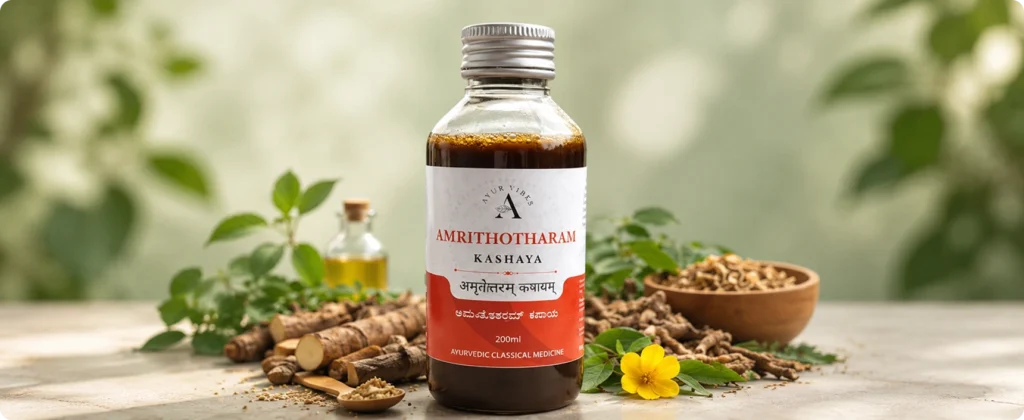
Amrithotharam Kashayam is a traditional Ayurvedic formulation made with Guduchi, Haritaki and Shunthi. It is traditionally used in Ayurveda for supporting digestion, Agni and Amapachana, and is also discussed in relation to fever. If you are considering it, knowing what it contains, how to take it and when to avoid self-use can help you make a more informed choice.
What Is Amrithotharam Kashayam?
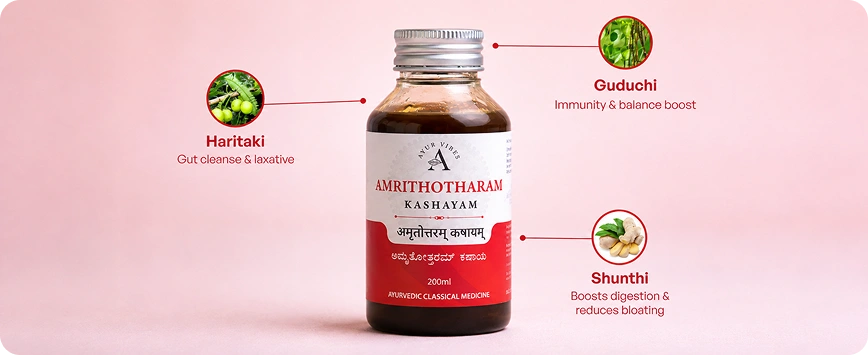
Amrithotharam Kashayam is a traditional Ayurvedic herbal decoction, also known as Nagaradi Kashayam. It’s made with three herbs: Guduchi, Haritaki and Shunthi. These herbs are combined to support digestion and overall balance according to Ayurvedic principles.
In Ayurveda, Deepana refers to supporting Agni, or the body’s digestive strength, while Pachana refers to helping process Ama. Ama is an Ayurvedic term for waste that may build up when digestion is not working properly. The classical formulation contains Guduchi, Haritaki and Shunthi in a 6:4:2 ratio.
Key Ingredients in Amrithotharam Kashayam
Amrithotharam Kashayam contains three main herbs: Guduchi, Haritaki and Shunthi. Each has a specific role in Ayurveda, and together they are traditionally used to support digestion and the processing of Ama.
- Guduchi or Amrita: Tinospora cordifolia is traditionally used to support digestion and Amapachana. It makes up the largest portion of the classical formulation.
- Haritaki: Terminalia chebula is traditionally used to support digestion and healthy bowel function. It is also commonly included in Ayurvedic formulations for digestive balance.
- Shunthi: Zingiber officinale, or dry ginger, is traditionally used to support appetite and digestion. Its warming properties make it a common ingredient in digestive formulations.
Together, these three herbs give the formulation its traditional Deepana and Pachana properties, which are linked to supporting digestion and processing Ama.
Top 7 Uses and Benefits of Amrithotharam Kashayam
Amrithotharam Kashayam is traditionally used in Ayurveda for digestive concerns, Ama-related imbalance and fever-related conditions. Its three key herbs, Guduchi, Haritaki and Shunthi, give the formulation its traditional Deepana and Pachana properties.
1. Better Digestion: Amrithotharam Kashayam is traditionally used to support Agni and improve sluggish digestion. Its Deepana and Pachana properties are associated with better processing of food and Ama.
2. Improved Appetite: Shunthi, or dry ginger, is traditionally valued for stimulating appetite. The formulation is used when reduced appetite is associated with weak or sluggish digestion.
3. Less Heaviness: The formulation is traditionally used for a heavy feeling, gas and abdominal discomfort linked with poor digestion. Its digestive herbs help support the proper processing of food.
4. Bowel Regularity: Haritaki is traditionally used to support healthy bowel movement. This makes the formulation relevant when constipation occurs alongside digestive sluggishness.
5. Ama Processing: In Ayurveda, Ama refers to material that can form when digestion is incomplete. Amrithotharam Kashayam is traditionally valued for Amapachana, which refers to supporting the processing of Ama.
6. Fever Care: Classical Ayurvedic literature discusses the formulation in relation to Jwara, the Ayurvedic term for fever. It is traditionally used when fever occurs alongside digestive disturbances.
7. Post-Fever Support: AyurvedaOne positions its formulation for digestive support and general wellness. In traditional Ayurvedic practice, the formulation is also considered when appetite and digestion remain disturbed during or after fever.
These are traditional Ayurvedic uses and should be understood within the Ayurvedic system. Persistent fever, severe abdominal symptoms or recurring digestive problems need proper medical evaluation.
How to Take Amrithotharam Kashayam
The right dose depends on the formulation you are using, so the product label should always be checked first. For AyurvedaOne‘s Amrithotharam Kashayam 200 ml, you can take 24 to 48 ml mixed with an equal quantity of warm water, once or twice daily, on an empty stomach or as directed by an Ayurvedic physician.
Shake the bottle well before use and keep it in a cool, dry place away from direct sunlight. Don’t increase the dose because you expect quicker results. If you have a medical condition, take regular medicines, or are unsure about the right dose, speak with an Ayurvedic physician before starting it.
Precautions and Possible Side Effects
AyurvedaOne Amrithotharam Kashayam should be taken only as directed on the product label or by an Ayurvedic physician. Pregnant or breastfeeding women, children, older adults and people with existing health conditions should seek professional advice before using it.
Some people may experience digestive discomfort or other reactions if the formulation doesn’t suit them or the dose is too high. For amrithotharam kashayam tablet side effects, check the specific product information, as tablet formulations can differ in ingredients and strength. Stop use and seek medical advice if you develop severe or persistent symptoms.
Why Consider AyurvedaOne Amrithotharam Kashayam?
If you’re looking for a ready-to-use liquid formulation, AyurvedaOne Amrithotharam Kashayam 200 ml is a simple option to consider. It contains Guduchi, Haritaki and Shunthi, the three herbs traditionally used in this formulation, and comes with clear dosage and dilution instructions.
The product is currently priced at ₹125, making it an accessible option for those looking to include a traditional Ayurvedic formulation in their routine. You’ll also know exactly what you’re buying and how to use it. If you’re unsure whether it’s right for you, speak with an Ayurvedic physician before starting.
Conclusion
Choosing an Ayurvedic formulation starts with knowing what it’s meant for, what it contains and how it should be used. Amrithotharam Kashayam is traditionally valued for supporting digestion, Agni and Amapachana, with its use also extending to certain fever-related conditions. Using the right dose and considering your individual needs is just as important as choosing the formulation itself.
If you’re looking for a ready-to-use option, AyurvedaOne Amrithotharam Kashayam 200 ml offers the traditional three-herb formulation with clear dosage instructions. If it fits your needs, you can explore the product and use it as directed.



 Joint Pain

 General
 Digestive Health
 Women’s Health