The weeks after delivery are demanding. Your body is healing, sleep is broken into short stretches, and many new mothers find themselves dealing with back pain, body aches, weakness, and a poor appetite while caring for a newborn around the clock.
Ayurveda treats this stage as a phase deserving its own dedicated care, known as Sutika Paricharya, and Dashmoola Kwatha is one of the traditional remedies used within it. Here is what it is, why it is used after delivery, how it may help with postpartum back pain, and how to use it safely.
For women exploring Ayurvedic approaches to recovery, AyurvedaOne’s Women’s Health collection includes traditional formulations for different stages of women’s wellbeing. However, products suitable outside pregnancy or breastfeeding may not be appropriate during postpartum recovery.
What Is Dashmoola Kwatha and What Are Its Ayurvedic Uses?
Dashmoola means “ten roots.” Dashmoola Kwatha is a decoction (kwatha or kashaya) made by boiling these roots in water, and it is one of Ayurveda’s long-used preparations for body pain, stiffness, and weakness.
The ten roots fall into two groups:
- The five larger roots: Bilva, Agnimantha, Shyonaka, Patala and Gambhari.
- The five smaller roots: Shalaparni, Prishniparni, Brihati, Kantakari and Gokshura.
Together, they form the foundation of many traditional Ayurvedic formulations.
Dashmoola is also available in other forms, including tablets, Dashmoolarishta (a fermented tonic), and medicated oils used for massage. The kwatha is the classical decoction form, while ready-made preparations can be more convenient for a new mother who has little time.
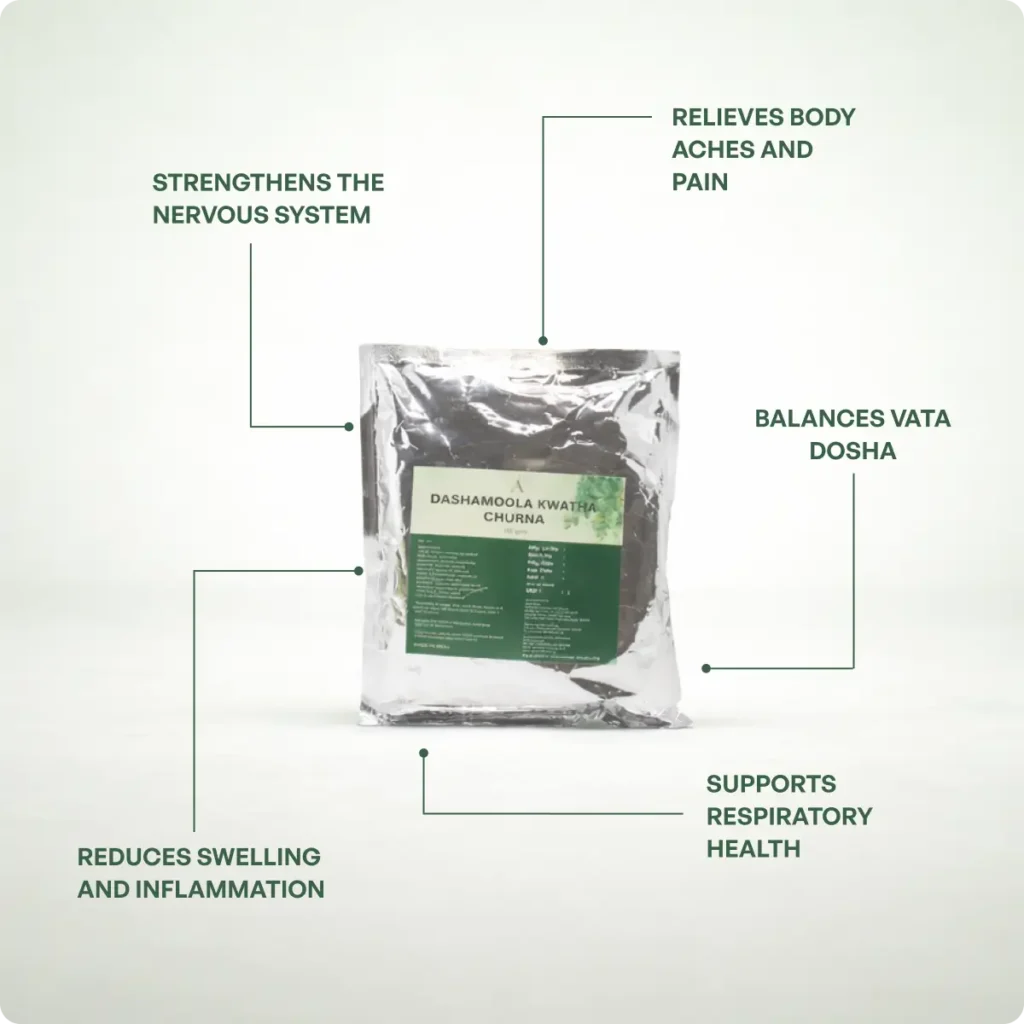
AyurvedaOne lists Dashamoola Kwatha Churna and Dasamoolam Kashayam (200ml) in its Bone, Joint & Muscle Health collection. These are different preparations, so the method of use and dosage should be checked individually with a qualified practitioner.
If you want to understand other traditional formulations used for musculoskeletal discomfort, AyurvedaOne’s guide to Ayurvedic medicine for joint pain, oils, tablets, and home remedies explains commonly used preparations and supportive self-care practices.
What Is Sutika Paricharya (Postpartum Care) in Ayurveda?
In Ayurveda, the period after delivery, traditionally around six weeks or longer, is considered a time of vulnerability. Childbirth is seen as using up a great deal of the body’s strength, and the body’s movement and nervous system energy, called Vata, is believed to become aggravated.
This is linked in traditional Ayurvedic explanations to the back pain, joint stiffness, body aches, restlessness, light sleep, and fatigue that many mothers describe.
Sutika Paricharya is the traditional answer to this. It combines rest, warm and nourishing food, gentle oil massage, warmth, and specific herbal remedies chosen to help the body recover steadily.
Dashmoola is classically included because it is considered a remedy for calming aggravated Vata.
Proper nutrition is also essential after childbirth, particularly when a mother has experienced significant blood loss. AyurvedaOne’s article on iron deficiency in women is relevant to understanding why ongoing tiredness, dizziness, and weakness may need nutritional assessment rather than relying only on herbal tonics.
For broader information on women’s nutritional and reproductive wellness, you can also explore Ayurvedic women’s health products, while keeping in mind that breastfeeding safety must be established for each specific product.
What Are the Traditional Benefits of Dashmoola Kwatha After Delivery?
Traditionally, Dashmoola Kwatha is used after delivery for:
– Back pain and body aches: Traditionally used for soreness and stiffness that may follow labour, long feeding sessions, and frequently lifting and carrying a baby.
– Weakness and fatigue: Used in Ayurvedic postpartum routines intended to support recovery when the body feels depleted.
– Appetite and digestion: Traditionally used when digestion feels sluggish after delivery. If digestive discomfort continues, AyurvedaOne’s Digestive Health collection provides information about different Ayurvedic preparations, although these should not be assumed safe during breastfeeding.
– Joint stiffness and general discomfort: Dashmoola has long been valued for its traditionally described pain-relieving and anti-inflammatory qualities.
– General recovery: Used as part of a broader postpartum regimen to support rest, nourishment, and gradual return to daily activity.
It is traditionally taken warm, and its warming nature is considered part of why it suits the postpartum period.
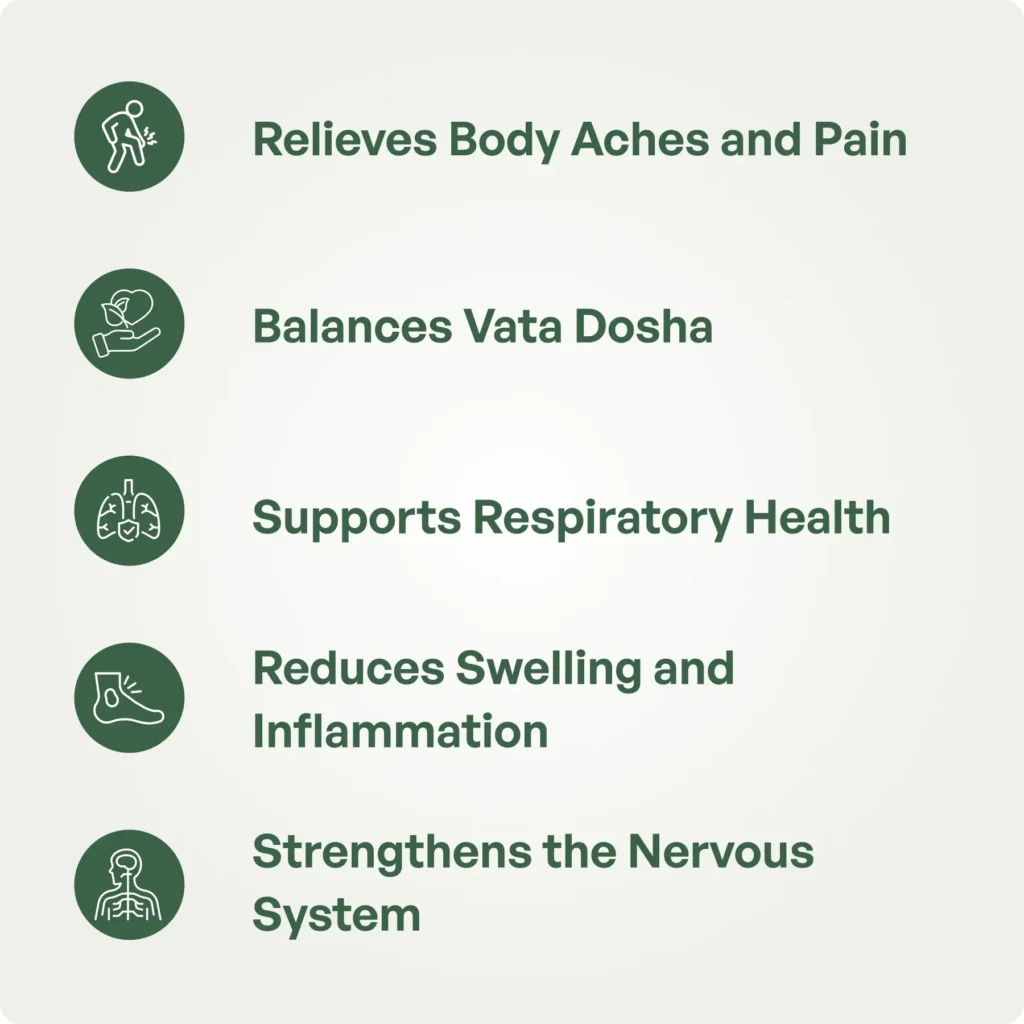
The Dashamoola Kwatha Churna listed by AyurvedaOne is associated with traditional inflammatory and musculoskeletal support. However, evidence specifically showing that it improves postpartum recovery in breastfeeding mothers is insufficient.
Can Dashmoola Kwatha Help With Back Pain After Delivery?
Back pain after delivery is very common. It can come from the strain of pregnancy and labour on the muscles and ligaments, the hormonal changes that loosen joints, weakened abdominal and core muscles, poor posture during feeding, and the repeated lifting of a growing baby.
For many women, it eases over weeks, but it can linger and make daily life harder.
Dashmoola is traditionally used for this kind of Vata-related pain. Its roots are described in Ayurvedic literature as having shothahara (anti-inflammatory) and vedanasthapana (pain-relieving) qualities.
Some laboratory and animal studies of Dashmoola ingredients have reported anti-inflammatory and pain-related activity. However, these findings do not establish that Dashmoola Kwatha effectively treats postpartum back pain in humans.
Depending on what a physician advises, traditional care may include a kwatha, other formulations, or external applications using medicated oils.
AyurvedaOne also lists Rasna Churna, a separate Ayurvedic preparation traditionally associated with joint stiffness, body aches, and Vata-related discomfort. It should not be added to a postpartum routine without medical guidance.
Another traditional preparation is Erandamula Kwatha Churna, which AyurvedaOne lists for joint and muscle discomfort. It is not interchangeable with Dashmoola and has not been established as safe or effective for postpartum back pain during breastfeeding.
For a broader comparison of traditional Ayurvedic pain remedies, read Ayurvedic Medicine for Joint Pain: Oils, Tablets, and Home Remedies.
How Can You Manage Postpartum Back Pain Alongside Ayurvedic Care?
No herbal remedy replaces the basics, and these can make a real difference to postpartum back pain:
– Rest as much as you can, and take opportunities for sleep when possible.
– Support your back while feeding, with a pillow under the baby and behind your back.
– Walk gently as your doctor allows, and ask about safe pelvic floor and core exercises.
– Eat warm, freshly cooked, nourishing food, with enough protein, fluids, and iron-rich foods. Persistent weakness or dizziness may warrant investigation for anaemia. AyurvedaOne’s Women’s Health collection includes information about iron-related nutritional support products, but supplements should be chosen based on clinical assessment.
– Use warmth, such as a warm compress on the lower back, and gentle massage if your doctor approves. Avoid the area around a caesarean wound and any area that is inflamed or infected.
– Lift carefully, bending from the knees instead of the waist, and keep the baby close to your body.
– Ask for help, because sharing night feeds and household tasks can protect both your back and your recovery.
Traditional Ayurveda also describes Abhyanga, or oil massage, as part of some postpartum care routines.
AyurvedaOne lists Dhanwantharam Kuzhambu (200ml) and Balashwagandha Lakshadi Taila (200ml) among its traditional Ayurvedic oils for bone, joint and muscle wellness. These have different ingredients and intended uses, and neither should be assumed suitable for application after childbirth without professional advice.
For more general information on medicated oils and their traditional uses, explore the article on Ayurvedic oils and home remedies for joint pain.
How to Use Dashmoola Kwatha Safely After Delivery?
Postpartum is a sensitive phase, so a few precautions matter:
– Start under guidance. The right preparation and quantity depend on whether you had a vaginal or caesarean delivery, your appetite, your recovery, and whether you are breastfeeding. Ask an Ayurvedic physician and your maternity-care clinician instead of using it on your own.
– Tell your doctor if you are breastfeeding, and mention everything you are taking. There is insufficient high-quality evidence to establish the safety of Dashmoola preparations for a breastfed infant.
– Check the alcohol content if choosing Dashmoolarishta, since fermented tonics may contain self-generated alcohol.
– Wait for medical clearance. There is no universally established safe starting day for Dashmoola after delivery. The appropriate timing depends on recovery, medication use, and individual health circumstances.
– Avoid combining multiple herbal preparations. Products such as Rasna Churna or Erandamula Kwatha Churna are separate formulations and should not automatically be combined with Dashmoola.
Before choosing a product, check the ingredient list, intended use, directions, and warnings. You can browse AyurvedaOne’s Bone, Joint & Muscle Health products for formulation information, but postpartum suitability should be assessed individually.





 Blog

 Blog
 Blog
 Blog