
Ayurvedic Hair Care: Best Oils and Remedies for Itchy Scalp
MD in Panchakarma | 16+ Years of Experience
Table of Content
An itchy scalp is one of those problems that is easy to ignore until it isn’t: the constant urge to scratch, flakes on your shoulders, a tight, dry or sometimes greasy feeling, and hair that suddenly feels unhealthy. It is also very common. Ayurveda has a long tradition of scalp care built around oils, herbs, and gentle cleansing. Here is why the scalp itches, which Ayurvedic oils and remedies are used for it, and how to use them well.
Why Does the Scalp Itch? The Ayurvedic and Modern View
In Ayurveda, a flaky, itchy scalp is called Darunaka, classically described as a condition with dryness, itching, flaking, and sometimes hair fall. Ayurveda links it to dryness and imbalance in the scalp, made worse by dry weather, harsh products, stress, irregular routines, and weak digestion.
Modern medicine agrees that several things can lie behind it:
- Dandruff and seborrheic dermatitis: the most common cause. Yeast that naturally lives on the scalp overgrows and irritates the skin, causing flaking and itching
- Dry scalp: from dry weather, hot water, or over-washing
- Reactions to hair products: shampoos, dyes, and styling products can irritate or trigger allergy
- Other skin conditions: eczema and scalp psoriasis
- Infections and infestations: fungal infection (ringworm) and head lice
This matters because the right remedy depends on the cause, and a few of these need medical treatment rather than home care.
The Best Ayurvedic Oils for an Itchy Scalp
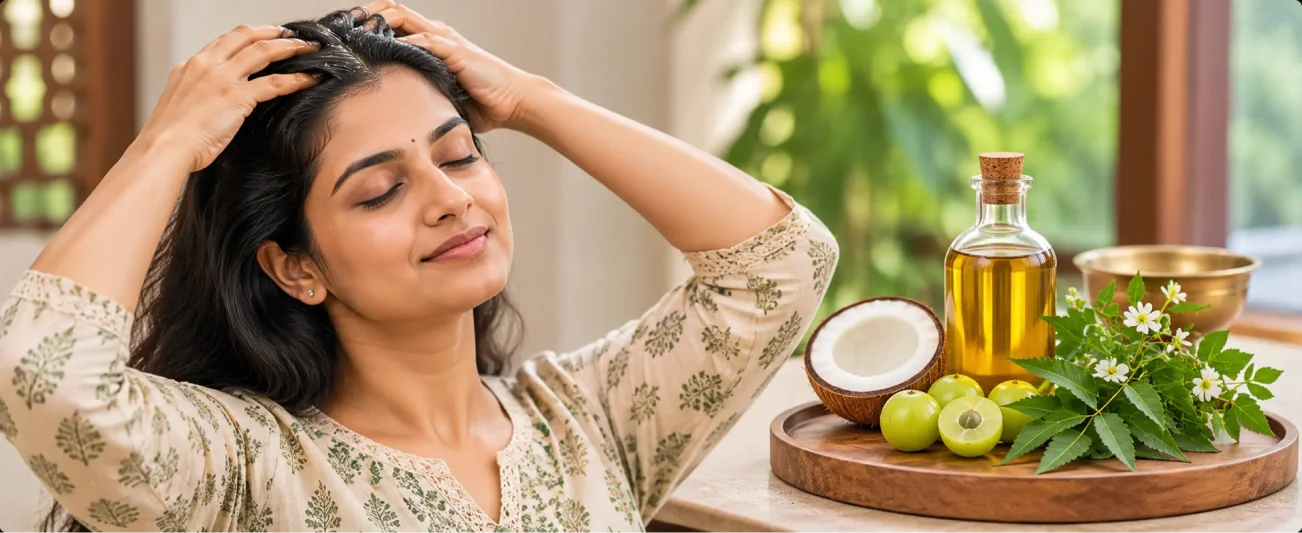
- Coconut oil: a gentle, cooling, moisturising base oil, especially helpful when the scalp is dry or the weather is hot
- Sesame oil (Tila taila): the classical Ayurvedic base for head massage, warming and nourishing, and well suited to dry scalps and cold weather
- Bhringaraja taila: made from Bhringraj (Eclipta alba), the best-known Ayurvedic herb for scalp and hair. It is traditionally used for dandruff, scalp health, and hair fall
- Neem oil (Nimba taila): neem is traditionally valued for skin and scalp conditions that itch. It has a strong smell, so it is usually used mixed into a carrier oil
- Amla oil: cooling and nourishing, traditionally used to soothe a hot, irritated scalp and support hair strength
- Brahmi oil: calming, traditionally used for stress, which can trigger or worsen scalp problems
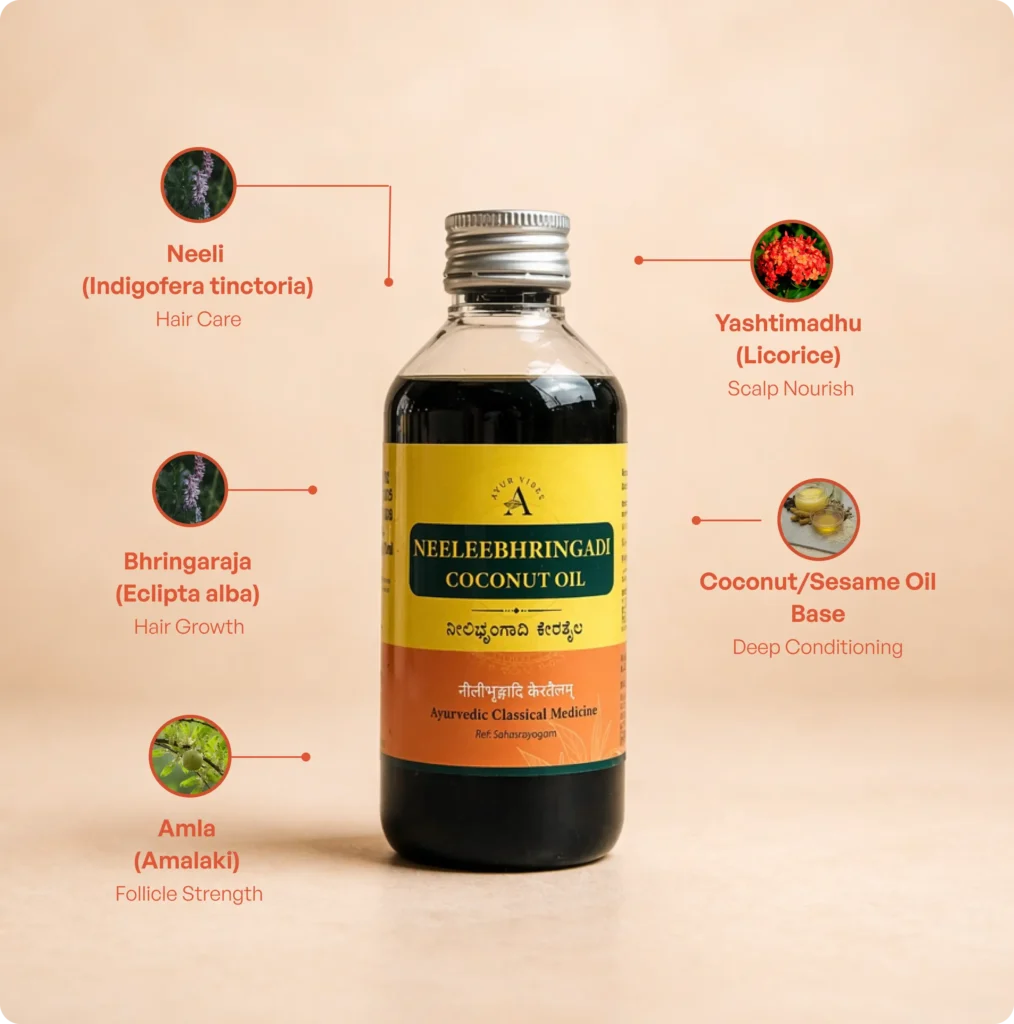
If you prefer a ready-made classical hair oil, AyurvedaOne also lists Neelibhringadi Taila, a traditional hair oil used for scalp dryness and hair fall. For a simple single-herb option, Bhringaraja Churna is another option for scalp and hair support and should be used as directed by an Ayurvedic practitioner.
Classical Medicated Oils for the Scalp
These are traditional formulations, mostly from the Kerala and classical texts, prepared for specific scalp problems:
- Chemparuthyadi taila: a coconut oil-based preparation from the classical text Sahasrayogam, made with hibiscus, tulsi, betel leaf, bael leaf and other herbs. It is traditionally used for itchy, flaky scalps, dandruff, and skin conditions that itch, and is considered gentle enough that it is also used for children
- Dhurdhurapatradi taila: a classical sesame oil preparation made with the leaf juice and seeds of Dhurdhura (Datura metel). It is traditionally used for scalp itching, dandruff and hair fall. In a 28-day study of 40 people with dandruff using a Dhurdhura-based oil, about 9 in 10 showed improvement. This oil is strictly for external use, should be washed off thoroughly, kept away from the eyes, and used only under an Ayurvedic physician’s guidance
- Malatyadi taila: a classical sesame oil preparation described in the Chakradatta, made with jasmine (Malati) leaves, Karanja seeds, and the roots of Karaveera and Chitraka. It is one of the oils classically prescribed for Darunaka (dandruff). In a 28-day study of 40 people with dandruff who massaged their scalp daily with it, 8 in 10 had complete relief of their symptoms and most of the rest improved. Its roots are potent plants that are traditionally purified before use, so it is for external use only, and should come from a reputable maker and be used under a physician’s guidance
- Keechakadi taila: another classical oil prepared specifically for Darunaka (dandruff)
How to Use Oil on an Itchy Scalp
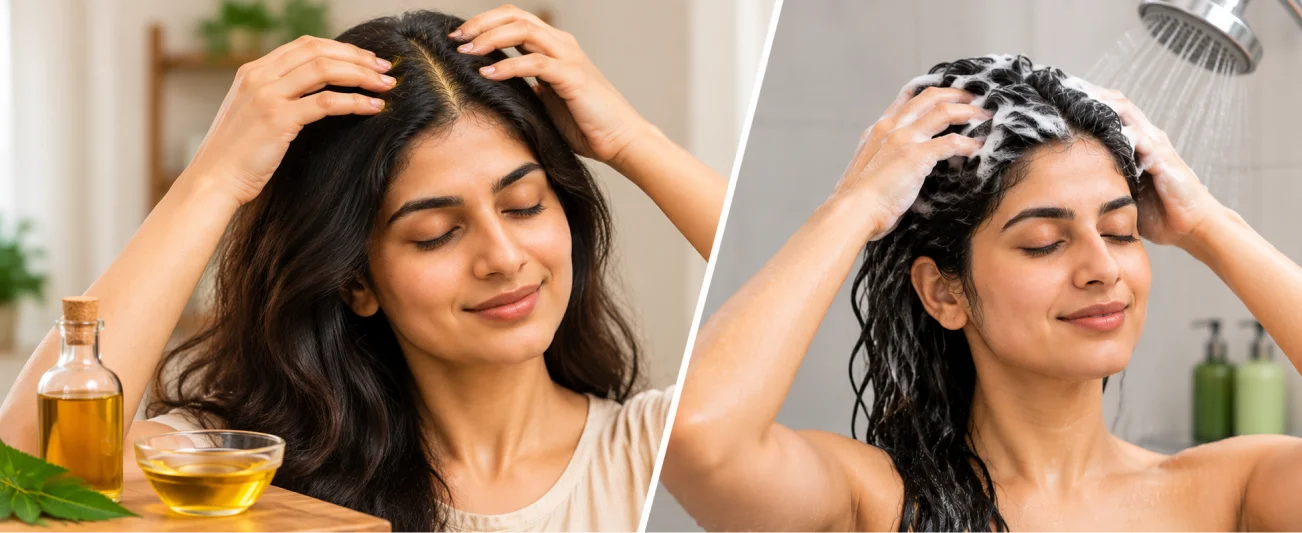
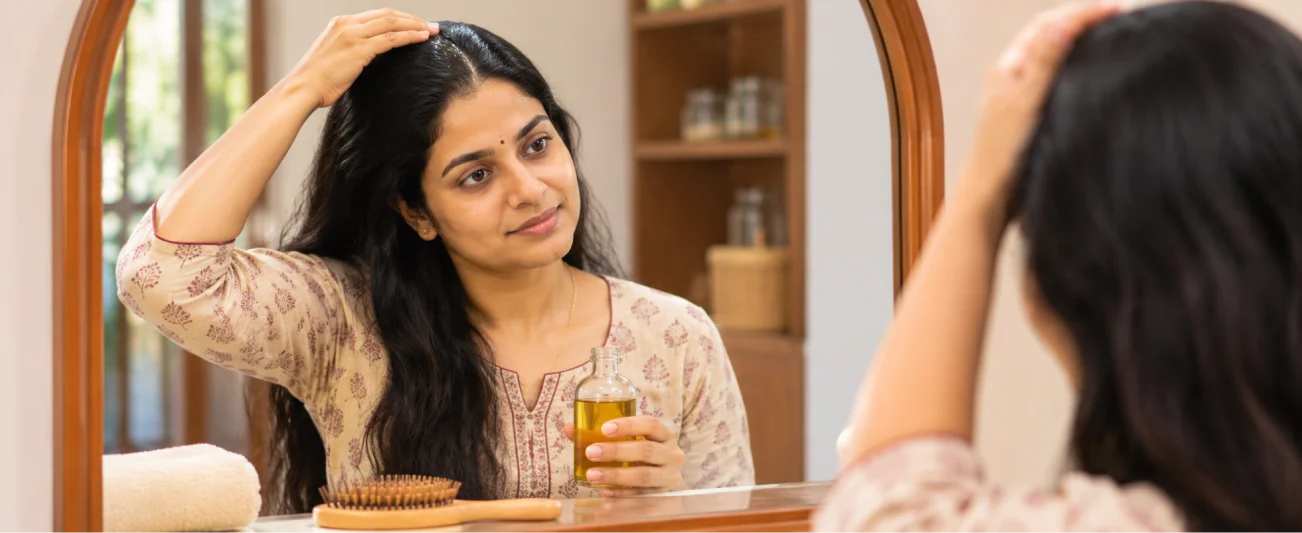
- Warm the oil slightly, part your hair, and massage the scalp gently with your fingertips, not nails
- Leave it on for a short time, usually at least 30 minutes for medicated oils, then wash with a mild shampoo or a gentle herbal wash and lukewarm water
- Do this once or twice a week, not daily, unless your physician advises otherwise
- Do a patch test on a small area first, especially with medicated or neem oils
- If your scalp is oily and flaky, do not leave oil on overnight. Some scalp yeast thrives on oils, so for oily dandruff a short oil massage before washing works better than a long one
Ayurvedic Remedies Beyond Oils
- Aloe vera gel: soothing and cooling. In a trial of 44 adults with seborrheic dermatitis, an aloe vera emulsion reduced itching and scaling, with dermatologists rating 58% of the aloe group as improved against 15% on placebo
- Ayurvedic scalp lotions: in a study of 143 adults with mild to moderate dandruff, an Ayurvedic lotion used for 30 days brought average flaking scores down from about 15.7 to 5.4, and the discomfort dandruff caused in daily life eased as well
- Fenugreek (methi): soaked seeds ground into a paste and used as a scalp mask are a traditional remedy for dandruff and dryness
- Neem leaf rinse: neem leaves boiled in water and cooled, used as a final rinse after washing
- Natural cleansers: gentle traditional cleansers such as shikakai, reetha, and amla, used in place of harsh shampoos
- Herbs for the skin from within: neem, Manjistha, and Guduchi are traditionally used for skin and scalp health, usually as tablets under an Ayurvedic physician’s guidance
For related scalp and hair-care reading, AyurvedaOne’s guide to Ayurvedic remedies for grey hair also discusses Neelibhringadi Taila, Bhringaraja and amla. For skin-focused Ayurvedic options, you can review Manjishta Kwatha Churna and Neem Tablets. Persistent itching, scaling, or hair loss still needs proper assessment, so consult an AyurvedaOne doctor instead of repeatedly changing oils or herbal products.
Everyday Habits That Help
- Wash your hair regularly with a mild shampoo and lukewarm, not hot, water
- Avoid scratching, which damages the skin and invites infection
- Dry your hair and scalp properly, and keep combs, towels and pillow covers clean
- Eat well and manage stress, as both show up on the scalp
- Limit very spicy, fried, and sugary foods if they seem to worsen your itch
- Stop any new hair product that makes your scalp burn or itch
Who Should Be Careful
- Anyone with open sores or broken skin on the scalp should not apply oils or herbal pastes
- Classical oils made with potent plants, such as Dhurdhurapatradi taila (Datura) and Malatyadi taila, are for external use only and must never be swallowed. Keep them away from children and eyes, and use them only as advised by a physician
- Do not use lemon juice, vinegar or raw garlic on the scalp, as they can burn
- Pregnant women and people with allergies should check herbal products before use, and anyone starting a medicated oil during pregnancy should ask their doctor first
- Children should only be given remedies advised by their doctor
When to See a Doctor
Home care is fine for mild itching and flaking. See a doctor or dermatologist if the itch does not improve after a few weeks, if it keeps returning, or if it comes with hair loss, a rash, redness, pain, oozing, or crusting. Thick silvery patches, scaly bald patches (especially in children), spreading to the face or ears, or visible lice also need proper treatment. Some scalp conditions need medicated treatment, and home remedies can sometimes make them worse.
A healthy scalp is the base of healthy hair. With gentle cleansing, the right oil, and patience, most mild itchy scalps settle well.
Related Products


Secure your child’s immunity with Swarnaprashna
Swarnaprashana blends Swarnabhasma with medhya herbs to protect and empower your child’s health.
Frequently Asked Questions
1. Is dandruff the same as itchy scalp?
Dandruff is one of the most common causes of an itchy scalp, but not the only one. Dry skin, product reactions, eczema, psoriasis, fungal infection and lice can all cause itching.
2. How long do Ayurvedic scalp remedies take to work?
Most people judge results over several weeks. Consistent use and a gentle routine matter more than quick fixes.
3. Should I oil my hair if I have dandruff?
For a dry, flaky scalp, a warm oil massage often helps. For an oily scalp, keep the oil on briefly and wash it off thoroughly.
4. Which oil is best for dandruff?
It depends on your scalp. Classical medicated oils like Chemparuthyadi, Dhurdhurapatradi and Malatyadi are traditionally used for dandruff and itch, while plain coconut or sesame oil suits a dry scalp. An Ayurvedic physician can match the oil to your scalp.
Discover your Ayurvedic balance with our doctor consultations, shop by health concern, or take a quick dosha quiz to find what fits you.
Related Blogs
 Heart Health
What Are Cardorium Plus Uses and Its Benefits?
Cardorium Plus is an Ayurvedic herbal formulation made for cardiovascular support. It combines seven herbs traditionally valued for…
Read More
 Joint Pain
Why Does Knee Pain Increase in Cold Weather? Ayurvedic Care Tips
Every winter the same thing happens. The first cold mornings arrive, and your knees complain: stiff when you…
Read More
 General
What Is Abhyanga Massage & Which Oil Is Best for Abhyanga Massage According to Ayurveda?
Abhyanga massage is a traditional Ayurvedic full-body massage with warm oil, applied from the scalp to the soles…
Read More
 General
Vata Dosha in Winter: Symptoms and How to Balance It Naturally
Vata dosha is the Ayurvedic energy of movement, made of air and space. Cold, dry, windy winter weather…
Read More