Fever isn’t a disease on its own; it is usually a sign of an underlying infection or inflammatory condition. When it occurs with fatigue, body aches, chills, reduced appetite, cough, congestion, or throat pain, recovery can become more difficult and the body may feel weak and drained.
While conventional treatment focuses on identifying and treating the cause, many people also look for supportive Ayurvedic supplements to help manage symptoms and support recovery. In Ayurveda, fever is called Jwara and is linked to an imbalance in the body along with reduced digestive strength.
In this blog, we’ll cover Ayurvedic supplements for fever, remedies for cold and cough, dietary advice during recovery, and warning signs that require medical attention, especially in children and older adults.
Understanding Fever in Ayurveda (Jwara)
Ayurveda refers to fever as Jwara. Classical Ayurvedic texts consider it one of the most important health conditions because it affects both the body and the mind. Rather than looking only at body temperature, Ayurveda tries to understand what may be contributing to the imbalance.
Two important concepts often discussed here are Agni and Ama. Agni refers to digestive and metabolic strength, while Ama is an Ayurvedic term used for incompletely digested substances believed to contribute to imbalance in the body.
Ayurveda also describes fever differently depending on the dominant dosha involved:
- Vata-related fever may involve chills, body pain, and dryness.
- Pitta-related fever may present with heat, thirst, and irritability.
- Kapha-related fever may be associated with congestion, heaviness, and mucus.
Of course, real life isn’t always this neat. Many people experience a mix of symptoms, which is why personalised guidance matters so much in Ayurvedic care.
Ayurvedic Medicines and Remedies Traditionally Used During Fever
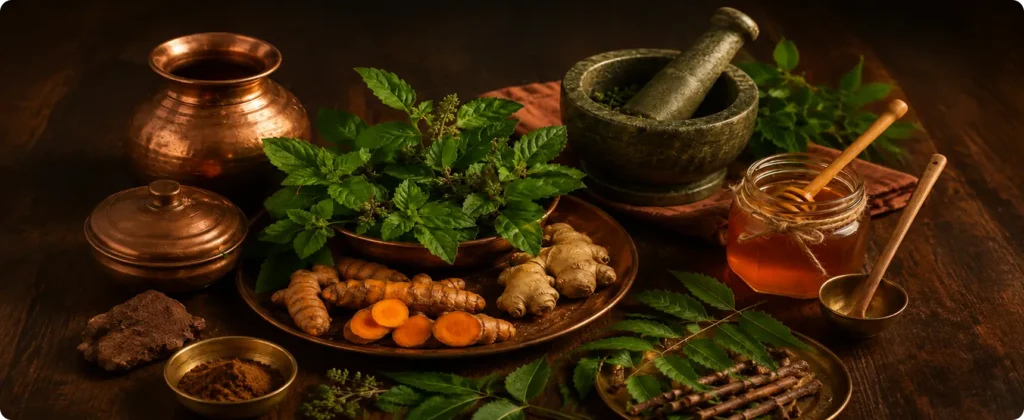
Several herbs and formulations are traditionally used in Ayurveda to support fever management. The choice of medicine usually depends on the person’s symptoms, overall health, and the underlying cause of fever.
NOTE: These remedies aren’t intended to replace medical treatment, especially in cases of high or persistent fever.
1. Guduchi (Giloy)
Guduchi, commonly known as Giloy, is classified in Ayurveda as a Jwaraghna herb and has traditionally been used in fever-related formulations. You can get it as a tablet or a powder.
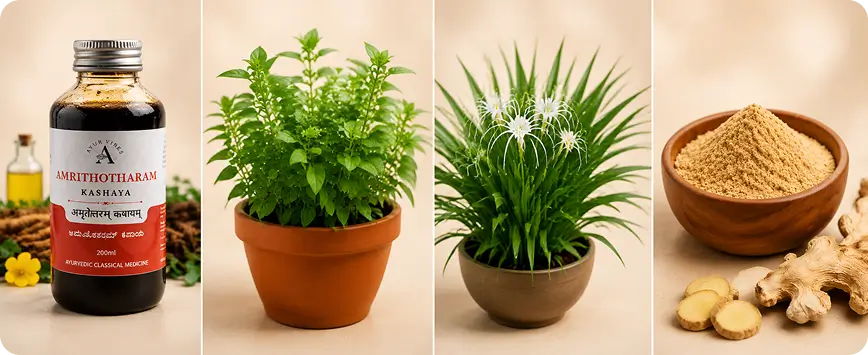
2. Tulsi
Tulsi is widely used in Ayurveda for respiratory support and is commonly recommended when fever occurs with cough, cold, or congestion. It is frequently consumed as a warm herbal preparation during recovery. You can buy tablets here.
3. Sudarshan Churna
Sudarshan Churna is a classical Ayurvedic formulation traditionally used in fever management. Since its suitability varies from person to person, it should only be taken under the guidance of a qualified Ayurvedic practitioner.
4. Dry Ginger (Shunthi)
Dry ginger is commonly used in Ayurvedic preparations for seasonal illnesses, particularly when symptoms include congestion or throat discomfort. It is often included in herbal infusions and formulations used during recovery. You can buy Shunthi Churna here.
These remedies are generally used alongside supportive measures such as adequate rest, hydration, and light, nourishing meals.
Ayurvedic Medicine for Cold, Cough, and Throat Infection During Fever
Fever rarely comes alone. Quite often it arrives with a blocked nose, a stubborn cough, or a throat that feels like sandpaper. Managing these symptoms can make recovery feel much easier.
1. Ayurvedic Medicine for Cold
When congestion and a runny nose appear alongside fever, Ayurvedic care often focuses on reducing heaviness and supporting comfort.
Common approaches include:
- Warm tulsi preparations
- Steam inhalation for congestion relief
- Warm fluids throughout the day
- Adequate rest
Steam inhalation may help loosen mucus and reduce the feeling of blockage, although it does not treat the fever itself.
2. Ayurvedic Remedies for Cough
A cough during fever can be exhausting, particularly at night when sleep is already disrupted.
Some commonly used ayurvedic remedies for cough include:
- Warm ginger preparations
- Honey for adults over one year of age
- Adequate hydration
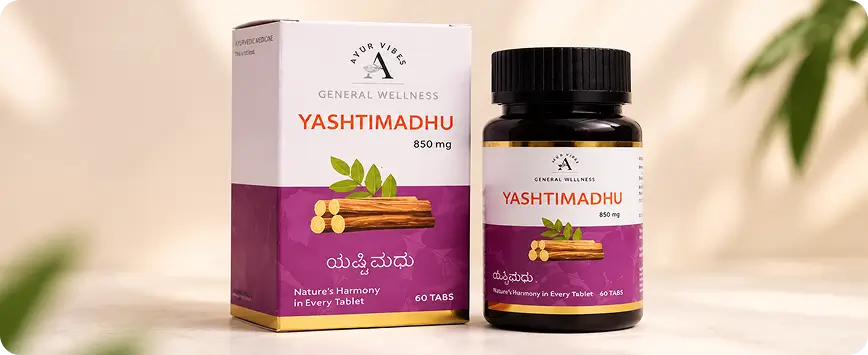
- Yashtimadhu Tablet
Persistent cough that continues for several weeks should always be medically evaluated.
3. Ayurvedic Medicine for Throat Infection
Sore throat is another common companion during fever, especially in viral infections.
Traditional options often discussed in Ayurveda include:
- Yashtimadhu (licorice)
- Warm salt water gargles
- Herbal teas
- Warm soups and fluids
These remedies are intended to support comfort and symptom relief rather than treat the underlying infection. Rest, hydration, and time remain essential for recovery.
What to Eat During Fever According to Ayurveda
Food can feel surprisingly unappealing during fever. Appetite drops, digestion feels slower, and heavy meals suddenly become difficult to tolerate.
Ayurveda generally recommends lighter, easy-to-digest foods during this period.
- Khichdi
- Rice gruel
- Vegetable soups
- Cooked vegetables
- Warm water
- Light homemade broths
These foods are easier on digestion and can help maintain hydration at the same time.
- Fried foods
- Heavy meals
- Sugary drinks
- Processed foods
- Excessively oily foods
When you have a fever, heavy or rich foods can be hard to eat. Smaller, lighter meals are usually easier when your appetite is low.
Lifestyle Practices That Support Recovery
Medicines and remedies matter, but so do the basics. Recovery tends to happen faster when the body gets what it actually needs.
A few simple habits can support the process:
- Prioritise rest and sleep.
- Drink fluids regularly.
- Avoid strenuous exercise.
- Keep the room comfortably ventilated.
- Return to normal activity gradually.
Many people try to jump back into work too soon because they feel slightly better for a few hours. Then the exhaustion comes right back. Giving yourself an extra day of recovery can sometimes save several more days later.
When Should You See a Doctor?
While supportive remedies may help improve comfort during recovery, some symptoms require prompt medical attention.
Seek medical advice if:
- The fever lasts longer than three days.
- The temperature rises above 103°F (39.4°C).
- You experience difficulty breathing.
- There is confusion, unusual drowsiness, or severe weakness.
- Vomiting prevents adequate fluid intake.
- Seizures occur.
These symptoms may indicate an underlying condition that needs medical evaluation and treatment.
Can Ayurvedic Medicine Be Taken Alongside Conventional Treatment?
In many cases, Ayurvedic medicines may be used alongside conventional treatment under professional guidance. However, some herbs and formulations can interact with prescription medicines or may not be suitable for certain health conditions. Always consult your healthcare provider before combining treatments, and do not stop prescribed medicines without medical advice.
Recovering from fever is rarely about finding one magic herb or one perfect remedy. More often, it comes down to giving the body what it needs at the right time. Rest, fluids, simple food, symptom relief, and patience all have a role to play. Ayurveda approaches fever with this broader perspective, looking at the person as a whole rather than focusing only on the thermometer reading.
If you’re looking to support your recovery with trusted Ayurvedic formulations, explore the range of wellness supplements from AyurvedaOne. Our products are developed to support immunity, overall wellbeing, and everyday health concerns using carefully formulated Ayurvedic ingredients backed by quality manufacturing standards. Explore our Shop or opt for personalized guidance with a Consultation with professionals.


 Blog
Blog

 Heart Health
 Joint Pain
 Women’s Health