Bloating and gas can make even a regular day feel uncomfortable. Your stomach may feel heavy or tight after meals, you may burp more than usual, or feel like you need to loosen your clothes. When this keeps happening, it can become frustrating. You may even start avoiding certain foods without knowing what is really triggering the problem.
Eating too quickly, constipation, certain foods, food intolerance and digestive issues can all contribute to gas and bloating. Ayurveda looks at digestion through food choices, daily habits and overall digestive balance. The good news is that a few simple changes may help ease occasional discomfort.
Let’s explore some practical ayurvedic remedies for bloating and gas you can try at home.
How Does Ayurveda View Gas and Bloating?
Ayurveda considers Agni important for healthy digestion. When digestion is disturbed, Ayurveda traditionally associates it with symptoms such as heaviness, bloating, belching and excess gas.
The focus is usually on calming aggravated Vata and supporting digestion through regular meals, suitable foods, warm preparations and simple daily habits. This is why ayurvedic remedies for gas generally focus on improving digestion rather than simply providing temporary relief.
What Causes Bloating and Gas According to Ayurveda?
From an Ayurvedic perspective, bloating and gas are often linked to an imbalance in Vata dosha and irregular digestion. Everyday habits can also affect how comfortably you digest your food.
Common Ayurvedic factors include:
- Eating at irregular times
- Eating too quickly or overeating
- Having too many dry, cold or processed foods
- Eating foods that are difficult for you to digest
- Suppressing natural urges
- Poor or irregular bowel movements
- A disturbed daily routine
- Weak or irregular Agni, or digestive fire
Let’s look at the remedies that can help in relieving bloating and gas.
Ayurvedic Remedies for Bloating and Gas You Can Try at Home
Ayurveda focuses on supporting digestion through simple food and lifestyle habits. If you have occasional bloating or gas, these everyday remedies may help settle your stomach without making your routine complicated.
1. Sip Warm Water
Warm water is a simple Ayurvedic practice that can fit into your daily routine. Sip it through the day, especially if constipation is adding to your discomfort.
2. Add Ginger to Your Meals
Ginger is traditionally used in Ayurveda to support digestion. Add fresh ginger to your meals or have a mild ginger drink after eating if it suits you.
There is no need to use large amounts. Keep it as part of your regular diet rather than relying on concentrated supplements.
3. Include Cumin or Jeera
Cumin is an easy way to add a traditional digestive spice to your meals. Use it while cooking dals, vegetables, soups or other everyday dishes.
You can also have a mild cumin drink after a meal. Keep the preparation simple and moderate.
4. Try Ajwain
Ajwain is traditionally used for gas and digestive discomfort. You can add it to your food or have a small amount after a meal when needed.
If you find yourself reaching for ajwain regularly because of recurring stomach pain or bloating, it is better to look into the underlying cause.
5. Have Fennel After Meals
Fennel seeds are traditionally used after meals to support digestion. You can chew a small amount or prepare a mild fennel infusion.
These ayurvedic remedies for bloating and gas are easy to include in everyday life. However, your meal size, eating pattern and food choices matter too, so it is worth looking at those habits alongside these remedies.
Which Ayurvedic Medicine Can Help With Bloating and Gas?
If bloating and gas keep coming back, small changes to your diet may not always be enough. Ayurveda takes an individual approach, so the right medicine depends on your symptoms, digestion and overall health.
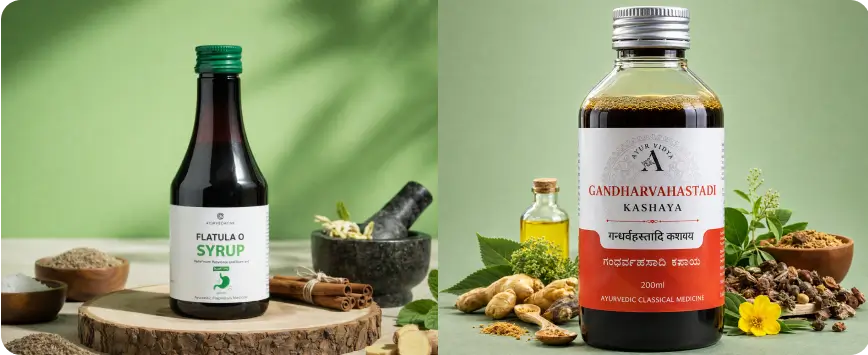
Some options available from AyurvedaOne include:
- Flatula O Syrup: It’s formulated with Ajamoda, Amalaki, Chitrakamoola and Jeeraka. AyurvedaOne lists it for gas formation, trapped gas, abdominal distension, stomach discomfort and acidity. It’s taken after meals as directed by a healthcare provider.
- Gandharvahastadi Kashayam: It’s listed for constipation, bloating, gas and sluggish bowel movements. It contains ingredients such as Gandharvahasta, Triphala, Shunthi and Saindhava Lavana. It’s best used as directed by an Ayurvedic physician.
If you’re unsure which option is right for you, it’s better to consult an Ayurvedic practitioner before starting any medicine. And if bloating or abdominal discomfort keeps returning, don’t ignore it.
4 Dietary Habits to Reduce Bloating and Gas
Your eating habits can make a noticeable difference to digestive comfort. Start with these four changes and see how your stomach responds.
1. Eat Slowly
Rushing through a meal can make you swallow more air, which may add to gas and bloating. Slow down, chew your food properly and give yourself enough time to finish your meal comfortably.
2. Track Triggers
Beans, lentils, cabbage, fizzy drinks and some sweeteners can cause gas in some people. Your own triggers may be different, so don’t remove foods from your diet without a reason.
Keep a simple food diary for a few days. Note what you eat and how your stomach feels afterwards. This can help you spot foods that repeatedly cause discomfort.
3. Watch Portions
A very large meal can leave you feeling heavy and bloated. Keep your portions moderate and try to eat at fairly regular times.
You may also want to avoid heavy meals close to bedtime, especially when night-time bloating is a regular problem.
4. Manage Constipation
Constipation can leave stool and gas sitting in the digestive tract, making bloating worse. Drink enough water, include suitable fibre in your meals and stay active throughout the day.
Frequent constipation needs more than repeated home remedies. Get professional advice if it keeps coming back or happens alongside persistent bloating.
These habits can support natural remedies for stomach gas by helping you address common triggers through your everyday routine. A little movement can also help when your stomach already feels heavy or uncomfortable.
3 Lifestyle Practices for Gas Relief
You don’t need a complicated routine to support digestive comfort. Gentle movement and a few simple practices can help you manage occasional bloating and trapped wind.
1. Take a Walk
A 10 to 15-minute walk after a meal can help you stay active and may ease that heavy, full feeling. Keep the pace comfortable and avoid strenuous exercise straight after eating.
2. Try Gentle Yoga
Child’s pose, a seated twist and a gentle knees-to-chest movement can help you relax when you’re feeling gassy. Move slowly and stay within a comfortable range.
Stop if you feel pain. These movements should feel gentle, not forced.
3. Massage Gently
A light abdominal massage may help when you’re dealing with trapped wind or constipation. Use gentle, circular movements and avoid pressing hard on your stomach.
Stop if the massage causes pain or makes your symptoms worse. Persistent or painful bloating needs proper attention rather than repeated self-treatment.
Together, these habits can support natural remedies for gas relief while keeping your routine simple. And when gas or bloating becomes frequent, looking at the underlying cause matters more than finding a quick fix each time.
When Should You See a Doctor for Bloating and Gas?
Occasional gas is normal, but recurring or persistent bloating needs attention. See a doctor if it doesn’t improve with dietary changes or keeps returning.
Seek medical advice if you also have:
- Unexplained weight loss
- Blood in your stool
- Persistent constipation or diarrhoea
- Repeated vomiting
- Ongoing abdominal pain
- Abdominal swelling
- Fever
Get urgent medical help for severe, sudden abdominal pain with vomiting, or if you can’t pass stool or gas. Home remedies may help occasional discomfort, but don’t use them to delay medical care when symptoms persist or worsen.
Conclusion
Bloating and gas often call for a closer look at your eating habits, meal portions, hydration and daily routine. Simple Ayurvedic practices such as ginger, cumin, ajwain and fennel can support comfortable digestion when used appropriately.
When the discomfort keeps returning, don’t keep guessing. AyurvedaOne offers Ayurvedic products and doctor consultations, helping you choose an approach suited to your needs instead of picking a product at random.




 Blog
Blog

 Heart Health
 Joint Pain
 Women’s Health