Kidney stones are painful, and if you’ve had one, you already know how disruptive they can be. While Ayurveda has long recommended certain herbs and lifestyle habits for supporting urinary health and reducing stone recurrence, it’s worth being upfront about something important: these remedies work best for prevention and mild support, not for actively treating a stone that’s already causing severe pain or blocking urine flow. Here’s what genuinely helps, and where the line is.
Water Is Still Your Best Defense
Before any herb, hydration is the single most effective thing you can do to prevent kidney stones. Drinking enough water dilutes the concentration of minerals in urine, making it much harder for crystals to form and clump together into stones. Aim to drink water consistently through the day rather than all at once, and pay attention to your urine color pale yellow generally means you’re well hydrated.
Lemon and Citrus: Simple, Science-Backed Prevention
This one’s genuinely easy to build into your day. Lemon juice is rich in citrate, a compound that helps prevent calcium from binding together and forming stones in the first place. A glass of warm water with fresh lemon juice, taken regularly, is one of the simplest and most evidence-supported habits for reducing stone risk especially for the most common type, calcium oxalate stones.
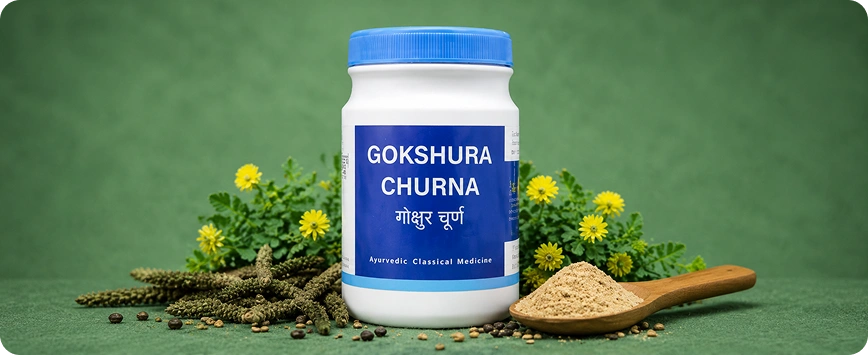
Gokshura (Tribulus terrestris): A Traditional Urinary Tonic
Gokshura has long been used in Ayurveda to support healthy urine flow and ease irritation in the urinary tract. It’s classified as a natural diuretic, and its traditional use for urinary health is well documented. It’s often taken alongside other kidney-supportive herbs, and is available as an easy-to-take tablet for those who want a consistent daily habit rather than preparing a decoction.
Punarnava (Boerhavia diffusa): Supports Healthy Urine Flow
Punarnava is another cornerstone herb in Ayurvedic urinary care, valued mainly for its gentle diuretic action. By supporting healthy urine output, it may help flush out the kind of small mineral particles that could otherwise build up over time. It’s commonly combined with Gokshura in traditional formulations, and works well as a daily tablet alongside good hydration habits.
Varuna (Crataeva nurvala): Ayurveda's Go-To Herb for Urinary Tract Support
Varuna holds a special place in classical Ayurvedic texts specifically for urinary and stone-related concerns. It’s traditionally used to support smooth urine flow and ease general urinary discomfort. Modern interest in Varuna has grown alongside its traditional reputation, and it’s frequently included in Ayurvedic formulations aimed at long-term urinary tract support.
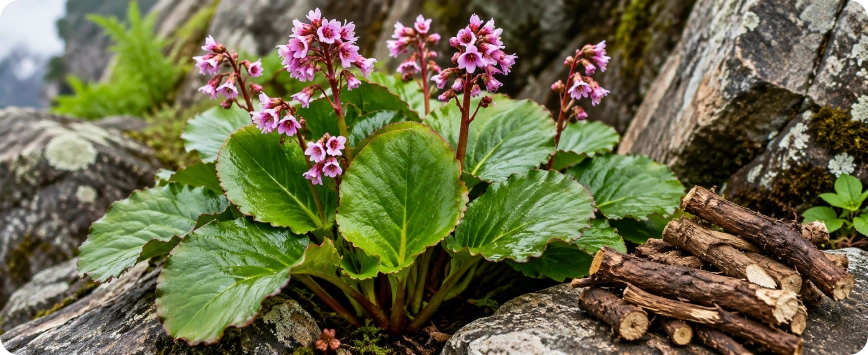
Pashanabheda: The "Stone Breaker" Herb
Pashanabheda’s name literally translates to “stone breaker,” and it’s one of the most specifically stone-focused herbs in Ayurvedic tradition. Research has found that it helps inhibit the formation and clumping of calcium oxalate crystals — the type responsible for most kidney stones — and supports this partly through its antioxidant activity, which helps protect kidney tissue from the oxidative stress that stone formation can cause. It’s traditionally taken as a decoction, though standardized tablet forms are now widely available and much easier to incorporate into a daily routine.
One honest caveat worth knowing: there’s long been some botanical debate over exactly which plant qualifies as “true” Pashanabheda, since a few different species have historically been used under this name. If you’re choosing a Pashanabheda-based product, it’s worth checking that it’s sourced from a verified, standardized extract.
Kulattha, more commonly known as horse gram, is unusual on this list because it’s also a food — a small legume that’s been part of Indian diets for centuries, particularly in regions where kidney stones are more common. Research has found that horse gram extract shows genuine antiurolithiatic activity, helping prevent the nucleation and clumping of calcium oxalate crystals. In studies comparing it with other stone-supportive plants, horse gram-based combinations have shown a meaningful reduction in stone-related markers.
Practically speaking, this is one of the easiest additions to make: horse gram can be cooked into a simple soup or dal and eaten a few times a week, making it a natural, food-based way to support stone prevention alongside any tablet or supplement you’re already taking.
If you’ve had a kidney stone before, or want to reduce your risk of one, small consistent habits matter more than any single remedy:
Drink water consistently through the day, not just when you feel thirsty
Add lemon water to your routine, especially in the morning
Cut back on excess salt and very high-oxalate foods (like large amounts of spinach or nuts) if stones have been an issue for you before
Avoid holding in urine for long periods
Consider a Gokshura or Punarnava-based tablet as part of a daily routine if you’re prone to recurring stones
This is important: herbs and hydration are genuinely helpful for prevention and mild support, but they are not a substitute for medical care if you’re dealing with an active stone. You should see a doctor promptly, not try to manage it with herbs alone, if you experience:
Severe, sharp pain in your back or side that comes in waves
Blood in your urine
Fever or chills along with urinary pain
Nausea or vomiting alongside the pain
Difficulty or inability to urinate
Larger stones or ones causing blockage often need medical intervention, and untreated infections linked to kidney stones can become serious quickly. Ayurvedic approaches work best as ongoing prevention and gentle support — not as a way to manage a stone that’s actively causing a problem.







 Joint Pain

 Women’s Health
 Digestive Health
 General