Managing blood sugar is a daily job, and most people with high sugar levels want a routine that works with their diet and medication, not against it. Madhuhar Churna is a polyherbal powder from AyurvedaOne, formulated for blood sugar support. This guide covers what is in it, what the research on those ingredients says, what a published case report showed, and how to use it responsibly.
If you are exploring Ayurvedic approaches to managing glucose levels, understanding the role of Ayurveda in diabetes treatment can help you see how herbal formulations, diet and lifestyle may complement conventional medical care.
What Is Madhuhar Churna?
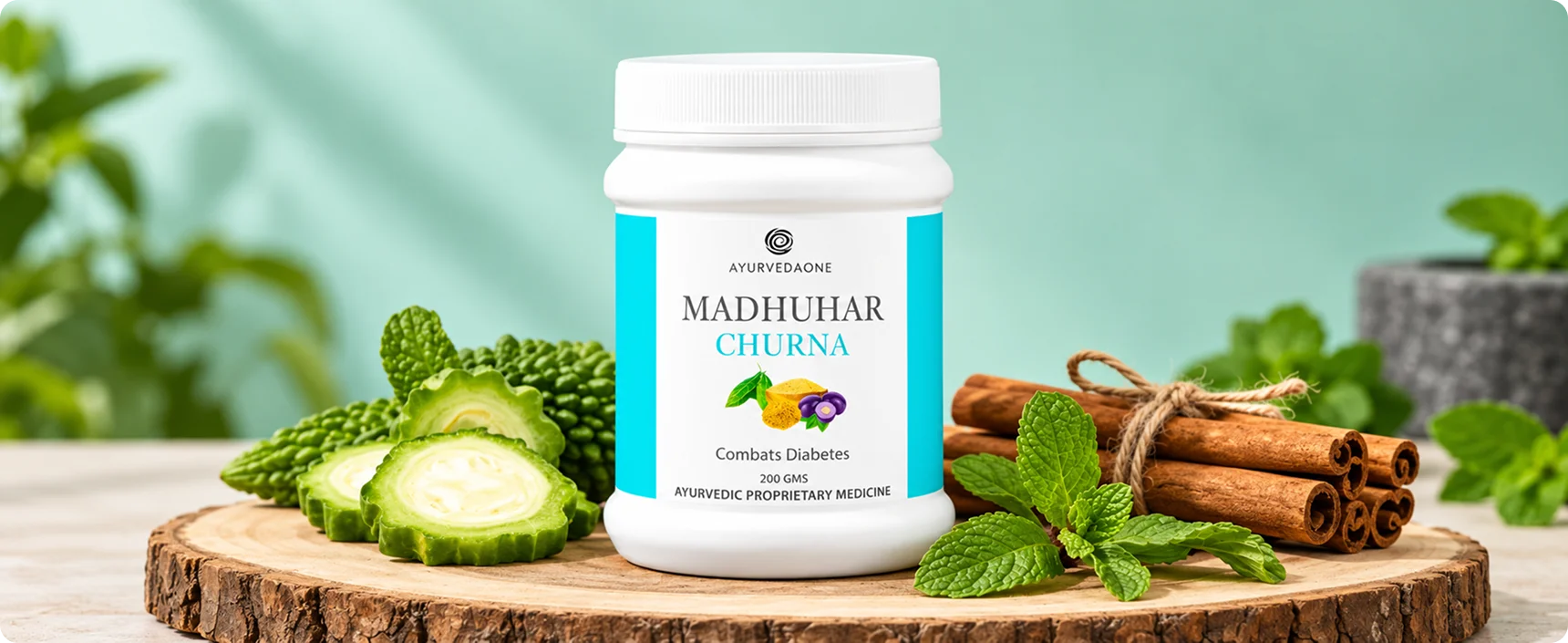
Madhuhar Churna combines twelve herbs that Ayurveda has long used for Madhumeha, the classical term for diabetes. Instead of relying on one herb, the formula brings together plants that may influence different parts of the sugar-handling process: insulin release, glucose uptake in cells, digestion of starch, and the oxidative stress that high sugar puts on the body.
The formulation is available as Madhuhar Churna (200gm) through AyurvedaOne. You can also explore its Diabetes & Blood Sugar Management range to understand the different Ayurvedic formulations available for metabolic wellness.
The 12 Ingredients and What Research Says About Them
Jambu (Syzygium cumini): Reviews describe possible benefits for metabolic syndrome, including blood sugar support. Jambu, commonly known as Jamun, has a long history of traditional use in Ayurvedic approaches to glucose management.
Methika (Fenugreek): A clinical study in people with prediabetes found fenugreek seed powder lowered progression to diabetes. Fenugreek is also valued for its fibre content and potential effects on carbohydrate metabolism.
For those interested in learning about this ingredient individually, AyurvedaOne also offers Methika Churna (Fenugreek Seed Powder).
Karavellaka (Bitter melon): Reviewed for its potential effects on type 2 diabetes, including mechanisms related to glucose uptake. Human evidence remains mixed.
Bitter melon is also known as Karela and is traditionally used in Ayurvedic metabolic wellness routines. You can explore Karela Churna to understand how this ingredient is offered as a standalone herbal powder.
Meshashrungi (Gymnema sylvestre): Called the “sugar destroyer” in traditional use, and reviewed for its potential role in diabetes care.
Gymnema is also known as Madhunashini or Gudmar. AyurvedaOne offers Madhunashini Tablets as another Ayurvedic formulation associated with traditional blood sugar support.
Nimba (Neem): Published research has investigated its potential effects in type 2 diabetes, including anti-inflammatory and antioxidant activity. However, further clinical evidence is needed to establish its effectiveness.
Guduchi (Giloy): Studied for protecting nerves in experimental diabetes, relevant to research on long-term complications like neuropathy. These findings do not establish that it prevents diabetic nerve damage in people.
You can read more about this herb in AyurvedaOne’s Giloy benefits, uses and side effects guide. The website also offers Guduchi Churna as a standalone herbal preparation.
Chirayata (Swertia chirayita): Extracts have been reviewed for their possible role in managing diabetes and related metabolic disorders.
Bilwa (Aegle marmelos): A compound from the plant showed blood sugar-lowering, lipid-lowering and antioxidant effects in animal studies.
Saptaparna (Alstonia scholaris): Showed an antidiabetic effect in animal studies.
Latakaranja (Caesalpinia bonduc): Laboratory work shows it inhibits enzymes that break starch down into sugar.
Shuddha Shilajit: Lowered blood glucose and improved lipid profiles in animal studies.
Shilajit is also traditionally associated with energy and general wellness. For more information on its traditional applications and precautions, read How to Use Shilajit: Benefits, Dosage and Side Effects.
Katuki (Picrorhiza kurroa): Traditionally used for liver and metabolic support.
How It May Help
Taken together, these herbs are thought to support pathways involved in insulin secretion, pancreatic beta-cell function, cellular glucose uptake, starch digestion, and oxidative stress. However, these proposed mechanisms are largely based on individual ingredient studies, and they do not establish that Madhuhar Churna itself improves these outcomes in clinical trials.
Several ingredients have also been studied for their effects on lipid levels, which matters because diabetes and abnormal cholesterol levels often occur together.
If cholesterol is also a concern, AyurvedaOne’s guide to Ayurvedic medicine for cholesterol discusses lifestyle measures and traditional herbs associated with cardiovascular wellness.
What a Published Case Report Showed
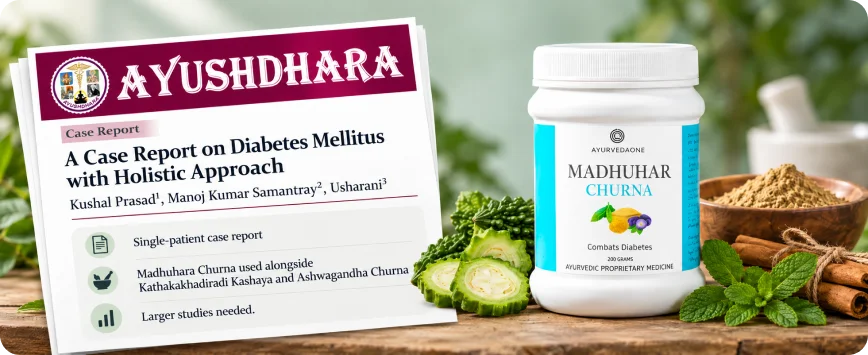
Madhuhar Churna was part of the regimen in a case report published in the journal AYUSHDHARA in 2025. A 76-year-old man with long-standing type 2 diabetes and poor control was given Madhuhar Churna, Ashwagandha Churna and a traditional decoction, Kathakakhadiradi Kashaya. At follow-up, the authors reported improvements in HbA1c and mean blood glucose. No adverse events were reported.
It is a single patient, he remained on his prescribed diabetes medicines throughout, and he was also taking other Ayurvedic preparations and following an active lifestyle. The authors themselves note that a larger study is needed before conclusions can be drawn. It is encouraging, not proof.
Readers interested in the formulation can review the Madhuhar Churna product details and research information on AyurvedaOne. The product page also includes ingredient highlights and usage guidance.
How to Use Madhuhar Churna
- Take it as directed on the Madhuhar Churna product label or by your Ayurvedic physician. Follow the recommended method of mixing it with warm water when appropriate.
- Use it consistently only under appropriate professional guidance. The timeframe and extent of any potential benefit are not established.
- Pair it with a fibre-rich, low-refined-sugar diet and regular movement, since no formulation replaces these.
- Keep checking your blood sugar and HbA1c on your doctor’s schedule so you can see how you are actually responding.
- Do not stop or reduce your prescribed medicines on your own; any change should come from your doctor based on your readings.
For more guidance on maintaining a balanced routine, read AyurvedaOne’s article on natural blood sugar control through Ayurvedic diet, herbs and lifestyle.
Who Should Be Careful
Several ingredients, including fenugreek, bitter melon and Gymnema, may lower blood sugar on their own. If you take diabetes medicines or insulin, the combined effect may increase the risk of low blood sugar, so tell your doctor before starting.
Check with your doctor first if you are pregnant or breastfeeding, have significant liver or kidney disease, or are preparing for surgery. Watch for symptoms of low sugar: sweating, shakiness, sudden hunger, dizziness, or confusion.
Although herbs such as Guduchi (Giloy) and Shilajit are widely discussed in Ayurveda, their suitability depends on a person’s medical history, medications and overall health.
Do not combine multiple blood sugar-support supplements without professional guidance. AyurvedaOne’s diabetes wellness products include different formulations, but they should not automatically be used together.
When to See a Doctor
Herbal support is meant to complement medical care, not replace it. See your doctor if your fasting or post-meal readings stay high despite treatment, if you have excessive thirst, frequent urination, unexplained weight loss, blurred vision, or slow-healing wounds, or if you experience repeated low sugar episodes.
If you are considering Ayurvedic support, you can explore AyurvedaOne’s consultation options alongside your existing diabetes care plan. Decisions about supplements should be based on your medical history, current medications and blood sugar readings.




 Heart Health

 General
 Women’s Health
 Women’s Health