It usually starts small. A tickle in your throat halfway through a meeting, a bit of scratchiness by dinner, and then you’re awake at 2 a.m. coughing into your pillow. In many Indian homes, the first thing someone does is pick a few leaves from the tulsi plant.
Using tulsi for cough is one of the most familiar Ayurvedic home remedies. Some families prefer their grandmother’s kadha, while others prepare tulsi tea or choose herbal tablets for convenience.
This guide covers five common ways to use tulsi, what you can expect from each method, and when a cough requires medical attention. For a broader understanding of traditional remedies, read AyurvedaOne’s Ayurvedic Treatment for Cold and Cough at Home.
Quick Answer: Tulsi (holy basil) is traditionally used in Ayurveda for cough, cold and throat discomfort. Common preparations include kadha, tea, tulsi with honey, herbal salt-water gargles and tablets. Warm fluids, honey and salt-water gargling may provide temporary comfort, but strong clinical evidence that tulsi itself treats or cures a cough is lacking.
What Is Tulsi, and Why Do People Use It for Cough and Cold?
Tulsi is a fragrant member of the basil family, known botanically as Ocimum tenuiflorum (or Ocimum sanctum). Ayurveda has long used it to support breathing comfort, which explains why tulsi for cough and cold is still such a common habit.
Classical Ayurveda tends to link heavy, mucus-filled coughs and colds to an imbalance of Kapha dosha. Tulsi is warm and pungent by nature, so it’s traditionally used to help bring Kapha back into balance.
On the science side, tulsi leaves contain compounds like eugenol and rosmarinic acid, which researchers have studied in the lab for antioxidant and anti-inflammatory activity. A 2017 systematic review looked at 24 human studies and found some favourable effects in areas like stress and metabolic health, with no serious side effects reported. The authors were careful, though. They said larger and better-designed trials were needed, and tulsi hasn’t been proven as a treatment for cough or the common cold.
So it’s fair to see tulsi as a comforting, traditional companion to rest and fluids, not a cure. If you want a broader look at household options, AyurvedaOne’s guide to Ayurvedic treatment for cold and cough is a good place to start.
How to Use Tulsi for Cough: 5 Simple Ways
If you’ve wondered how to use tulsi for cough without fussing over complicated recipes, these five options should help. They go roughly from the most traditional to the most convenient. The quantities are everyday kitchen amounts for healthy adults, not medical doses.
1. Tulsi Kadha
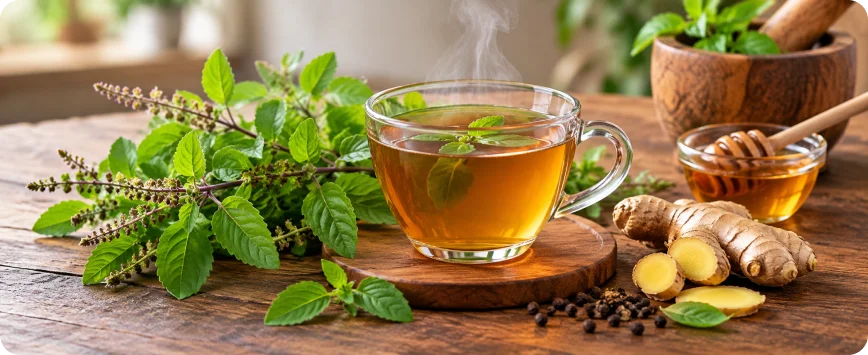
Kadha is a warm decoction, herbs and spices simmered in water until the flavours come through. Ask around and most people will tell you this is how their family used tulsi when someone caught a cold.
You’ll need:
- 5–7 fresh tulsi leaves, washed
- 2–3 thin slices of fresh ginger
- A small pinch of crushed black pepper (optional)
- 1 teaspoon of honey (optional; only for adults and children over one year)
How to prepare: Add the tulsi leaves and ginger to water and simmer gently for 5–10 minutes. Add the pepper if desired, strain the liquid, and let it cool until comfortably warm. Stir in the honey if using it.
The warmth of the kadha may temporarily soothe throat irritation. However, excessive ginger or pepper can aggravate acidity or an already sensitive throat.
For a broader overview of herbs and home-care practices used during seasonal illnesses, explore Ayurvedic Treatment for Cold and Cough.
2. Tulsi Tea
Kadha can be a bit much for some people. Tulsi tea is lighter, and it’s what many reach for when they want tulsi for cold symptoms like a runny nose or a blocked feeling.
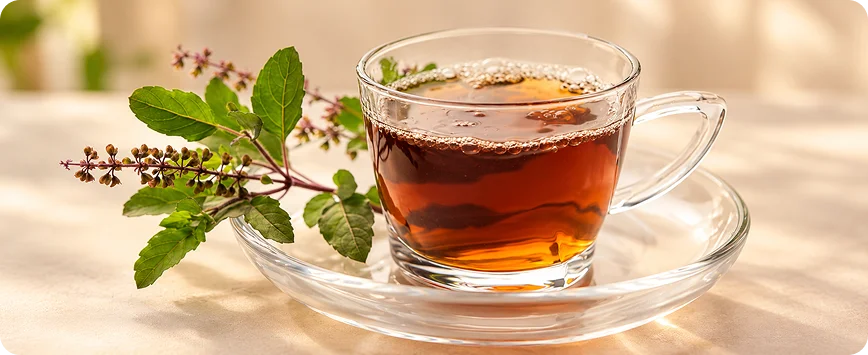
How to prepare: Boil one cup of water, turn off the heat, and add 4–6 washed tulsi leaves or approximately one teaspoon of dried tulsi. Cover the cup, let it steep for 5–7 minutes, and strain before drinking.
Much of the comfort associated with tulsi tea may come from warmth and hydration rather than a proven medicinal effect against cold viruses. You can add a little lemon if acidic drinks don’t irritate your throat.
Alongside warm drinks, good nutrition, adequate sleep and hydration remain important during seasonal illness. AyurvedaOne’s guide on How to Improve Immunity Naturally explains these everyday habits in more detail.
3. Tulsi With Honey
A dry cough is the irritating kind: little or no mucus, just a tickle that won’t quit. When people talk about tulsi for dry cough, they usually mean a mild tulsi infusion mixed with honey.
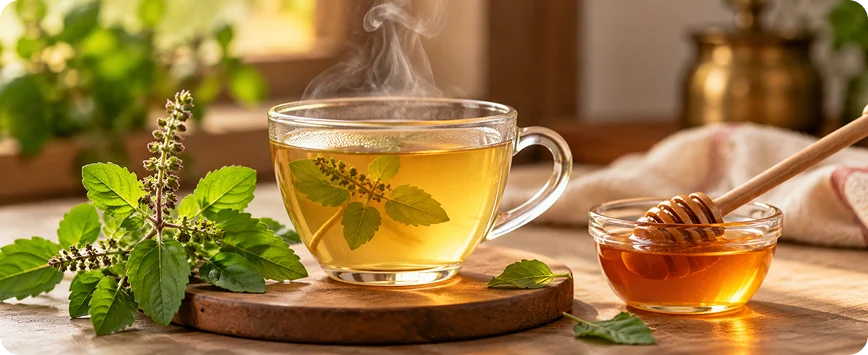
How to prepare: Simmer 4–5 washed tulsi leaves in half a cup of water for about five minutes. Strain the liquid, allow it to cool until warm, and stir in one teaspoon of honey. Sip slowly.
Honey has more direct clinical evidence for temporary cough relief than tulsi. Some studies suggest it may reduce nighttime coughing in children over one year, although the evidence remains limited.
Important: Never give honey to babies younger than 12 months because of the risk of infant botulism. For children, consult a paediatrician before using herbal preparations.
If you’re exploring other traditional respiratory formulations, AyurvedaOne’s Allergies, Sinus & Respiratory Health range provides information about different products. These are not substitutes for treatment of persistent cough, asthma or respiratory infection.
4. Tulsi Salt-Water Gargle
When even swallowing hurts, gargling can feel better than drinking anything. This is the easiest way to use tulsi for sore throat discomfort, since it builds on a habit most of us already know.
How to prepare: Steep 6–8 washed tulsi leaves in one cup of hot water for approximately 10 minutes. Strain, allow it to cool until lukewarm, and dissolve half a teaspoon of salt. Gargle gently for 20–30 seconds and spit out the liquid.
Warm salt-water gargling is commonly recommended for temporary sore-throat comfort in adults. Do not swallow the solution, and avoid giving gargles to young children who cannot perform them safely.
If your sore throat occurs with fever, body aches or other symptoms, read AyurvedaOne’s Ayurvedic Medicine for Fever for additional context on supportive care and warning signs.
5. Tulasi Tablets
Not everyone has a tulsi plant at home, and it’s not exactly practical to carry fresh leaves when you travel. That’s where tablets come in.
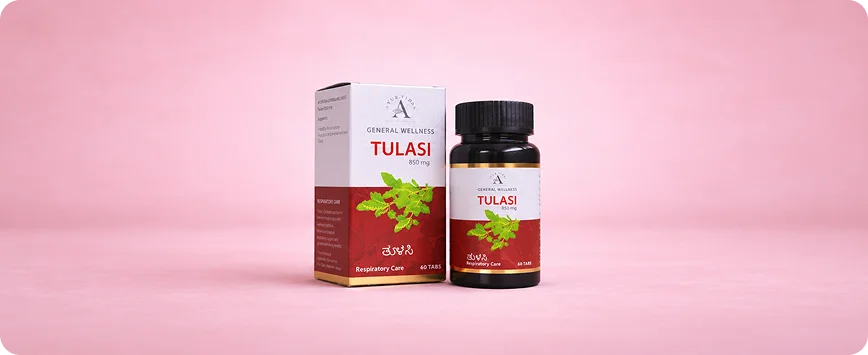
AyurvedaOne’s Tulasi Tablet features tulasi as its highlighted ingredient and is marketed for traditional respiratory and seasonal wellness support. The product page advises taking it with water as directed by an Ayurvedic practitioner.
Tablets should not be assumed to provide faster or stronger cough relief than homemade preparations. There is insufficient clinical evidence to establish tulsi tablets as a treatment for cough.
You can also explore the Ayurvedic Immunity Products collection to compare Tulasi Tablet with other formulations, such as Immunoj Tab. These products have different ingredients and should not automatically be used together.
Tulsi Leaves for Cough or Tablets: Which Is Better?
There’s no clinical evidence that one form works better than another, so it really comes down to what suits you. Fresh tulsi leaves for cough make sense if you like a warm homemade drink and want to know exactly what’s in it. Tablets are better if you’d rather have something measured and ready to go.
| Method |
Works well when |
Keep in mind |
| Tulsi kadha |
You want a warming, traditional drink for cough and cold |
Keep spices mild if you get acidity |
| Tulsi tea |
You want something light and caffeine-free |
Mostly helps with hydration and comfort |
| Tulsi with honey |
A dry, tickly cough keeps you up at night |
No honey for babies under one |
| Tulsi salt-water gargle |
Your throat feels sore or scratchy |
Spit it out; not for young children |
| Tulasi tablets |
You don’t have time to prepare anything |
Follow the label and your practitioner’s advice |
Fresh leaves are convenient for homemade drinks, while Tulasi Tablets may suit adults who prefer a packaged preparation under professional guidance.
Whichever method you choose, adequate rest, fluids and avoiding smoke exposure remain essential parts of managing a mild cough.
Who Should Be Careful With Tulsi?
A few leaves in food or the occasional cup of tea is generally fine for healthy adults. It’s a different matter if you’re taking tulsi regularly or in concentrated forms like extracts and tablets. Be more careful if any of these apply to you:
- Pregnant or breastfeeding: We don’t know enough about the safety of medicinal amounts. Skip concentrated tulsi unless your doctor says otherwise.
- On blood thinners or living with a bleeding disorder: Tulsi may affect clotting, so talk to your doctor before taking supplements.
- Taking diabetes medication: Tulsi may lower blood sugar. Check with your clinician before making it a daily supplement.
- Giving it to children: Adult recipes and tablets aren’t meant for kids without professional advice. AyurvedaOne’s guide to immunity boosters for children has age-appropriate ideas.
- Prone to allergies or a sensitive stomach: Stop if you notice a rash, swelling, acidity or any discomfort.
For parents interested in age-appropriate wellness information, AyurvedaOne’s article on Immunity Boosters for Children discusses children’s nutrition, traditional herbs and supplement considerations.
Do not combine Tulasi Tablet with other herbal immunity formulations without checking for overlapping ingredients and potential interactions.
When Should You See a Doctor About a Cough?
Home remedies are only meant for mild coughs that clear up on their own. If you have trouble breathing, chest pain, or you’re coughing up blood, get medical help right away.
You should also see a doctor if your cough has gone on for more than three weeks, keeps getting worse, or comes with a high or lingering fever. The same applies if you have asthma, a heart or lung condition, or a weakened immune system. If fever is part of the picture, AyurvedaOne’s article on Ayurvedic medicine for fever gives some useful context, but a high or persistent fever always needs a professional’s attention.
Final Thoughts
Tulsi won’t make a cough vanish overnight, and it isn’t meant to. What it offers is comfort: a warm cup of kadha, a light tea, a spoonful of honey before bed, a gargle when your throat is raw, or a tablet when you’re on the move. Keep your preparations mild, watch for the warning signs, and see a doctor if a cough hangs around.
For a ready-made traditional formulation, explore AyurvedaOne’s Tulasi Tablet or browse its Immunity collection. Use herbal products responsibly and consult a healthcare professional when symptoms persist.
Disclaimer: This article is for general educational purposes and does not replace personalised medical advice, diagnosis or treatment. Consult a qualified healthcare professional before using herbal products, especially during pregnancy, while breastfeeding, for children or alongside prescribed medicines.
Sources and References





 Heart Health

 General
 Women’s Health
 Women’s Health