If you have heavy, painful, or unpredictable periods, someone has probably told you to try Ashokarishta. It is one of Ayurveda’s best-known women’s health tonics, and one of the most widely used. Here is what it is, how it is traditionally used, what research says, and how to take it properly.
If you’re exploring Ayurvedic approaches to menstrual health, AyurvedaOne’s guide to Ayurvedic remedies for irregular periods explains how diet, daily routines, and traditional herbal preparations may support menstrual wellbeing.
What Is Ashokarishta?
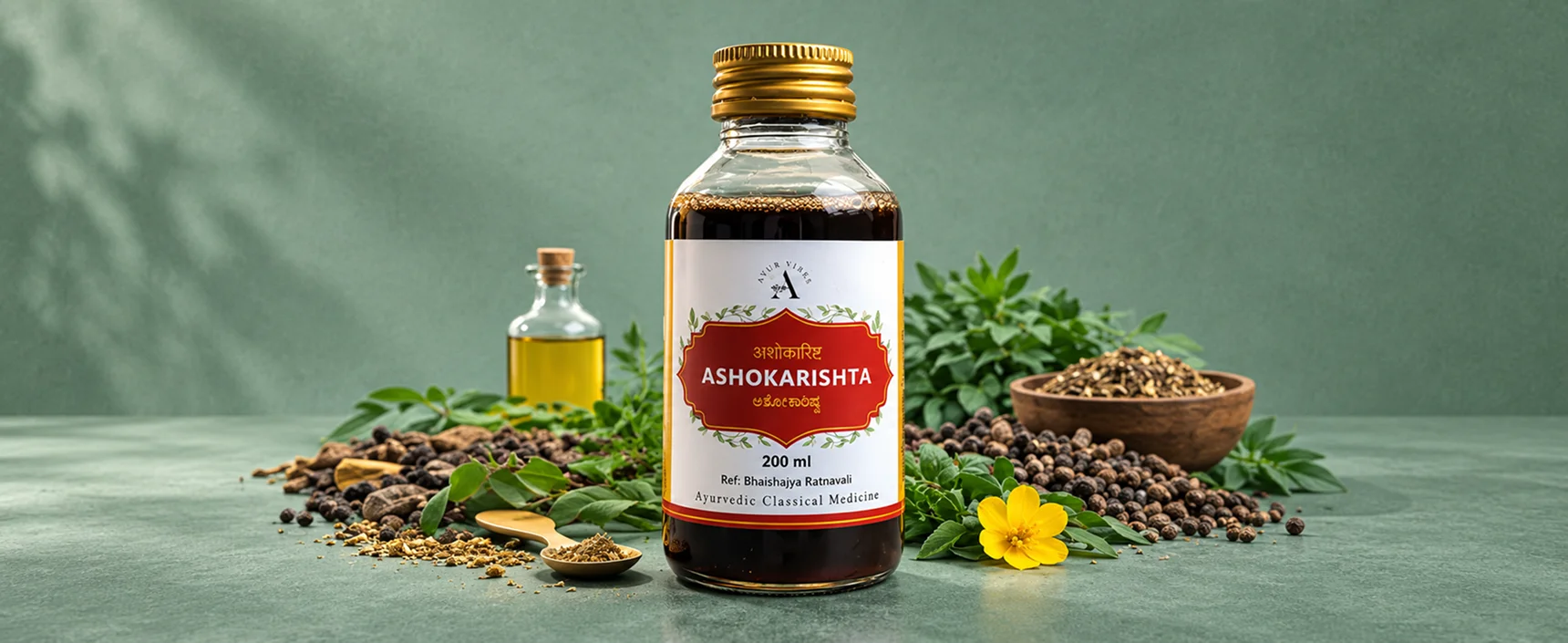
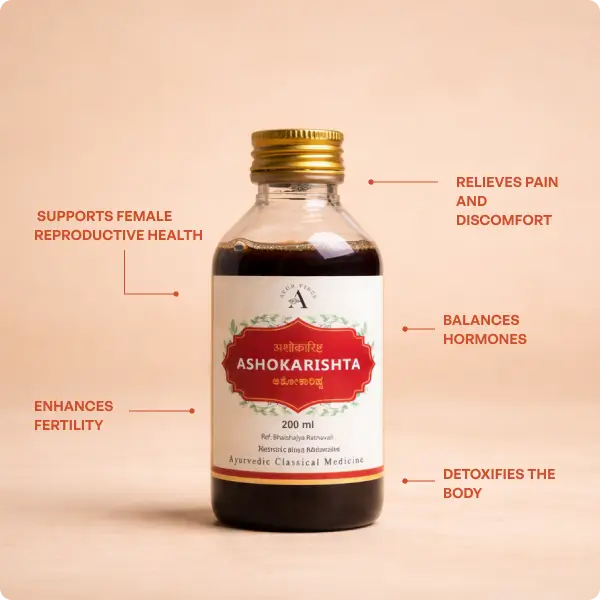
Ashokarishta is a classical Ayurvedic liquid tonic made from the bark of the Ashoka tree (Saraca asoca) along with other herbs. It belongs to a group called arishtas, which are prepared by natural fermentation. That process produces a small amount of self-generated alcohol, which helps extract constituents from the herbs. Jaggery is the base, which gives it a mildly sweet taste.
AyurvedaOne offers Ashokarishta (Ayur Vibes) in 200 ml and 450 ml variants. It is part of the brand’s Ayurvedic Women’s Health collection, which includes formulations traditionally associated with menstrual comfort, reproductive wellness, and nutritional support.
What Is Included in Ashokarishta?
Alongside Ashoka bark, the formulation usually includes:
- Dhataki (Woodfordia fruticosa): The fermenting herb, also traditionally used for menstrual health.
- Haritaki, Bibhitaki and Amalaki: The three Triphala fruits, traditionally used for digestive and general wellness support. Evidence that Triphala in Ashokarishta improves iron absorption is insufficient.
- Musta, Vasa, Daruharidra, ginger, cumin and others: Traditionally used to support digestion and comfort.
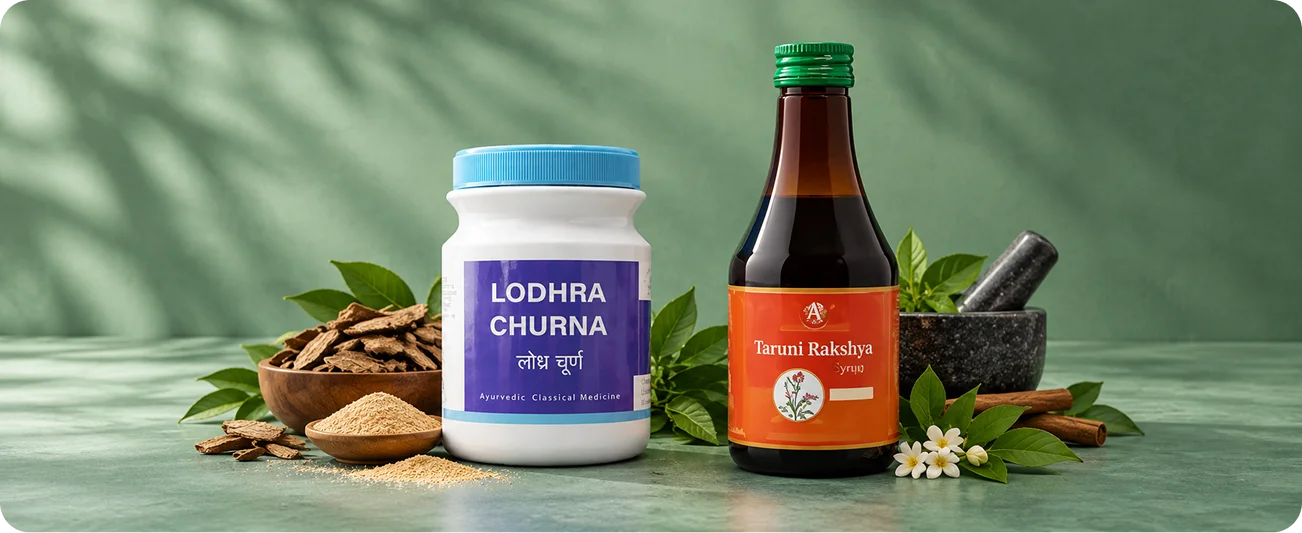
The combination of herbs makes Ashokarishta different from a single-herb powder. AyurvedaOne also offers other traditional women’s wellness preparations, including Lodhra Churna, which is associated with uterine wellness and traditionally used for concerns involving excessive bleeding.
Although Ashokarishta and Lodhra Churna have overlapping traditional applications, they contain different ingredients and should not be taken together without professional guidance.
How Is It Traditionally Used for Periods?
Ashoka means “without sorrow,” and the bark has been used for centuries as a uterine tonic. Ashokarishta is traditionally used for:
- Heavy periods: The astringent quality of Ashoka bark is traditionally associated with managing excessive menstrual bleeding. People interested in this traditional use may also encounter Lodhra Churna for excessive bleeding, although neither formulation should replace evaluation or treatment for heavy menstrual bleeding.
- Painful periods: Traditionally used to ease menstrual cramps. AyurvedaOne’s article on the top 10 Ayurvedic remedies for menstrual cramps covers additional approaches involving diet, gentle movement, and traditional self-care.
- Irregular cycles: Used as general support for the female reproductive system. However, irregular periods can have several underlying causes, including PCOS, thyroid disorders, and hormonal changes. Read more about these causes in Ayurvedic Remedies for Irregular Periods.
- Recovery from heavy bleeding: Traditionally associated with nourishment and general wellbeing, although Ashokarishta has not been established as a treatment for iron-deficiency anaemia.
For women experiencing frequent menstrual discomfort or unpredictable cycles, AyurvedaOne also offers Taruni Rakshya Syrup, another formulation positioned for menstrual wellness and PMS-related concerns. It has a different ingredient profile and dosage, so the two products should not be treated as interchangeable.
What Does Research Say?
The research is preliminary and limited. Small clinical investigations have explored Ashokarishta for menstrual symptoms, including heavy bleeding, pain and haemoglobin-related outcomes. However, the findings need confirmation in larger, well-designed trials before its effectiveness or long-term safety can be established.
A single-blind, placebo-controlled trial described in the original research summary reported changes in haemoglobin after ten menstrual cycles, while other evaluations have reported changes in menstrual discomfort. These specific findings should be checked against the original published papers before being presented as established clinical evidence.
Ashokarishta remains a traditional Ayurvedic preparation with a history of use, rather than a clinically proven replacement for treatment of heavy menstrual bleeding or painful periods.
If menstrual irregularities occur alongside symptoms such as acne, unwanted facial hair, or difficulty conceiving, hormonal conditions may need investigation. AyurvedaOne’s guide to Shatavari benefits for women, hormones, PCOS and fertility offers further background on traditional Ayurvedic approaches to reproductive wellness.
The Right Dosage
Dosing varies, but as a general guide:
Many Ashokarishta products are labelled for 15 to 30 ml, twice daily, after meals.
Some formulations may recommend lower amounts, so check the exact manufacturer’s label rather than applying one dose to every product.
It is commonly mixed with an equal amount of water.
Taking it after meals is the usual practice and may help reduce stomach discomfort.
A practitioner may review symptoms over subsequent menstrual cycles, but there is no established timeframe for clinical benefit.
For AyurvedaOne’s Ashokarishta (200ml) – Ayur Vibes, the product page specifies 15–30 ml twice daily after meals, diluted with an equal quantity of warm water, or as directed by an Ayurvedic physician.
Your Ayurvedic physician may adjust the amount or timing depending on your symptoms, so do not exceed the labelled amount, and avoid long-term use without guidance.
If you are comparing Ayurvedic tonics for period-related concerns, the Women’s Health product range at AyurvedaOne provides information about different formulations, ingredients, and intended applications.
Who Should Avoid It or Be Careful?
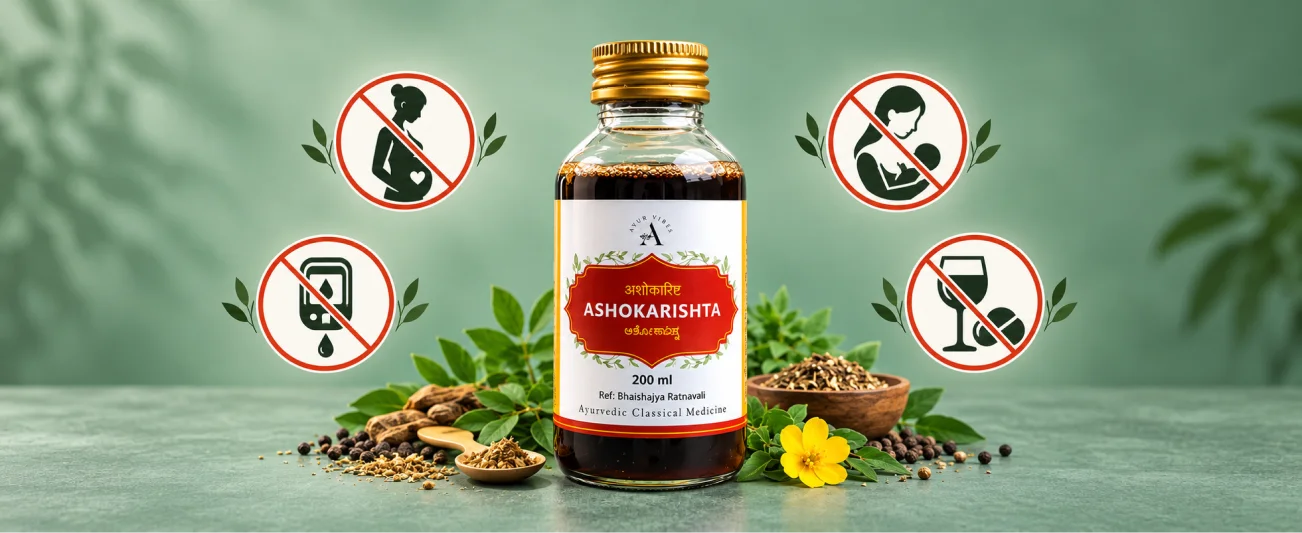
- Pregnancy: Not recommended because it contains fermentation-generated alcohol and includes herbs traditionally used to influence uterine function.
- Breastfeeding: Check with your doctor first because safety information is limited.
- Diabetes: It is jaggery-based, so people managing blood sugar should consult their doctor before use.
- Alcohol avoidance: The fermentation-generated alcohol may be present in small quantities, but people who must avoid alcohol entirely should discuss it with their doctor.
- Other medicines: Inform your doctor about any prescribed medications or other herbal supplements to avoid possible interactions.
Women who are already using other Ayurvedic formulations, such as Taruni Rakshya Syrup or Lodhra Churna, should not automatically add Ashokarishta to their routine. The right formulation depends on the underlying concern and individual medical history.
When to See a Doctor
Heavy or painful periods are sometimes a sign of something that needs diagnosis, such as fibroids, polyps, thyroid or hormonal issues, or anaemia.
See a doctor if you soak through a pad or tampon every hour or two, bleed for more than seven days, pass large clots, feel dizzy, breathless or unusually tired, have severe pain that disrupts daily life, bleed between periods, or miss periods when you could be pregnant. If bleeding is very heavy and accompanied by fainting, severe dizziness or breathlessness, seek urgent medical care.
Heavy menstrual bleeding can sometimes contribute to iron deficiency. AyurvedaOne includes Lohiron Ayurvedic Iron Supplements in its women’s wellness range, but iron supplementation should be based on appropriate assessment rather than used automatically for fatigue.
For further reading about conditions affecting menstrual cycles, explore AyurvedaOne’s guide to Ayurvedic remedies for irregular periods.
Ashokarishta is best considered alongside a proper diagnosis, not instead of one. For more information about traditional formulations for women’s wellness, visit AyurvedaOne and review the available products and ingredient information.


 Blog

 Blog
 Blog
 Blog