If your child frequently complains of a tummy ache, seems gassy or bloated after meals, has an on-and-off appetite, or deals with irregular bowel movements, you’re far from alone – digestive troubles are one of the most common concerns parents bring up. Children’s digestive systems are still developing, which makes them more sensitive to diet, routine, and stress than we often realize.
Ayurveda offers a set of gentle, food-based approaches that work well alongside your pediatrician’s guidance, without needing anything harsh or complicated. For a broader understanding of how Ayurveda approaches gas, bloating, indigestion and digestive balance, you can also explore AyurvedaOne’s Ayurvedic digestive health guide and formulations.
Start With Routine and Food, Not Remedies
Before any specific remedy, consistency is what actually regulates a child’s digestion most reliably. This is where Ayurveda’s gentle, food-first approach genuinely helps – simple enough to fold into daily routine, and easy to use alongside your pediatrician’s guidance:
- Keep meal times consistent, since children’s digestive fire (much like adults’) works best on a predictable rhythm
- Favor warm, freshly cooked, easily digestible meals over cold, packaged, or fried foods
- Include foods naturally gentle on digestion – moong dal, well-cooked rice, ripe banana, and soft-cooked vegetables
- Limit sugary snacks and processed food, which are common (and often overlooked) contributors to bloating and irregular bowel movements in kids.
- Make sure your child is drinking enough water through the day, not just at meals
Ajwain (Carom Seeds): A Gentle, Time-Tested Digestive Aid
Ajwain is one of the most commonly used Ayurvedic remedies for children’s digestive discomfort, valued for easing gas, bloating, and general indigestion.
A mild ajwain water – made by boiling a small amount of seeds and letting it cool to lukewarm – is a traditional favorite for settling an upset tummy. It’s gentle enough to be a household staple, though it’s best introduced in very small amounts first to see how your child responds.
Ajwain is also one of the traditional remedies discussed in AyurvedaOne’s guide to Ayurvedic remedies for bloating and gas, alongside diet and eating-pattern changes.
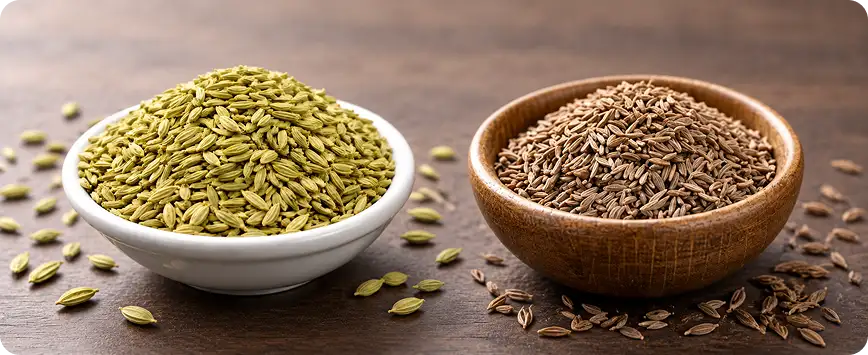
Fennel and Cumin: Kitchen Staples for Gas and Bloating
These two are especially easy to work in, since they’re common cooking spices.
A mild fennel water after meals is a classic, gentle way to ease gas and support digestion, and cumin water works similarly. Both are mild enough to become a regular after-meal habit for children prone to bloating.
AyurvedaOne’s guide to bloating, gas and natural digestive relief also discusses fennel as a traditional after-meal digestive aid.
A Pinch of Hing (Asafoetida): For Gas and Discomfort
Hing has long been used in Ayurveda specifically for relieving gas and abdominal discomfort in children.
A tiny amount mixed into warm water, or a small dab of hing paste massaged gently around the navel, is a traditional way to ease trapped gas. Because it’s potent, only a very small quantity is ever needed.
If gas, abdominal discomfort or bloating keeps returning despite dietary changes, it’s better to discuss the pattern with your child’s healthcare professional instead of continually relying on home remedies.
Triphala: Gentle Support for Bowel Regularity
For children dealing with occasional constipation, mild Triphala is a traditional go-to, valued for its gentle laxative action and role in supporting regular bowel movements.
Triphala is also one of the key remedies covered in AyurvedaOne’s detailed guide to Ayurvedic remedies for constipation and better digestion.
That said, this is one remedy worth using specifically under a pediatrician or pediatric Ayurvedic practitioner’s guidance, since the right amount and preparation varies quite a bit by a child’s age.
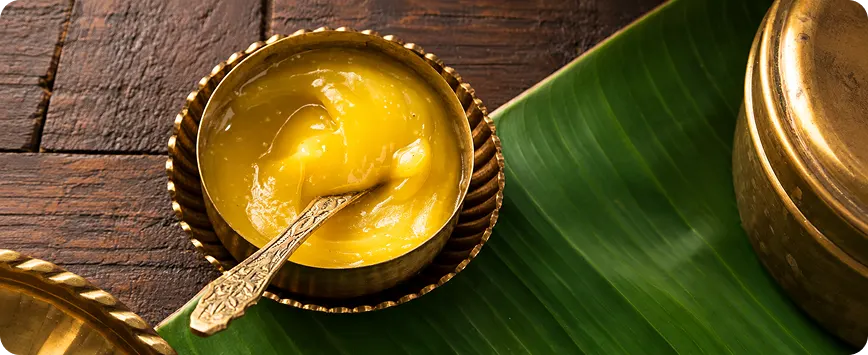
Ghee: Simple, Soothing, and Nourishing
A small amount of ghee mixed into warm milk or rice is a gentle, traditional way to lubricate and soothe a child’s digestive tract, particularly helpful for constipation or a generally sluggish digestion.
It’s mild enough to be part of a regular diet rather than an occasional remedy. Ghee is also included among AyurvedaOne’s natural approaches to constipation relief, together with warm water, Triphala, fibre-rich foods and daily movement.
Don't Overlook the Emotional Side
Digestive troubles in children aren’t always just physical – stress, anxiety, or even fear, such as fear of using an unfamiliar bathroom, can genuinely disrupt a child’s digestion and, in some cases, lead to stool-withholding and a difficult cycle of constipation.
A calm, patient, and reassuring approach at home, alongside the dietary steps above, often makes as much difference as any remedy.
Maintaining predictable meal times, sleep routines, physical activity and a relaxed bathroom routine can also help a child feel more comfortable and secure.
Building a Gentle Digestion-Support Routine
- Keep meals warm, freshly cooked, and on a consistent schedule
- Offer mild fennel or cumin water after meals as a simple daily habit
- Keep ajwain and hing on hand for occasional gas or discomfort, used in very small amounts
- Talk to a pediatrician before starting Triphala or any other herb regularly, especially for infants and toddlers
- Be patient and reassuring if constipation seems tied to stress or fear, not just diet
For parents considering a child-specific Ayurvedic formulation rather than individual home remedies, AyurvedaOne also offers Shishu Kalyana Rasa, which is positioned for concerns including childhood digestion, colic and bloating. Because dosage depends on a child’s age and weight, it should only be used according to professional healthcare advice.
If you’re also working on your child’s overall wellness, AyurvedaOne’s guide to Ayurvedic immunity support for children covers nutrition, daily habits and commonly used Ayurvedic approaches for children.
When to See a Pediatrician
Most digestive hiccups in children are mild and settle with simple home care, but it’s important to check in with a pediatrician if your child has persistent vomiting, blood in the stool, significant weight loss or failure to gain weight, severe or ongoing abdominal pain, constipation lasting more than a couple of weeks, or if they’re an infant under one year.
In that case, it’s best to consult a pediatrician before trying any herbal remedy at all, since dosing and safety are very different for babies than for older children.
If you would like personalised Ayurvedic guidance before introducing herbs or formulations into your child’s routine, you can also consult an AyurvedaOne doctor and discuss the child’s symptoms, age, diet and existing medical care before choosing an appropriate approach.



 Blog
Blog

 Heart Health
 Joint Pain
 Women’s Health