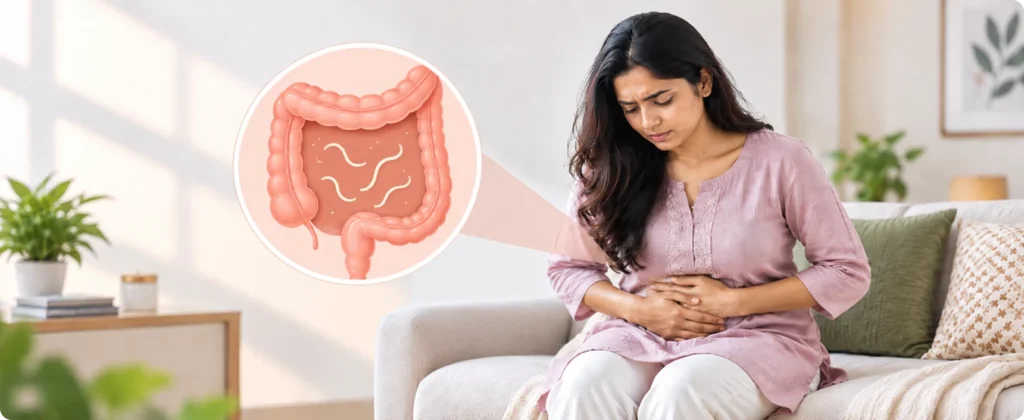
Persistent bloating, recurring abdominal discomfort, tiredness or changes in bowel habits are easy to blame on ordinary indigestion. Often, that is exactly what they are. But when symptoms keep returning, an intestinal parasite is one of several possibilities worth considering, especially after exposure to contaminated soil, unsafe water, poor sanitation or undercooked food.
Intestinal worm infections remain common worldwide. According to the World Health Organization, an estimated 1.5 billion people are infected with soil-transmitted helminths. Many light infections cause few or no symptoms, while heavier infections can lead to abdominal pain, diarrhoea, weakness, nutritional problems and anaemia.
Knowing the early signs of intestinal worms can help you decide when to seek medical advice, but symptoms alone cannot confirm an infection. Proper diagnosis matters because the same digestive complaints can also occur with constipation, food intolerance, gastritis, IBS and other conditions.
Common Types of Intestinal Worms
Intestinal worms are parasites that can live in the digestive tract. Different species behave differently: some remain in the intestine and compete for nutrients, while others attach to tissue and may contribute to blood loss or irritation.
Pinworms: Small, thin worms that most often cause itching around the anus, particularly at night.
Roundworms: Worms such as Ascaris can live in the intestine. Light infections may cause no symptoms, while heavier infections can contribute to abdominal discomfort and nutritional problems.
Hookworms: These worms attach to the intestinal lining and feed on blood. Heavier infections can contribute to iron-deficiency anaemia, fatigue and weakness.
Tapeworms: Flat, segmented worms that may be acquired through certain undercooked meats or other parasite-specific routes. Symptoms vary depending on the species and the extent of infection.
7 Common Symptoms of Intestinal Worms
The signs and symptoms of intestinal worms in humans vary with the parasite involved, the number of worms present and the person’s general health. Some people notice nothing at all. Others develop a combination of digestive and nutritional symptoms rather than one obvious warning sign.
1. Persistent Abdominal Pain or Discomfort
Recurring abdominal pain, cramping or an unsettled feeling in the stomach can occur with some worm infections. The discomfort may be mild and intermittent rather than severe. Because abdominal pain has many possible causes, it should never be treated as proof of a parasite infection on its own.
2. Diarrhoea or Changes in Bowel Habits
Some intestinal worms can disturb normal bowel habits and cause diarrhoea, loose stools or ongoing digestive discomfort. If bowel changes continue for more than a few days, recur frequently or are accompanied by blood, dehydration or severe pain, medical assessment is important.
3. Unexplained Weight Loss or Reduced Appetite
A noticeable loss of appetite or unplanned weight loss deserves attention, especially when it appears alongside persistent digestive symptoms. Heavier hookworm and other helminth infections can affect appetite and nutritional status, but weight loss has many other causes and should be properly evaluated.
4. Fatigue and Weakness
Unusual tiredness can occur when a worm infection affects nutrition or causes ongoing blood loss. Hookworm is particularly important because a heavier infection can contribute to iron-deficiency anaemia. If fatigue persists, a healthcare professional may recommend blood tests to check haemoglobin, iron levels and other possible causes.
5. Anal Itching
Persistent itching around the anus, especially at night, is a classic sign associated with pinworm infection. The CDC notes that many people with pinworms have no symptoms, but when symptoms do occur, nighttime anal itching is one of the most typical. Skin irritation and other conditions can cause similar itching, so the pattern still needs proper assessment.
6. Nausea, Bloating or Digestive Discomfort
Nausea, fullness, gas and bloating can occur with some intestinal infections, but they are also among the most common symptoms of everyday digestive problems. If bloating is your main complaint, it is worth looking at other possible triggers as well; AyurvedaOne’s guide to Ayurvedic remedies for bloating and gas explains several non-parasitic causes that can produce similar discomfort.
7. Nutritional Problems or Anaemia
A significant worm burden can interfere with nutritional health. Hookworms can cause chronic intestinal blood loss, while other soil-transmitted helminths may contribute to poor nutrient absorption or reduced appetite. Persistent weakness, pale skin, breathlessness on exertion or confirmed low iron levels should be discussed with a healthcare professional rather than managed through self-diagnosis.
The Ayurvedic View on Gut Parasites (Krimi Roga)
Ayurveda discusses worm-like infestations under the broader concept of Krimi Roga. Traditional Ayurvedic assessment also considers Agni, or digestive strength, and Ama, a classical term used for material associated with incomplete digestion. These are Ayurvedic concepts and should not be treated as biomedical proof that parasites are present.
From a supportive-care perspective, Ayurveda may focus on appetite, bowel regularity and digestive comfort while the underlying problem is being evaluated. If a worm infection is suspected or confirmed, medically recommended deworming treatment should not be delayed. People who want personalised traditional support can also consult an AyurvedaOne doctor and review the brand’s digestive health range according to their individual needs.
5 Time-Tested Ayurvedic Herbs for Gut Support
Ayurvedic herbs are traditionally used to support digestion, bowel regularity and gut comfort. They should be viewed as supportive care rather than a substitute for diagnosis or proven antiparasitic treatment when an infection is present.
Vidanga: Vidanga has a long traditional association with Krimi-related care in Ayurveda and is commonly used in formulations intended for digestive support. People specifically looking for an Ayurvedic medicine for intestinal worms may come across Vidanga Churna, but it is best used under professional guidance rather than as a reason to skip testing or standard treatment.
Neem: Neem is a bitter herb traditionally used in Ayurveda for cleansing and skin, metabolic and digestive applications. Evidence is not strong enough to treat it as a proven stand-alone therapy for human intestinal worm infections, so dosage and suitability should be discussed with a qualified practitioner.
Kutaj: Kutaj is traditionally valued for supporting the gut, particularly when loose stools or diarrhoea are part of the digestive picture. It is not appropriate to assume that diarrhoea is parasite-related without diagnosis.
Triphala: This three-fruit formulation combines Amalaki, Bibhitaki and Haritaki and is commonly used to support bowel regularity. AyurvedaOne’s Triphala Churna is one option for digestive support, and its guide to Ayurvedic remedies for constipation gives additional context for irregular bowel movements.
Turmeric (Haridra): Turmeric has a long history of use in Ayurveda and can be part of a broader digestive-support routine. It should not be promoted as a deworming treatment by itself, especially when symptoms suggest a clinically significant infection.
Daily Habits to Prevent Parasite Growth
Herbs are only one part of the picture. Reducing exposure to parasites depends much more on food safety, clean water, sanitation and everyday hygiene.
- Cook meat thoroughly and avoid raw or undercooked meat when there is a risk of food-borne parasites.
- Wash fresh fruits and vegetables well under clean running water before eating or preparing them. Special vinegar or produce washes are not required for routine cleaning.
- Wash hands with soap before preparing or eating food and after using the toilet, changing diapers, handling soil or caring for someone with a suspected pinworm infection.
- Use safe drinking water. When water quality is uncertain, follow local public-health guidance for boiling, filtering or otherwise treating it before drinking.
- Use proper sanitation and wear footwear in areas where soil may be contaminated with human waste, because some hookworm larvae can enter through the skin.
Conclusion
Persistent abdominal discomfort, diarrhoea, unexplained fatigue, anal itching or weight loss are worth paying attention to, but they do not automatically mean you have intestinal worms. The pattern of symptoms, exposure history and appropriate testing are far more useful than trying to diagnose the problem from a single sign.
If an infection is confirmed, use the treatment recommended by a qualified healthcare professional. Ayurvedic care can then be considered alongside that plan for digestive comfort, appetite and bowel regularity, depending on the person and the formulation being used.
If you are looking for traditional digestive support, AyurvedaOne offers a dedicated gut health and constipation range as well as practitioner guidance. The safest approach is to match the support to the actual cause of your symptoms rather than treating every episode of bloating or fatigue as a parasite problem.




 Blog
Blog

 Heart Health
 Joint Pain
 Women’s Health