It’s peak summer, you’ve just finished a plate of spicy chaat, and within the hour your face feels flushed, your stomach’s burning, and you’ve snapped at someone over something trivial you’d normally shrug off. Sound familiar? In Ayurveda, this textbook aggravated Pitta – the body’s internal fire that governs digestion, metabolism, and body temperature, running a little too hot. When Pitta runs high, it shows up physically and emotionally, often at the same time. The good news: there’s a well-established toolkit, both dietary and herbal, for cooling it back down.
Start With Diet: What You Eat Changes Your Internal Heat
- Favor naturally cooling foods – cucumber, watermelon, coconut water, leafy greens, and sweet fruits
- Cut back on excessively spicy, fried, and very sour or salty foods, which tend to intensify heat and acidity
- Swap caffeinated drinks for cooling alternatives like coriander water, buttermilk, or amla juice, since tea and coffee tend to be heating and dehydrating
- Eat meals at consistent times and avoid skipping meals, since erratic eating patterns tend to aggravate digestive heat
If burning, sour belching or discomfort after meals is a regular problem, AyurvedaOne’s guide to home remedies for acidity and acid reflux explains the Ayurvedic connection between excess Pitta, Amlapitta and digestive heat in more detail.
Myth: Cooling Down Means Reaching for Ice-Cold Drinks
It’s tempting to grab an ice-cold drink the moment you feel overheated, but Ayurveda actually cautions against this. Very cold food and drinks shock the digestive fire rather than calming it, often causing it to overcompensate – which can lead to more acidity and sluggish digestion, not less.
Room-temperature or lukewarm cooling drinks such as coconut water, coriander water and buttermilk work with the body instead of against it and are traditionally preferred when trying to manage internal heat.
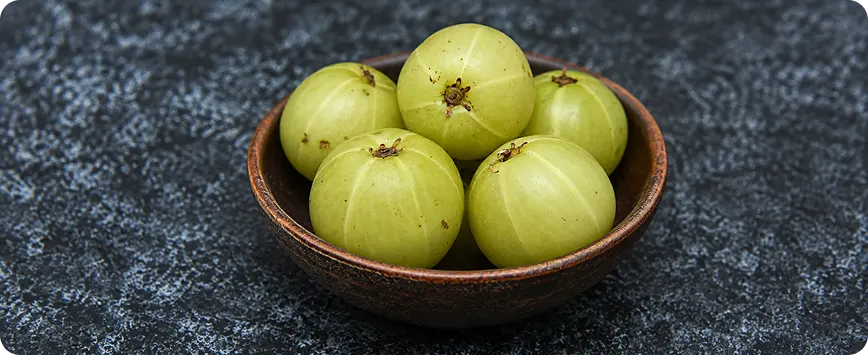
Amla (Indian Gooseberry): A Cooling Powerhouse
Amla is one of the most trusted cooling remedies in Ayurveda, and its high vitamin C and antioxidant content gives it real backing for this role. It helps purify the blood, supports clearer skin, and eases the kind of acidity that often accompanies excess body heat.
A glass of amla juice in the morning is one of the simplest ways to work it into a daily routine, or it’s available in convenient Ayurvedic formulations for consistency. If you want to understand its broader traditional uses, read AyurvedaOne’s complete guide to Amla benefits.
Guduchi (Giloy): Support for Heat-Related Inflammation
Guduchi, also known as Giloy, has a long-standing reputation for detoxifying the body and calming inflammation, both closely tied to Pitta imbalance.
Its immune-modulating and anti-inflammatory properties have been studied in various clinical contexts, and it’s specifically featured in classical protocols for heat-related acidity, where patients following Guduchi-based treatment reported meaningful symptom relief within about three weeks.
It’s a herb well suited to regular Ayurvedic routines rather than needing fresh preparation. Before using it regularly, especially if you have an existing health condition or take medicines, read more about Giloy benefits, uses and possible side effects.
Yashtimadhu (Licorice): A Cooling Coat for Irritated Tissue
Yashtimadhu is one of Ayurveda’s most specific Pitta-pacifying herbs, valued for its sweet, cooling nature. It forms a soothing, protective layer over the stomach lining, easing hyperacidity, burning sensations and gastritis, and doubles as relief for a heat-related sore throat or mouth ulcers.
AyurvedaOne’s guide to Ayurvedic treatment for gastritis explains how excess Pitta and digestive heat are traditionally associated with burning, acidity and irritation of the stomach lining.
Yashtimadhu is available in several Ayurvedic preparations, but people with ongoing health conditions or those taking medication should seek professional guidance before using it regularly.
Gond Katira (Tragacanth Gum): A Traditional Summer Coolant
This natural plant gum has long been used specifically for cooling the body during hot weather. Soaked overnight until it turns gel-like, it has a demulcent, soothing action on the digestive tract and is traditionally mixed into milk or sweet drinks as a hot-season staple.
It’s a good complementary addition alongside amla or Yashtimadhu, though it works best as an occasional seasonal remedy rather than a daily herb.
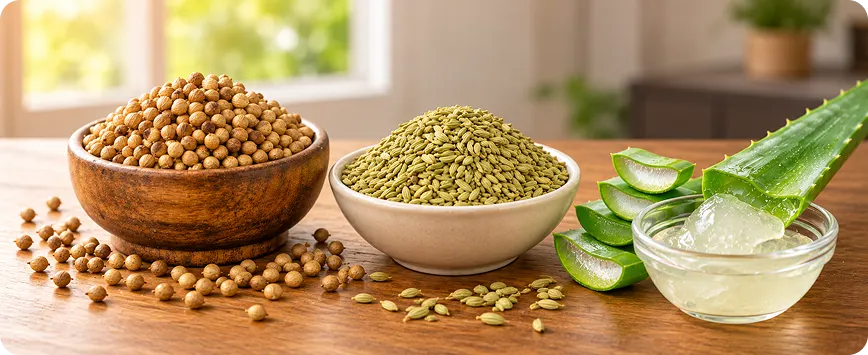
Coriander, Fennel, and Aloe Vera
Coriander seed water, soaked overnight and drunk in the morning, and fennel after meals are simple ways traditionally used to manage excess heat and ease post-meal acidity.
Aloe vera works both ways – taken internally it is traditionally used to soothe digestive heat, while topical aloe gel may help calm heat-related skin irritation. Aloe vera and other cooling approaches are also discussed in AyurvedaOne’s detailed guide to natural remedies for acidity and acid reflux.
For people experiencing recurring acidity, gas or indigestion, you can also explore AyurvedaOne’s Ayurvedic digestive health range rather than choosing a formulation randomly.
Mental and Emotional Balance: Pitta Isn't Just Physical
Pitta imbalance shows up as much in temperament as in the body – irritability, impatience, a short fuse, or a mind that feels “overheated” under stress. Left unmanaged, this emotional heat feeds back into the physical symptoms, so calming the mind is a genuine part of cooling the body, not a side note.
If everyday stress is becoming persistent, AyurvedaOne’s guide to Ayurvedic medicine for anxiety and stress covers herbs, daily practices and lifestyle approaches commonly used to promote a calmer mental state.
- Chandra Anuloma Viloma: A left-nostril-emphasized breathing practice traditionally used in Ayurveda to cool and pacify excess Pitta. It may also encourage a calmer breathing pattern and relaxation.
- Build in a wind-down window before bed, away from screens and stimulation, since a wired mind at night can make relaxation and sleep more difficult.
- Avoid overcommitting your schedule during high-heat months or high-stress periods; constantly pushing without adequate recovery can compound physical and mental stress.
- Choose gentle, non-competitive movement such as walking, easy yoga or swimming rather than intense exercise during periods when you already feel overheated.
If your mind remains active late into the night or stress starts interfering with rest, AyurvedaOne’s guide to Ayurvedic treatment for insomnia provides additional sleep-supportive diet, herbal and daily-routine guidance.
Building a Fuller Body-Cooling Routine
- Start the day with coriander water or amla juice instead of tea or coffee
- Favor cooling, well-cooked meals; cut back on spice and fried food
- Consider Amla, Guduchi or Yashtimadhu only when appropriate for your individual health needs
- Keep gond katira as a seasonal cooling addition and aloe vera gel for topical relief
- Practice Chandra Anuloma Viloma for a few minutes daily, especially during stressful or hot periods
- Protect your wind-down time in the evening to keep mental heat in check
Small habits practiced consistently usually make more sense than trying several remedies at once. AyurvedaOne’s Ayurvedic health tips offer additional ideas for building diet, movement, sleep and everyday wellness habits into a sustainable routine.
At a Glance: Your Pitta-Cooling Toolkit
Amla – Acidity, skin clarity and antioxidant support
Guduchi – Inflammation and general wellness support
Yashtimadhu – Hyperacidity, gastritis and throat soothing
Gond Katira – Seasonal cooling and digestive soothing
Coriander Water – Morning cooling and digestive support
Fennel – Post-meal digestive comfort
Aloe Vera – Digestive cooling and topical skin soothing
Chandra Anuloma Viloma – Relaxation, mental heat and irritability
When to See a Doctor
Occasional heat-related discomfort may improve with dietary and lifestyle adjustments. But it’s worth checking in with a doctor if you experience persistent high body temperature or fever, severe or worsening acidity, skin issues that don’t improve with basic care, or physical symptoms paired with significant fatigue, dizziness or mood changes that don’t ease up.
These can point to something beyond a simple Pitta imbalance that needs proper evaluation.
If you are unsure whether Amla, Guduchi, Yashtimadhu or another Ayurvedic formulation is appropriate for you, especially when you already take medication or have a diagnosed health condition, you can consult an AyurvedaOne Ayurvedic doctor for personalised guidance.



 Joint Pain

 Women’s Health
 Digestive Health
 General