
What Is Abhyanga Massage & Which Oil Is Best for Abhyanga Massage According to Ayurveda?
MD in Panchakarma | 16+ Years of Experience
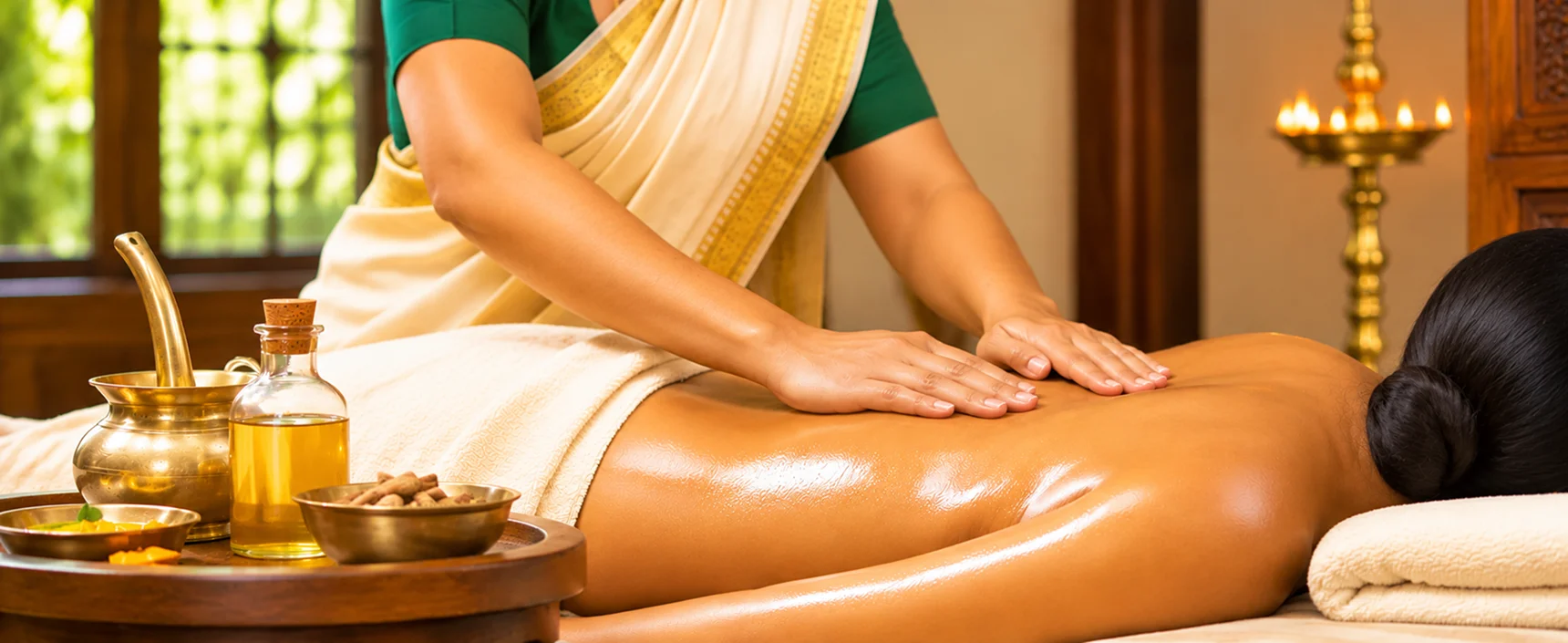
Table of Content
Quick Answer
Abhyanga massage is a traditional Ayurvedic full-body massage with warm oil, applied from the scalp to the soles of the feet before a bath. It is traditionally used to calm the mind, ease stiff muscles and joints, nourish the skin and support deeper sleep. The best oil depends on your body type: sesame for Vata, coconut for Pitta and light mustard for Kapha.
The word abhyanga comes from Sanskrit and simply means “oil massage” or “to rub with oil”. In Ayurveda, abhyanga massage is not a spa luxury. It is part of dinacharya, the healthy daily routine described in classical texts, alongside things like waking early and eating on time. You can have it done at an Ayurvedic centre, but most people practise it as a self-massage at home in 15–20 minutes.
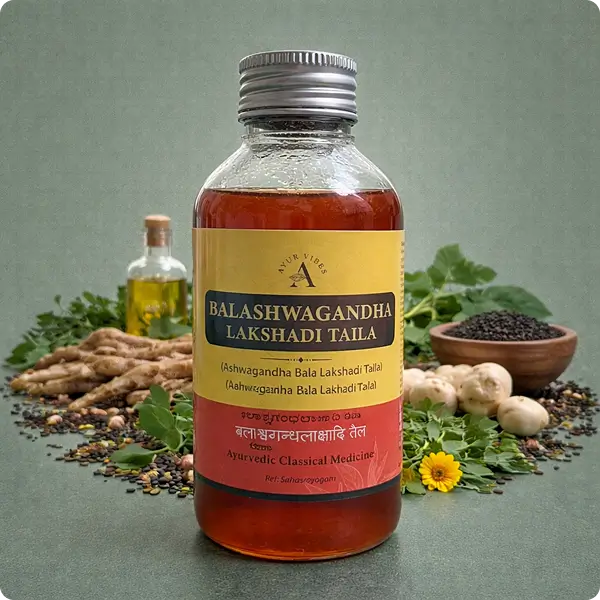
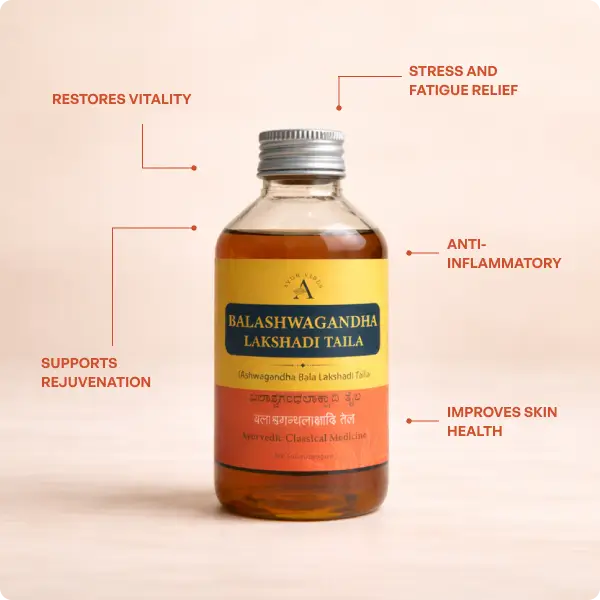
Choosing the right oil makes all the difference. A plain sesame or coconut oil works well for daily use, while herbal oils like Balashwagandha Lakshadi Taila are made with herbs that add strength and nourishment to your routine. Below, you will learn the benefits, the step-by-step method, which oil suits your body type and who should avoid abhyanga massage.
Abhyanga Massage: At a Glance
| Question | Answer |
|---|---|
| What it is | A warm oil massage of the whole body, from head to feet |
| Best time | Morning, before your bath, on an empty or light stomach |
| How long | 15–20 minutes of massage, then 15–30 minutes to let the oil soak in |
| How often | Daily is ideal; 2–3 times a week still helps |
| Main benefits | Calmer mind, better sleep, softer skin, less stiffness in muscles and joints |
| Best oil | Depends on your dosha: sesame (Vata), coconut (Pitta), mustard (Kapha), or a herbal taila for a specific need |
What Is Abhyanga Massage?
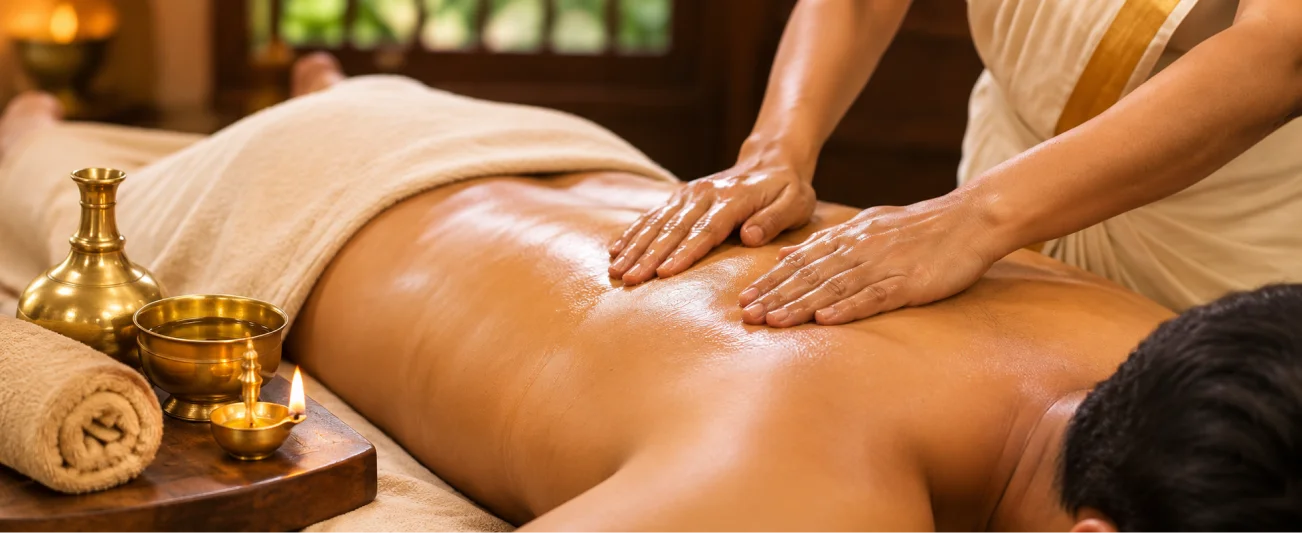
Abhyanga massage is a warm oil massage where the oil is applied generously over the entire body, including the scalp, ears and feet, using long strokes on the arms and legs and gentle circles on the joints. The oil is left on for a while and then washed off with a warm bath.
Unlike a deep-tissue massage, the aim is not to press hard. The aim is to nourish. Ayurveda believes oil soaks into the skin and calms Vata, the energy of air and movement that, when out of balance, shows up as dryness, stiffness, restlessness, anxiety and poor sleep.
Classical Ayurvedic texts single out three areas for special attention in daily abhyanga: the head, the ears and the feet. Even if you are short on time, oiling just these three areas is a good start.
What Are the Benefits of Abhyanga Massage?
1. Calms the Mind and Eases Stress
Warm oil and slow, rhythmic strokes have a deeply calming effect. Many people find abhyanga massage helps them feel grounded on busy, anxious days. Small studies on Ayurvedic oil massage have reported lower stress levels and a more relaxed heart rate after a session. For more ways to unwind, see our top 10 Ayurvedic tips for stress relief at home.
2. Supports Deeper Sleep
Ayurveda links poor sleep to excess Vata. Oiling the scalp and the soles of the feet in particular is a traditional way to settle the mind before bed. Read our guide to Ayurvedic treatment for insomnia for more sleep support.
3. Eases Stiff Muscles and Joints
Regular abhyanga massage keeps the body supple, eases stiffness and helps muscles recover after exercise or long hours of sitting. It is especially loved by people with Vata-type joint stiffness. Our guide to Ayurvedic medicine for joint pain covers this in more depth.
4. Supports Healthy Circulation
Massage strokes towards the heart encourage blood flow and the movement of lymph, which is why you often feel warm and light afterwards. Learn more about supporting healthy circulation with Ayurveda.
5. Nourishes the Skin
Oil keeps the skin soft, moist and supple, which is especially helpful in winter or air-conditioned rooms. See our full guide to Ayurvedic skin care.
6. Builds Strength and Energy
Ayurveda describes abhyanga as nourishing to the body tissues and helpful for strength and stamina, particularly after illness or in older age. If you are recovering from a fever, read our tips on restoring strength after fever.
Which Oil Is Best for Abhyanga Massage According to Ayurveda?
There is no single “best” oil for everyone. Ayurveda chooses the oil based on your body type (dosha), the season and what you want help with. Here is the simple way to choose.
Best Base Oil for Your Dosha
| Dosha | Signs of imbalance | Best base oil | How to apply |
|---|---|---|---|
| Vata (air + space) | Dry skin, stiffness, anxiety, poor sleep, feeling cold | Warm sesame oil, or almond oil | Generous amount, warm, slow and gentle strokes; daily |
| Pitta (fire + water) | Feeling hot, redness, rashes, irritability, burning | Coconut oil or sunflower oil | Lukewarm oil, soft strokes; avoid very hot oil |
| Kapha (earth + water) | Heaviness, sluggishness, oily skin, congestion | Light sesame or mustard oil | Small amount, brisk and vigorous strokes |
Not sure which one you are? Take our dosha quiz. Sesame oil is the most classic choice, and Ayurveda considers it suitable for most people except those who run very hot.
Herbal Oils (Tailas) for Specific Needs
Plain oils are great for everyday abhyanga massage. Herbal oils, called tailas, are oils cooked with herbs and are chosen when you want extra support for a particular need. Here is how the AyurvedaOne range fits in:
| Oil | Key ingredients | Traditionally used for | Best way to use | Price |
|---|---|---|---|---|
| Balashwagandha Lakshadi Taila (200ml) | Ashwagandha, Laksha, Rasna, Manjishta | Strength, energy, muscle support, fatigue, recovery after illness | Full-body abhyanga before bathing | ₹220 |
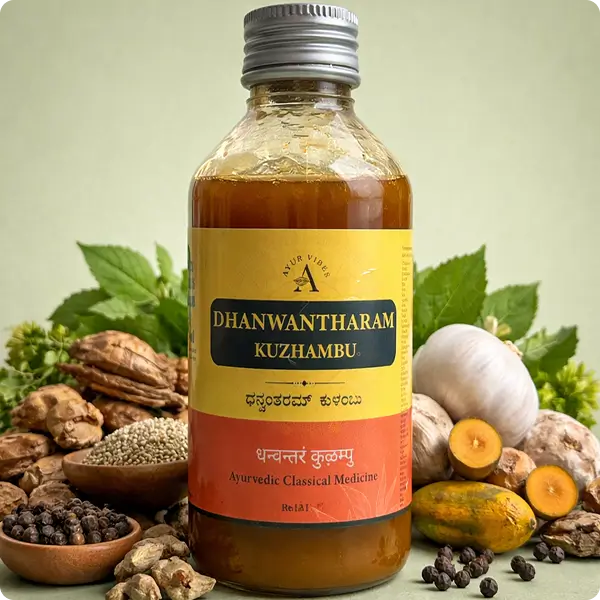
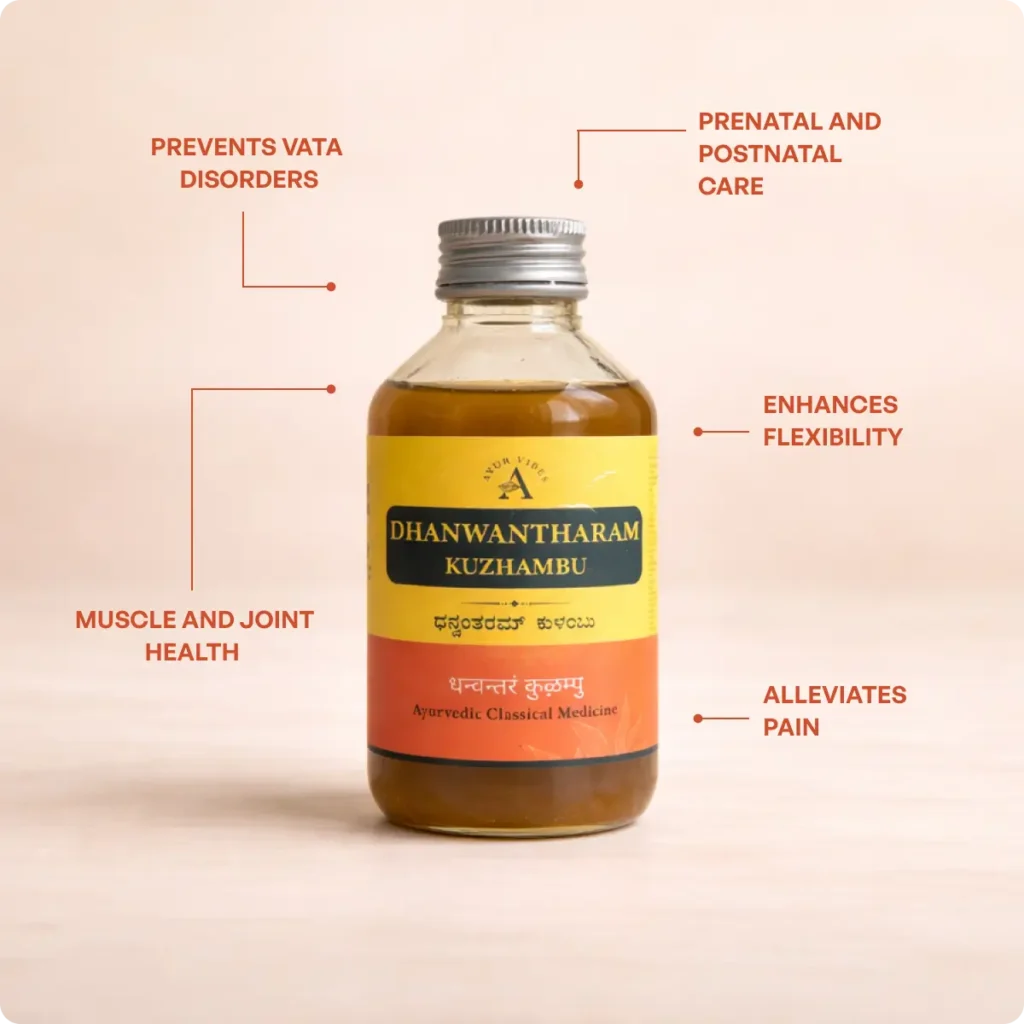
| Dhanwantharam Kuzhambu (200ml) | Bala, Dashamoola, Meda, ghee | Vata imbalance, muscle stiffness, back and joint pain, postnatal care | Full-body or focused on back and joints | ₹220 |
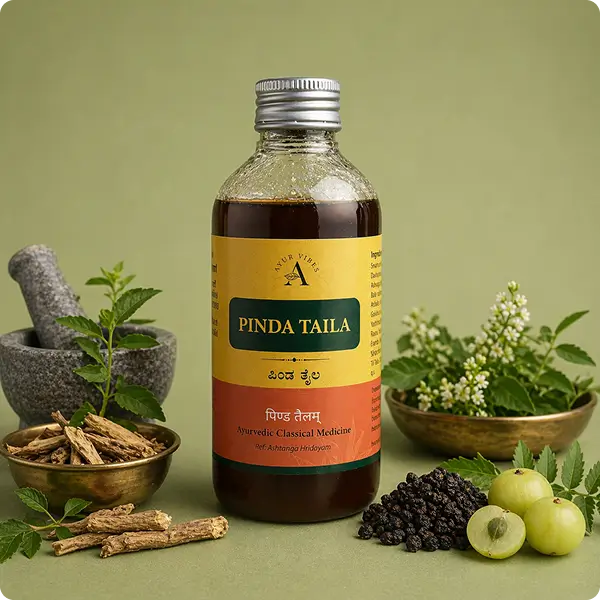
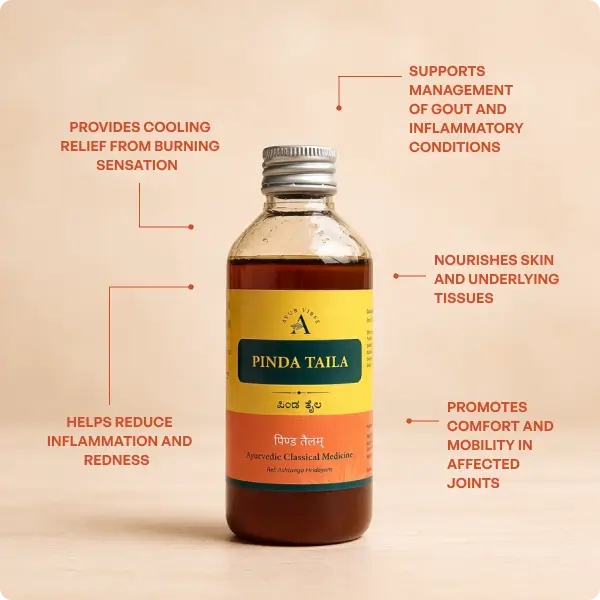
| Pinda Taila (200ml) | Manjishta, Sariva, beeswax, sesame oil | Pitta conditions: burning, redness and inflammation in skin and joints | On affected areas, gently, 1–2 times a day | ₹245 |
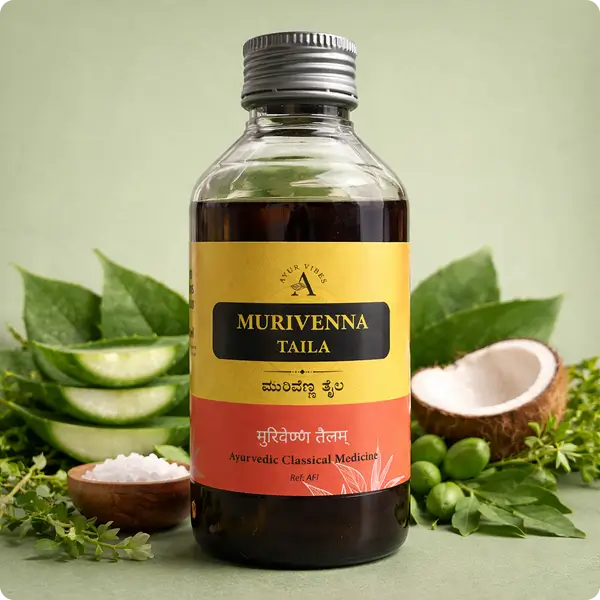
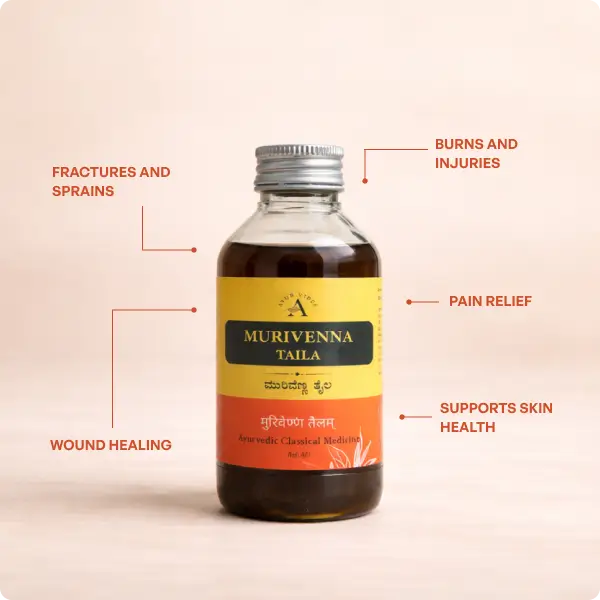
| Murivenna Taila (200ml) | Aloe vera, Karanja, betel leaf, coconut oil | Sprains, bruises, muscle soreness, joint pain, minor wounds | On affected areas, 2–3 times a day | ₹210 |
Which one should you choose?
- For a daily full-body abhyanga massage that builds strength and eases fatigue, choose Balashwagandha Lakshadi Taila. It is specifically meant to be used as regular abhyanga before bathing, and is a good fit for Vata types and anyone feeling run-down. Learn more about its key herb in our Ashwagandha guide.
- For stiffness, back pain or after delivery, choose Dhanwantharam Kuzhambu, a classical Vata-balancing oil traditionally used in postnatal massage. Pair it with our guide to Ayurvedic postpartum care. If you are pregnant, ask your doctor before using it.
- For a hot body type or joints that feel warm, red and inflamed, choose Pinda Taila. It is a cooling oil best applied to the affected areas rather than as a vigorous full-body massage. See also our tips to manage body heat and balance Pitta.
- For sore muscles after sport, sprains or bruises, keep Murivenna Taila at home. It is a spot-treatment oil, not a daily full-body oil.
You will find more oils and joint support in our Bone, Joint & Muscle Health and Vitality collections, and postnatal care options in Women’s Health.
How to Do Abhyanga Massage at Home: Step by Step
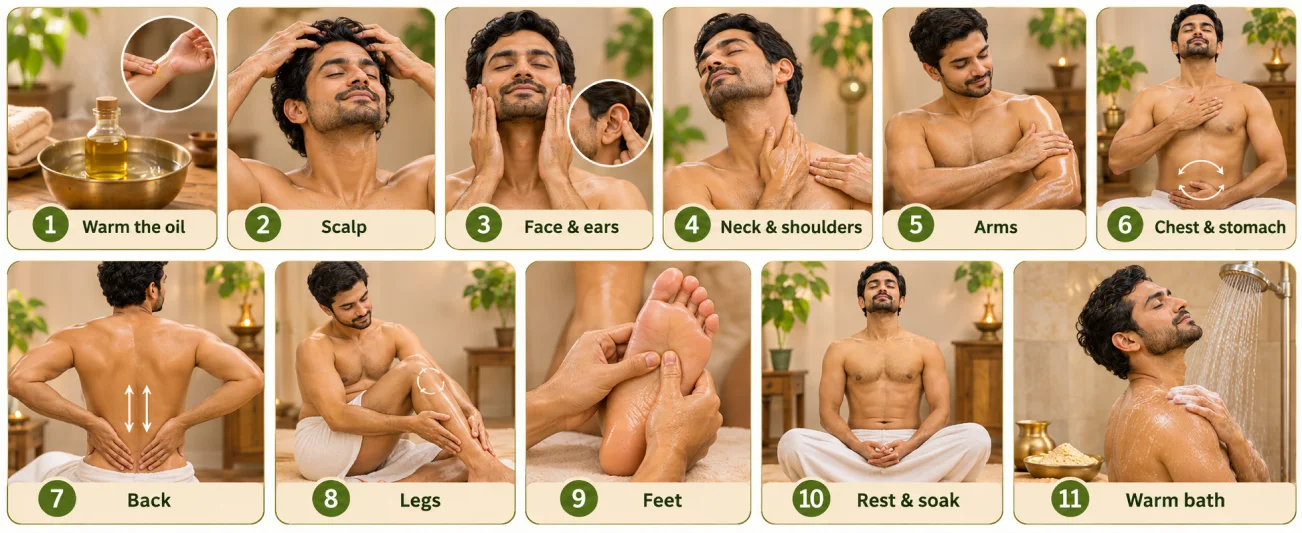
A self abhyanga massage takes about 15–20 minutes. Here is how to do it:
1. Warm the oil. Place the bottle in a bowl of hot water for a few minutes. The oil should feel pleasantly warm, never hot. Test it on your wrist.
2. Start with your head. Pour a little oil on your fingertips and massage your scalp in small circles for 1–2 minutes.
3. Do your face and ears. Use gentle upward circles on your forehead, cheeks and jaw. Rub a little oil on the outer ears and earlobes.
4. Move to your neck and shoulders. Use long, smooth strokes down the neck and across the shoulders.
5. Massage your arms. Use long strokes on the upper and lower arms and circular strokes on the shoulders, elbows and wrists.
6. Do your chest and stomach. Use gentle circles on the chest. On the stomach, move in slow clockwise circles, following the direction of digestion.
7. Reach your back as far as you can. Use up-and-down strokes on the lower back.
8. Massage your legs. Use long strokes on the thighs and calves and circular strokes on the hips, knees and ankles.
9. Finish with your feet. Spend 2–3 minutes on the soles, heels and toes. Ayurveda gives special importance to foot massage (padabhyanga). If you often feel tingling or numbness in your feet, see our guide on managing tingling in hands and feet.
10. Let the oil soak in. Rest for 15–30 minutes. Sit quietly, stretch or do some light breathing.
11. Take a warm bath. Use warm, not hot, water. A mild cleanser or traditional green gram (moong) flour removes extra oil without drying your skin.
Tip: Be careful in the bathroom, as oily feet can be slippery. Wear old clothes or a robe while the oil soaks in, as oil can stain fabric.
When Is the Best Time for Abhyanga Massage?
- Morning, before your bath, is the traditional time.
- On an empty or light stomach. Wait at least 2–3 hours after a heavy meal.
- Evening abhyanga of just the scalp and feet is a lovely way to wind down before sleep.
- In winter and dry weather, daily abhyanga massage is especially helpful. In hot, humid months, Pitta and Kapha types may do it 2–3 times a week with a lighter oil.
Abhyanga Massage at Home or at an Ayurvedic Centre?
Both have their place. At an Ayurvedic centre, trained therapists (often two at a time, working in sync) give a full abhyanga massage, sometimes followed by herbal steam (swedana). This is relaxing and a great experience, especially if you are new to it or are following a Panchakarma programme.
A self abhyanga massage at home is what Ayurveda actually recommends for everyday health. It is free apart from the oil, takes only 15–20 minutes, and the benefits come from doing it regularly rather than once in a while. Many people enjoy a professional session occasionally and self-massage the rest of the week.
Who Should Avoid Abhyanga Massage?
Abhyanga massage is gentle and safe for most people, but Ayurveda advises skipping it in these situations:
- During fever, cold, flu or heavy congestion. Ayurveda says oil massage can make these worse. Wait until you recover.
- With indigestion, bloating or right after a heavy meal.
- On broken skin, open wounds, rashes or skin infections. Do not massage over these areas.
- During pregnancy, unless guided by your doctor or an Ayurvedic physician. Avoid pressure on the stomach.
- With serious health conditions such as heart disease, blood clots, high blood pressure or recent surgery, check with your doctor first.
- During the heaviest days of your period, many Ayurvedic practitioners suggest a lighter massage or a short break.
- If you are allergic to any oil or herb, do a patch test on your inner arm 24 hours before a full massage.
If you are unsure whether abhyanga massage suits you, consult a doctor at AyurvedaOne for personalised advice.

Common Mistakes to Avoid
- Using cold oil. Warm oil soaks in better and is what makes abhyanga calming.
- Washing off the oil immediately. Give it at least 15 minutes.
- Bathing in very hot water afterwards, which can dry out the skin again.
- Using a spot-treatment oil for daily full-body massage. Oils like Murivenna are meant for specific problem areas.
- Doing it only once in a while. Abhyanga massage works best as a regular habit. Our 10 Ayurvedic health tips share other simple daily habits.
Final Thoughts
Abhyanga massage is one of the simplest and most rewarding habits in Ayurveda. Warm the oil, massage from head to feet, rest for a few minutes and take a warm bath, and you have given your body and mind real care in under half an hour. Start with the base oil that suits your dosha, and add a herbal oil when you need extra support: Balashwagandha Lakshadi Taila for daily strength, Dhanwantharam Kuzhambu for stiffness and postnatal care, Pinda Taila for heat and inflammation, and Murivenna Taila for sprains and sore muscles.
If stress is your main reason for trying abhyanga, read our guide to Ayurvedic medicine for anxiety and stress next.
This article is for general information only and is not a substitute for medical advice. Please consult a qualified doctor or Ayurvedic physician if you have a health condition, are pregnant or are unsure whether abhyanga massage suits you.
Related Products
Secure your child’s immunity with Swarnaprashna
Swarnaprashana blends Swarnabhasma with medhya herbs to protect and empower your child’s health.
Frequently Asked Questions
1. What is abhyanga massage?
Abhyanga massage is a traditional Ayurvedic warm oil massage of the whole body, from scalp to feet, done before a bath. It is part of the Ayurvedic daily routine and is used to calm the mind, nourish the skin and keep the body supple.
2. Which oil is best for abhyanga massage?
It depends on your dosha. Sesame oil suits Vata, coconut oil suits Pitta and light mustard oil suits Kapha. For extra strength and nourishment, a herbal oil like Balashwagandha Lakshadi Taila is made for regular abhyanga.
3. How often should I do abhyanga massage?
Daily is ideal, especially in winter or if you have dry skin and a busy mind. If that is not possible, 2–3 times a week still brings benefits.
4. How long should I leave the oil on after abhyanga?
Leave it on for 15–30 minutes before your bath. This gives the oil time to soak into the skin.
5. Can I do abhyanga massage at night?
Yes. A short evening massage of just the scalp and feet is a traditional way to relax before sleep. Full-body abhyanga is best done in the morning before bathing.
6. Can I use coconut oil for abhyanga massage?
Yes. Coconut oil is cooling and is the best choice for Pitta types, people who feel hot easily and during summer.
7. Is abhyanga massage good for joint pain?
Abhyanga massage is traditionally used to ease stiffness and support joint comfort. For stiffness and back pain, Dhanwantharam Kuzhambu is a classical choice; for joints that feel hot and inflamed, Pinda Taila is traditionally preferred. See a doctor for severe or persistent pain.
8. Who should not do abhyanga massage?
Avoid it during fever, cold or flu, with indigestion, on open wounds or skin infections, and right after meals. Pregnant women and people with serious health conditions should ask their doctor first.
Discover your Ayurvedic balance with our doctor consultations, shop by health concern, or take a quick dosha quiz to find what fits you.
Related Blogs
 Hair
Ayurvedic Hair Care: Best Oils and Remedies for Itchy Scalp
An itchy scalp is one of those problems that is easy to ignore until it isn’t: the constant…
Read More
 Heart Health
What Are Cardorium Plus Uses and Its Benefits?
Cardorium Plus is an Ayurvedic herbal formulation made for cardiovascular support. It combines seven herbs traditionally valued for…
Read More
 Joint Pain
Why Does Knee Pain Increase in Cold Weather? Ayurvedic Care Tips
Every winter the same thing happens. The first cold mornings arrive, and your knees complain: stiff when you…
Read More
 General
Vata Dosha in Winter: Symptoms and How to Balance It Naturally
Vata dosha is the Ayurvedic energy of movement, made of air and space. Cold, dry, windy winter weather…
Read More