
Throat Infection: Causes, Symptoms and Natural Home Remedies
MD in Panchakarma | 16+ Years of Experience

Table of Content
Quick Answer
The most effective throat infection natural remedies are a warm salt and turmeric gargle 3–4 times a day, honey with ginger, chewing mulethi (licorice root), tulsi kadha, turmeric milk and steam inhalation. Most viral throat infections settle in 2–7 days. See a doctor if you have a high fever, white patches on your tonsils or trouble swallowing.
A throat infection is usually caused by a virus, the same kind that causes a common cold. That is good news, because these infections clear up on their own, and throat infection natural remedies can ease the pain, swelling and scratchiness while your body heals. In Ayurveda, herbs like Yashtimadhu (mulethi) are traditionally used to soothe the throat, and Yashtimadhu Tablet makes this easy to take every day.
One important point: if a bacterial infection such as strep throat is behind your symptoms, you need a doctor. Home remedies can make you more comfortable, but they cannot replace the treatment a bacterial infection needs.
Throat Infection Natural Remedies: At a Glance
| Remedy | Helps with | How to use |
|---|---|---|
| Salt + turmeric gargle | Pain, swelling, mucus | ½ tsp salt and a pinch of turmeric in warm water, 3–4 times a day |
| Honey + ginger | Soreness, cough | 1 tsp honey with ginger juice, 2–3 times a day |
| Mulethi (Yashtimadhu) | Raw, scratchy throat, hoarse voice | Chew a small stick, sip as tea or take as a tablet |
| Tulsi kadha | Throat infection with cold | 1 cup warm, once or twice a day |
| Turmeric milk | Night-time throat pain | 1 cup warm before bed |
| Steam inhalation | Dryness, blocked nose | 5–10 minutes, once or twice a day |
What Is a Throat Infection?
A throat infection happens when germs, usually viruses and sometimes bacteria, infect the back of your throat (the pharynx), your tonsils or your voice box (larynx). The throat becomes red, swollen and painful, especially when you swallow.
People often use “sore throat” and “throat infection” to mean the same thing. A sore throat is the symptom. An infection is one of the most common reasons for it.
What Causes a Throat Infection?
- Viruses. Most throat infections come from cold and flu viruses. They usually come with a runny nose, sneezing or cough.
- Bacteria. Strep throat, caused by Streptococcus bacteria, is the most common bacterial type. It is more common in children and often comes with fever and white patches on the tonsils.
- Weather changes and cold drinks. These do not cause infection by themselves, but many people notice their throat gets irritated first.
- Weak immunity. Poor sleep, stress and tiredness make it easier to catch infections.
- Allergies and post-nasal drip. Mucus dripping down the back of the throat can irritate it and lead to infection. If blocked sinuses are part of the problem, read our guide to Ayurvedic treatment of sinusitis.
- Acid reflux. Acid rising into the throat can cause a burning, sore throat that feels like an infection. See our home remedies for acidity and acid reflux.
What Are the Symptoms of a Throat Infection?
- Pain or scratchiness in the throat
- Pain that gets worse when you swallow or talk
- Red, swollen tonsils
- White patches or pus on the tonsils (more common with bacterial infection)
- Swollen, tender glands in the neck
- Hoarse or muffled voice
- Fever, body ache and tiredness
- Cough, runny nose or sneezing (more common with viral infection)
Is It Viral or Bacterial? How to Tell the Difference
| Sign | Viral infection | Bacterial (strep) infection |
|---|---|---|
| Cough, runny nose | Common | Usually absent |
| Fever | Mild or none | Often high |
| White patches on tonsils | Rare | Common |
| Swollen neck glands | Mild | Often tender and swollen |
| How it starts | Gradually, with cold symptoms | Suddenly, with sharp throat pain |
| What helps | Rest and home remedies | Doctor visit; antibiotics if confirmed |
How Does Ayurveda Explain a Throat Infection?
Ayurveda links most throat infections to an imbalance of Kapha (the heavy, cold, mucus-forming energy) together with Pitta (the hot, inflammatory energy). Kapha brings congestion and mucus. Pitta brings redness, burning and swelling.
That is why Ayurvedic throat infection natural remedies are mostly warm, light and soothing: warm gargles, honey, ginger, tulsi and turmeric clear the heaviness, while cooling, sweet herbs like Yashtimadhu calm the burning. Curious which dosha you lean towards? Take our dosha quiz.
10 Best Throat Infection Natural Remedies
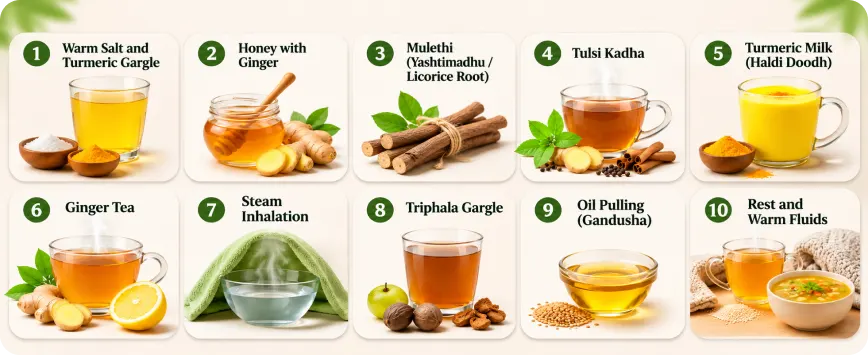
1. Warm Salt and Turmeric Gargle
This is the first remedy most doctors and Ayurvedic practitioners suggest. Salt water draws out fluid from swollen tissue and loosens mucus. Turmeric has long been used in Indian homes for its soothing properties.
How to use: Mix ½ teaspoon of salt and a pinch of turmeric in a glass of warm water. Gargle for 30 seconds and spit it out. Repeat 3–4 times a day.
Note: Not suitable for young children who may swallow the water.
2. Honey with Ginger
Honey coats the throat and calms irritation, and it is one of the best-known throat infection natural remedies for cough that comes along with the pain. Ginger adds warmth and helps clear mucus.
How to use: Mix 1 teaspoon of honey with a few drops of fresh ginger juice and take it slowly, 2–3 times a day. You can also stir honey into warm water or herbal tea.
Note: Never give honey to babies under 1 year old.
3. Mulethi (Yashtimadhu / Licorice Root)
Yashtimadhu is Ayurveda’s favourite herb for the throat. It is sweet and cooling, and is traditionally used to soothe a sore, inflamed throat and a hoarse voice. Teachers, singers and speakers have relied on it for generations.
How to use: Chew a small piece of mulethi stick slowly, or boil it in water for 5 minutes to make a mild tea. For a no-fuss daily option, Yashtimadhu Tablet 850mg gives you this herb in an easy tablet form.
Note: Avoid long-term use without advice if you have high blood pressure, kidney problems or hormonal issues, or if you are pregnant or breastfeeding.
4. Tulsi Kadha
Tulsi (holy basil) is the go-to Ayurvedic herb for throat infection with cold and cough. A warm kadha with ginger, black pepper and cinnamon is comforting and easy to make.
How to use: Boil 6–8 tulsi leaves, a small piece of ginger, 2–3 crushed peppercorns and a small piece of cinnamon in 2 cups of water until it reduces to 1 cup. Strain, cool slightly and add honey. For more ways to use it, read 5 ways to use tulsi for cough at home.
5. Turmeric Milk (Haldi Doodh)
A cup of warm turmeric milk at bedtime soothes the throat and helps you sleep better, which matters because rest is when your body fights infection.
How to use: Add ½ teaspoon of turmeric and a pinch of black pepper to a cup of warm milk. Drink it before bed.
6. Ginger Tea
Ginger is warming and helps break up mucus. A simple ginger tea is gentle enough to sip several times a day.
How to use: Boil a few slices of fresh ginger in water for 5–10 minutes. Add honey and a squeeze of lemon once it cools slightly.
7. Steam Inhalation
Steam keeps your throat moist, eases dryness and helps when a blocked nose is forcing you to breathe through your mouth.
How to use: Breathe in steam from a bowl of hot water with a towel over your head for 5–10 minutes. Add a few tulsi leaves or a pinch of ajwain if you like.
8. Triphala Gargle
Triphala, the well-known three-fruit Ayurvedic formula, is traditionally used as a gargle for mouth and throat health. Learn more in our guide to Triphala benefits.
How to use: Boil 1 teaspoon of Triphala powder in 2 cups of water, let it cool to lukewarm, strain and gargle twice a day.
9. Oil Pulling (Gandusha)
Gandusha is a traditional Ayurvedic practice of holding warm oil in the mouth. It is used to keep the mouth and throat clean and moist.
How to use: Swish 1 tablespoon of warm sesame oil in your mouth for 3–5 minutes in the morning, then spit it out and rinse with warm water. Do not swallow the oil.
10. Rest and Warm Fluids
Rest is the most underrated of all throat infection natural remedies. Sip warm water, soups and herbal teas through the day, and rest your voice as much as you can.
What about cold foods? Some people find ice chips or cold water numb the pain for a short while. Ayurveda, though, prefers warm foods during a throat infection because cold foods can increase Kapha and mucus. If cold helps you, keep it occasional.
Which Ayurvedic Tablet Helps With Throat Infection?
| Product | Key ingredient | Traditionally used for | How to take | Price |
|---|---|---|---|---|
| Yashtimadhu Tablet 850mg (60 Tabs) | Yashtimadhu (licorice root) | Soothing throat irritation, cough, clearer breathing; also acidity | 1–2 tablets daily after meals, with warm water | ₹270 |
Why Yashtimadhu? It is the single herb Ayurveda turns to most for a sore, irritated throat and a hoarse voice. It also supports a calm stomach, which helps when acid reflux is part of the problem.
If your throat infection comes with cough and congestion, Talisadi Chewable Tablet is another traditional option. You can find more in our Allergies, Sinus and Respiratory Health collection, and support everyday immunity with products like Igerotone Tablet from our immunity range.
What Should You Eat and Avoid During a Throat Infection?
Eat more of:
- Warm soups like moong dal, vegetable or chicken soup
- Soft foods that are easy to swallow, like khichdi, porridge and mashed vegetables
- Ginger, garlic, black pepper, tulsi and turmeric in cooking
- Warm water, herbal teas and kadha
Avoid or cut down on:
- Cold drinks, ice cream and chilled water
- Fried, oily and very spicy food
- Dry, hard or crunchy snacks that scratch the throat
- Curd and heavy dairy at night, which Ayurveda links to more mucus
- Smoking and alcohol, which dry out and irritate the throat
How to Prevent Throat Infections

- Wash your hands often, especially before eating and after being in crowded places.
- Do not share cups, bottles or utensils with someone who is unwell.
- Drink warm water during seasonal changes and cold weather.
- Sleep well and manage stress to keep your immunity strong. Our guide on how to improve immunity naturally shares easy daily habits, and Giloy is one herb Ayurveda traditionally uses for immunity.
- Replace your toothbrush after a throat infection.
Throat Infection in Children: What Parents Should Know
Children get throat infections often, and strep throat is more common in school-age kids. Keep these points in mind:
- No honey for babies under 1 year.
- Gargles only for children old enough to spit out the water.
- Give Yashtimadhu tablets to children only under medical supervision.
- See a doctor quickly if your child has a high fever, drools, struggles to swallow or breathe, or refuses to drink.
For year-round support, read our guide to immunity boosters for children or browse our Kids & Family Care range.
How Long Does a Throat Infection Last?

Most viral throat infections improve within 2 to 7 days. A bacterial infection usually starts to improve within a day or two of starting the right treatment. Throat infection natural remedies can help you feel better during this time, but the infection itself needs to run its course. If you feel weak afterwards, see our tips on managing fatigue after fever.
When Should You See a Doctor?
Please see a doctor if you have:
- Throat pain that does not improve after a week
- A high fever (above 101°F / 38.3°C)
- White patches or pus on your tonsils
- Difficulty swallowing or breathing
- A swollen neck or a lump that does not go away
- Blood in your saliva or phlegm
- Hoarseness that lasts more than two weeks
- Throat infections that keep coming back
For personalised Ayurvedic guidance alongside your doctor’s care, you can consult a doctor at AyurvedaOne.
Who Should Be Careful With These Remedies?
- Yashtimadhu (mulethi): avoid long-term use without advice if you have high blood pressure, kidney problems or hormonal conditions, or are pregnant or breastfeeding. Too much can cause water retention and raise blood pressure.
- Honey: not for babies under 1 year; people with diabetes should use it in small amounts.
- Ginger and black pepper: use small amounts if you have acidity.
- Regular medicines: speak to your doctor before starting any herbal tablet.
Final Thoughts
Most throat infections are viral and clear up within a week, and simple throat infection natural remedies make that week far more comfortable. Start with a warm salt and turmeric gargle, honey with ginger, tulsi kadha and plenty of rest. For steady, easy support, Yashtimadhu Tablet brings Ayurveda’s most trusted throat herb into your daily routine. And if you notice high fever, white patches or trouble swallowing, see a doctor without delay.
If your throat infection comes with a cold and cough, read our full guide to Ayurvedic treatment for cold and cough. If you are also running a temperature, see Ayurvedic medicine for fever.
Related Products


Cardorium Plus Syrup (300ml) – Ayurvedic Heart & Circulation Support
In stock
₹450.00

Secure your child’s immunity with Swarnaprashna
Swarnaprashana blends Swarnabhasma with medhya herbs to protect and empower your child’s health.
Frequently Asked Questions
1. What are the best throat infection natural remedies?
2. How can I cure a throat infection fast at home?
3. Is Yashtimadhu good for throat infection?
Yes. Yashtimadhu (mulethi) is traditionally used in Ayurveda to soothe a sore, inflamed throat and a hoarse voice. Yashtimadhu Tablet is an easy way to take it. Avoid long-term use if you have high blood pressure.
4. Can throat infection natural remedies treat strep throat?
5. Which is better for throat infection, warm or cold drinks?
6. Does turmeric help a throat infection?
7. How do I know if my throat infection is serious?
8. Can a throat infection spread to others?
Discover your Ayurvedic balance with our doctor consultations, shop by health concern, or take a quick dosha quiz to find what fits you.
Related Blogs
 Hair
Ayurvedic Hair Care: Best Oils and Remedies for Itchy Scalp
An itchy scalp is one of those problems that is easy to ignore until it isn’t: the constant…
Read More
 Heart Health
What Are Cardorium Plus Uses and Its Benefits?
Cardorium Plus is an Ayurvedic herbal formulation made for cardiovascular support. It combines seven herbs traditionally valued for…
Read More
 Joint Pain
Why Does Knee Pain Increase in Cold Weather? Ayurvedic Care Tips
Every winter the same thing happens. The first cold mornings arrive, and your knees complain: stiff when you…
Read More
 General
What Is Abhyanga Massage & Which Oil Is Best for Abhyanga Massage According to Ayurveda?
Abhyanga massage is a traditional Ayurvedic full-body massage with warm oil, applied from the scalp to the soles…
Read More